You find the alternator you’ve been hunting for three weeks: right year, right engine code, fair price. You add it to your cart Tuesday evening, then get an email Thursday saying it’s no longer available and your card has been refunded. The part may have sold, or the listing may not have reflected what was actually on the shelf. Understanding used auto parts online inventory can help explain why this happens.
Salvage stock arrives one vehicle at a time and sells as it becomes available. Quality Auto Parts can help you check whether a listing is still available before ordering. Contact Quality Auto Parts to ask about current stock and compatible options.
What “In Stock” Really Means for Used Auto Parts Online
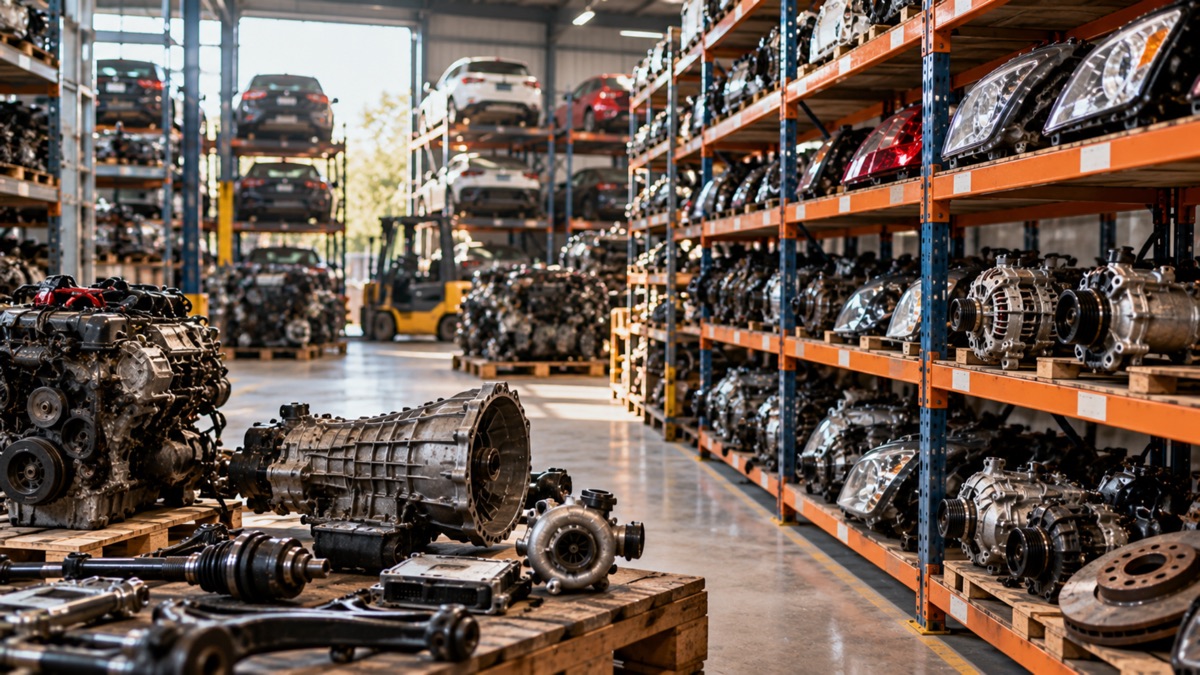
New parts come from a warehouse that reorders. Recycled parts come from a specific vehicle that came through a specific gate on a specific day, and when it’s gone there’s no reorder button. Every listing you see for used auto parts online represents one physical item, not a stock level.
That single-unit reality shapes everything downstream. Prices swing more. Availability is regional. Two identical searches for used auto parts online a week apart can return completely different results, and neither one is wrong.
It also explains why timing matters so much more here than with new parts. If you see a Grade A unit at a fair price and your vehicle is off the road waiting, hesitating for a week to save forty dollars often costs you the part entirely.
Why Salvage Inventory Turns Over So Quickly
Yards operate on cycles, and knowing those cycles makes your searching smarter.
The dismantling clock
A vehicle arriving at a recycler doesn’t get stripped immediately. It’s catalogued, fluids are drained, high-demand components come off first, and the rest may sit on the vehicle for months until someone asks. So a part can be genuinely available without appearing in a searchable catalogue. This is exactly why a submitted request often beats a plain used auto parts search, because it prompts someone to go and physically look.
Seasonal and regional patterns
Radiators and AC condensers move fast in summer. Heater cores and batteries move in winter. Body panels spike after hailstorms and after the first hard freeze. Meanwhile, vehicles common in one region are scarce in another: pickup drivetrain parts are thick on the ground in the Midwest and thin in dense coastal cities. Widening your used auto parts search geographically often finds stock that simply doesn’t exist near you.
The Ghost Listing Problem
Not every entry advertising used auto parts for sale reflects something a person could walk over and pick up today. Some listings survive after the part has sold. Others came from a paper log nobody has reconciled in a month. A few are placeholder entries generated from vehicle records rather than verified stock.
You can usually tell the difference by looking for these signals:
• A photograph of the actual unit with a yard tag or stock number visible, not a catalogue image
• A stated donor vehicle with mileage, VIN fragment or stock ID
• A specific interchange number rather than “fits multiple models”
• A recent listing or update date
• A seller who answers a direct availability question in writing before you pay
If a listing for used auto parts online gives you none of those, treat it as a lead rather than a purchase.
How an Auto Parts Locator Reads Live Stock
A proper auto parts locator doesn’t scrape web pages. It connects to yard management systems that update as parts are pulled, sold and shipped, which is why a used part finder built on live feeds tends to be far more reliable than open marketplace listings.
The other advantage is breadth. A single query through an auto parts locator can check hundreds of yards at once and return only those with a confirmed match on interchange. That matters most for used automotive parts that were shared across platforms, where the compatible donor might be a model you’d never think to search for by name.
Not every locator covers every yard, though. Smaller independent operators often stay offline entirely, which is why phoning a local yard still has a place for older or unusual vehicles, even when you’re mainly shopping used auto parts online.
What Availability Does to Used Automotive Parts Pricing
Scarcity moves the price of used automotive parts more than condition does. This is roughly how availability plays out across categories.
| Part category | Typical availability | What it does to price |
|---|---|---|
| Alternators, starters | High on common models | Stable, often 50–70% under new OEM |
| Body panels, doors | Moderate, colour-dependent | Wide swing; matching paint costs more |
| Engines, transmissions | Moderate, mileage-dependent | Freight becomes a major line item |
| ECUs, body modules | Low on newer vehicles | Premium pricing; programming may add labour |
| Discontinued trim | Very low | Priced by rarity, not by condition |
Read those ranges as indicative. The same component can vary by a factor of two depending on grade, donor mileage and how many yards happen to hold one that month.
Timing Your Purchase of Used Auto Parts Online
The pool of used auto parts for sale near you changes every week as vehicles arrive and ship out, so there’s a practical rhythm to this. If the repair is urgent, buy the first sound match with a real warranty and stop optimising. If the vehicle is a secondary car and you can wait, setting up a standing request and letting matches come to you over two or three weeks will usually beat any single day’s browsing.
For older vehicles, availability generally declines year on year, so if you plan to keep the car a long time and find a scarce part cheap, buying it before you need it is defensible. That logic doesn’t extend to items with a shelf life, like rubber components or batteries.
Verifying Availability Before You Pay
Questions worth asking in writing
1. Is this specific unit physically on your shelf today?
2. What’s the donor vehicle’s year, mileage and stock number?
3. What interchange number are you matching to?
4. What’s the warranty period, and does it cover replacement only or labour too?
5. Is there a core charge, and how do I return the old unit?
What to do with the answers
Cross-check the interchange number against your own VIN before paying. Save the written confirmation of availability, because that’s what supports a refund if the part turns out to have sold. A good used part finder service does this verification for you, but the check takes two minutes and it’s your money.
Frequently Asked Questions
Why do used auto parts online listings disappear so often?
Because each listing is one physical item from one donor vehicle, not a restockable product. When it sells, it’s gone. Catalogue updates also lag behind the yard floor, so a part can be sold on Monday and still visible on Wednesday. Always confirm current availability in writing before you pay.
How can I tell whether a used part is genuinely in stock?
Ask for a photo of the actual unit with its yard tag, plus the donor vehicle’s stock number and mileage. Sellers with real inventory answer within a business day. Vague replies, catalogue-only images and refusal to give an interchange number are the usual warning signs.
Is it worth widening my search to other states?
Usually yes. Regional vehicle mixes differ sharply, and a component that’s scarce near you may be common six hundred miles away. Weigh the saving against freight, which is trivial for small parts and can run into the low hundreds for engines and transmissions on a pallet.
Should I buy a scarce part before I actually need it?
For a vehicle you plan to keep long term, buying a hard-to-find electronic or trim component when you see one is reasonable, since availability only tightens with age. Avoid pre-buying rubber parts, belts, batteries or anything else that degrades sitting on a shelf.
Conclusion
Availability is the hidden variable in every recycled parts purchase. The catalogue you’re browsing is a snapshot of a lot that changes weekly, so treat used auto parts online listings as leads to verify, not guaranteed stock. Ask for a yard tag photo, donor mileage, and interchange number. Widen your search area when a part is scarce, and move quickly when a good grade appears at a fair price. Match your urgency to your search method to avoid wasted time.
Chasing a component that keeps slipping away? Contact Quality Auto Parts to ask what’s available, compare prices, and explore more of the collection. Get in touch to learn more and find out what’s in stock now.