You turn the key and get a single loud click. Try again and the engine spins lazily, then catches. A week later it won’t turn over at all in a grocery store lot, and the jump-start that used to fix it does nothing. That’s the classic decline of a worn starting motor, and a used starter from Quality Auto Parts is usually the cheapest honest fix once the battery has been cleared.
The tricky part isn’t finding one. It’s finding one that bolts up, engages the flywheel correctly and wasn’t pulled from a 200,000-mile donor. Quality Auto Parts helps you focus on those three checks, which separate a two-year repair from a two-month one.
What Wears Out Inside a Used Starter
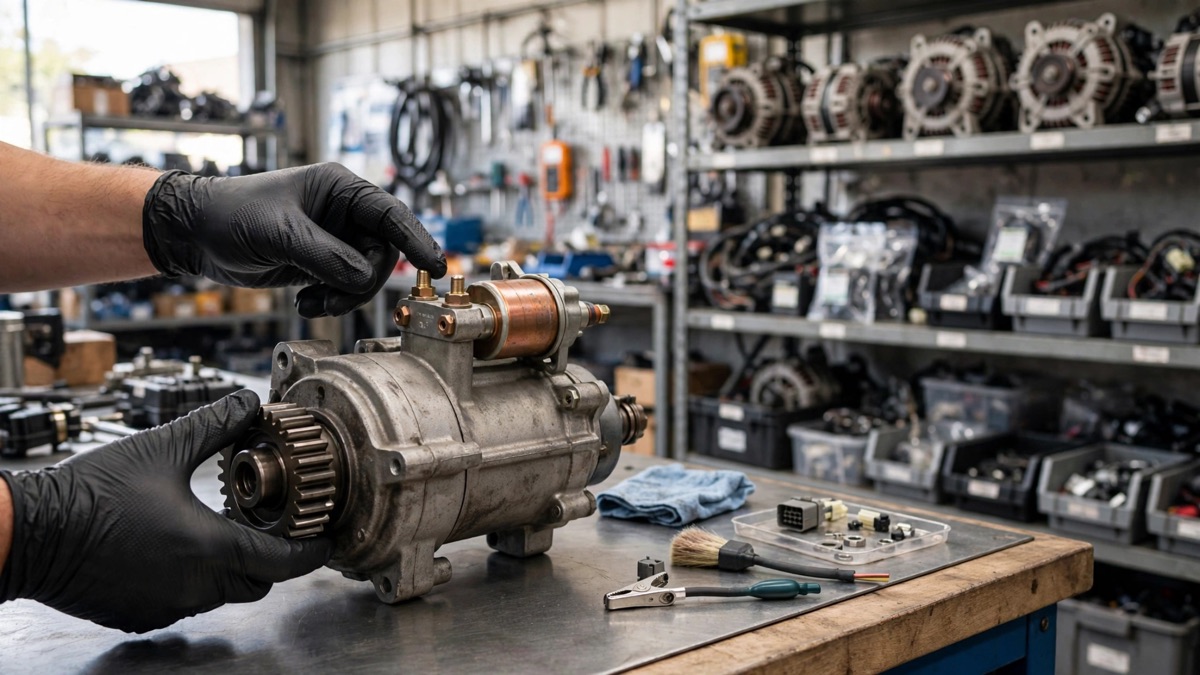
Starters fail in predictable ways, which is why recycled units are a reasonable bet. Brushes wear down and lose contact. Solenoid contacts pit and burn until they can’t pass enough current, producing the single-click symptom. Bushings go oval and let the armature drag. The drive gear, the Bendix, can also stop engaging cleanly and give you that grinding noise on start.
None of that is a design flaw so much as ordinary wear from thousands of high-current cycles. A used starter pulled from a wrecked car with 45,000 miles has barely begun its working life. That’s the whole logic behind buying used electrical auto parts rather than paying dealer prices for a component that spends most of its existence doing nothing.
Where to Buy Used Starters You Can Trust
Full-service auto recyclers
These yards dismantle vehicles themselves, record donor mileage, and bench-test before shelving. You’ll pay somewhat more than a pull-it-yourself yard, but the part arrives tested with a warranty attached. For most people this is the right answer.
Self-service yards
You bring tools and pull it yourself. Cheapest option by a wide margin, but there’s no testing, no mileage record and usually no warranty. Reasonable if you can bench-test the unit before installation and you’re comfortable eating the loss if it’s dead.
Online parts networks
These search hundreds of yards at once, which matters for older or low-volume vehicles. You’ll get several used starters at different grades and prices in one reply. Confirm the grade, the donor mileage and who covers return freight before ordering.
Local rebuilders
A rebuilder refreshes your existing unit with new brushes, bushings and solenoid contacts, usually within a couple of days. That keeps your original casting, useful on older or imported vehicles where replacement auto parts are scarce.
Matching a Used Starter to Your Vehicle
More returns come from fitment mistakes than from faulty parts. Same year, same badge, different starter is a completely normal situation.
VIN and interchange numbers
Give the seller your full 17-digit VIN. A competent counter person decodes the engine and transmission combination, then pulls an interchange number identifying every year and model that shares an identical unit. If nobody asks for your VIN, you’re buying on hope.
Tooth count, mounting and solenoid layout
Four physical details decide whether a used starter motor will actually work:
• Pinion tooth count. Nine, ten, eleven and thirteen-tooth versions exist across similar engines, and the wrong count either won’t mesh or will chew the ring gear.
• Bolt pattern and nose length. Two-bolt and three-bolt mounts differ, and nose depth changes engagement depth.
• Solenoid position and terminal layout. Clocking varies, and a solenoid pointing the wrong way can foul an exhaust manifold.
• Gear reduction versus direct drive. Gear-reduction units are smaller and draw less current. Some engines were built both ways across a single model run.
Bench Testing and Grading a Used Starter
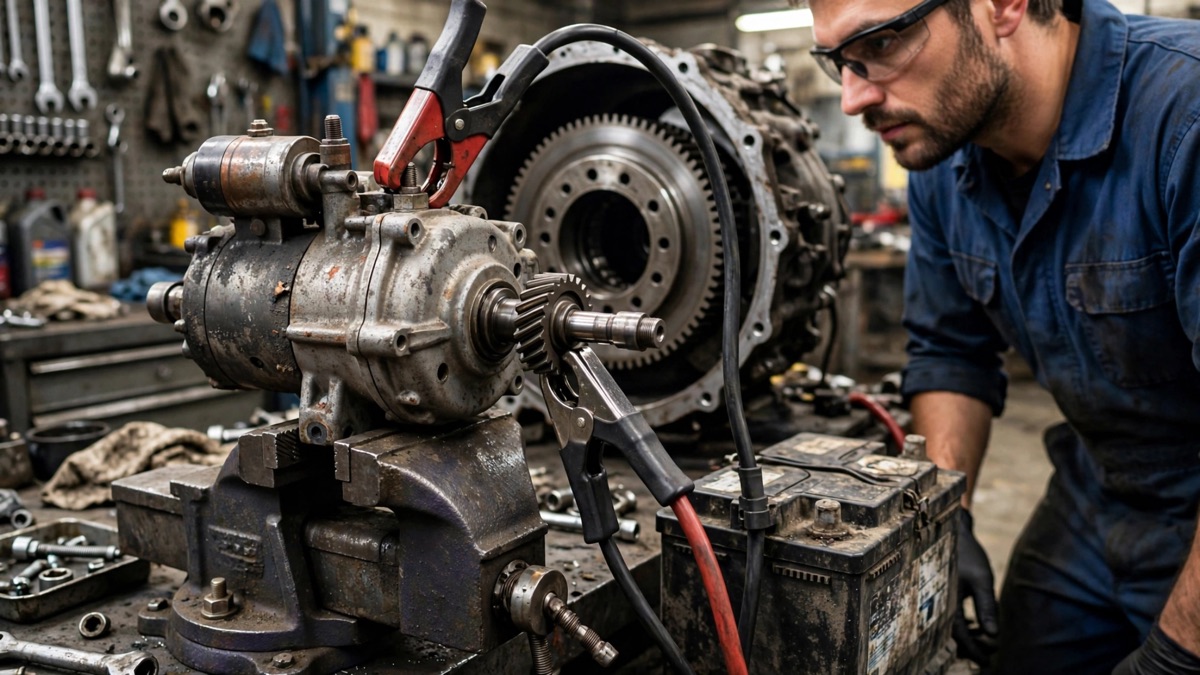
Alt text : Used starter bench tested with battery
Ask exactly what the supplier did before listing the used starter motor. A serious operation runs a no-load test to check free speed and current draw, then a load test to see whether the solenoid pulls in cleanly and holds. High current draw on a no-load test means worn bushings or a dragging armature, even if the unit spins.
Grading is the other question, and it works much the same across used electrical auto parts generally. Most yards use an A/B/C scale tied to donor mileage and condition. For starting motors, mileage is a rough proxy for cycle count rather than an exact one, since a delivery van with 90,000 stop-start miles has worked its starter far harder than a highway car with 140,000. Ask about the donor vehicle’s use, not just the odometer. Suppliers who handle a lot of used auto parts will usually know.
What a Used Starter Should Cost
| Option | Indicative price | Warranty | Notes |
|---|---|---|---|
| Self-service yard pull | $20 to $50 | None or very short | You test it yourself |
| Tested recycler unit | $55 to $150 | 90 days to 1 year | Best value for most cars |
| Rebuilt exchange | $90 to $220 | 6 months to lifetime | New wear parts fitted |
| New OEM | $250 to $600-plus | 1 to 2 years | Diesel and luxury run higher |
Labor typically adds $80 to $250. Access is everything here. Some four-cylinder cars give you two bolts from underneath in twenty minutes, while certain V6 and V8 layouts require removing an intake manifold, which turns a cheap part into a half-day job.
Warranty, Cores and Placing a Good Request
As with any replacement auto parts purchase, get the commercial terms in writing before you pay. Ninety days is the minimum worth accepting, six months to a year is common from established suppliers, and almost every warranty covers the part only rather than labor. Expect a core charge of roughly $15 to $50, refunded once your old unit ships back in the original box. Return windows are typically thirty days, so confirm who pays freight if the part turns out to be wrong.
When you contact a supplier, send everything at once:
1. Year, make, model, trim and engine size
2. Your full 17-digit VIN
3. Transmission type, automatic or manual
4. The part number stamped on your existing unit, plus a photo of the solenoid terminals
5. Your ZIP code for accurate shipping rather than an estimate
Installation Mistakes That Kill a Good Part
A used starter often gets blamed for problems it didn’t cause. Before condemning anything, load-test the battery and clean both cable ends, including the engine-to-chassis ground strap. Voltage drop across a corroded cable will make a healthy used starter behave exactly like a dying one.
Check the ring gear teeth through the inspection port while the old unit is out. If they’re chipped where the pinion engages, a new motor will grind on every start. Torque the mounting bolts to spec too, since a starter sitting slightly proud misaligns the pinion and destroys itself over a few weeks. And fit any shims that came off the original in the same order.
Frequently Asked Questions
How long does a used starter typically last?
It tracks donor mileage and usage pattern more than anything else. A tested unit from a low-mileage wreck often gives several years of normal driving, while one from a high-cycle city vehicle gives less. Ask for donor mileage and a bench-test result.
Can I test a used starter before installing it?
Yes. Clamp it securely, connect it to a good battery with heavy jumper leads, and watch whether the pinion throws out crisply and the motor spins freely without excessive noise. Many auto parts stores will bench-test a loose unit at no charge, which takes minutes and prevents a wasted installation.
Is a rebuilt unit better than used?
Rebuilt units get new brushes, bushings and solenoid contacts, so warranties are longer. A tested original costs less and keeps exact factory fit. On common engines a rebuild is easy to justify. On older or imported vehicles, good used starters are often the only sensible route.
Do used auto parts sellers guarantee fitment?
Most reputable ones do, provided you supplied the correct VIN. That’s precisely why they ask for it. If a part arrives that doesn’t match your build, a fitment guarantee usually covers the exchange, though return freight terms vary by supplier and should be confirmed upfront.
Conclusion
Finding a used starter that genuinely fits comes down to a short discipline. Rule out the battery and cables first, since they cause a surprising share of no-crank calls. Send your VIN to Quality Auto Parts so the supplier can pull the right interchange number. Confirm tooth count, bolt pattern and solenoid layout against your engine. Insist on a bench-tested, graded part with donor mileage on record, and read the warranty before you pay. Handled that way, a recycled unit costs a fraction of dealer pricing.
If you’re weighing up your options, giving your VIN and symptoms to an experienced parts specialist like Quality Auto Parts is the fastest way to get an answer matched to your vehicle. Your Starter Search Ends Here.