Your dash lights up, the windows stop working, or the vehicle cranks but won’t start. A shop diagnoses a failed module, then quotes $1,400 for a part that fits in one hand. For older vehicles it’s worse: the module is discontinued, with no new one to buy at any price. Quality Auto Parts offers a practical option with used control modules, but only when you understand what you’re actually ordering.
Modules aren’t like mechanical parts. Two units with identical casings can carry different software, and one of them will never work in your car no matter how well it plugs in. Quality Auto Parts helps you find the right used module by focusing on compatibility, part numbers, and vehicle-specific requirements.
What counts as a control module
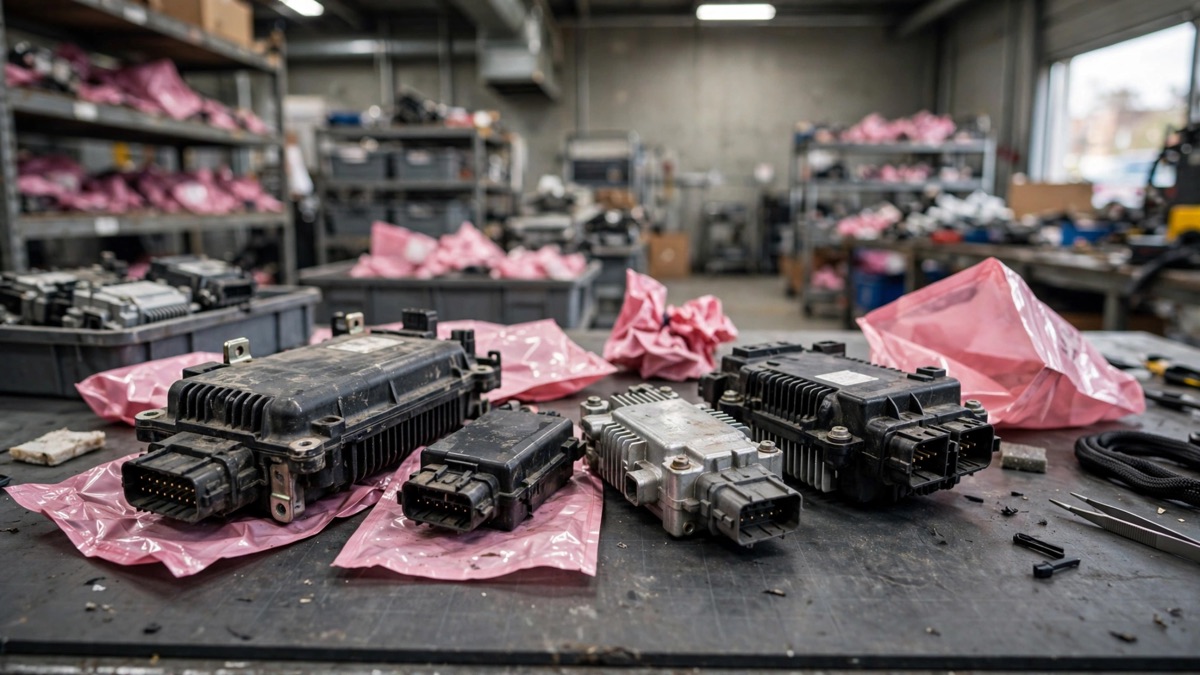
Modern vehicles run dozens of them, and used control modules exist for nearly all of them. The ones people replace most often:
• Engine control module (ECM or PCM), managing fuel, spark and emissions
• Transmission control module, sometimes integrated with the ECM
• Body control module, handling lights, locks, windows and interior functions
• ABS or electronic brake control module
• Airbag or restraint control module
• Instrument cluster, which is itself a networked module
Any of these can fail from water intrusion, corroded connectors, voltage spikes during a jump start, or age. Corrosion is the quiet killer: a module mounted low in a footwell or under a cowl drain fails far more often than one mounted high and dry.
Why buyers turn to used control modules
New modules from a dealer typically run $400 to $2,000, and most still require programming on top of the part price. Aftermarket options exist for common applications but thin out quickly on older or less popular vehicles.
For vehicles past roughly fifteen years old, the calculation changes entirely. Manufacturers discontinue electronics long before they discontinue sheet metal, so used control modules are frequently the only source.
Older vehicles
Older modules are often the easiest used buys. Pre-2005 systems rarely tie the module to the VIN, so a matching part number frequently means plug and drive. That’s why a used ECM for a mid-90s pickup can arrive on a Tuesday and have the truck running the same afternoon.
The trade-off is availability. Supply shrinks each year, and electronics that sat in a damp yard aren’t as reliable as a part pulled recently from a running vehicle. Ask when the donor was dismantled and how the module was stored.
Newer vehicles
Anything built in the last fifteen years or so is likely to have security integration. A used body control module from a 2019 crossover generally has to be programmed to your VIN, sometimes by a dealer, sometimes with an aftermarket tool that has the right licensing.
Some manufacturers lock modules permanently to the first vehicle they’re installed in. Then a used unit is worthless unless the seller offers pre-programming.
Programming, cloning and VIN locking
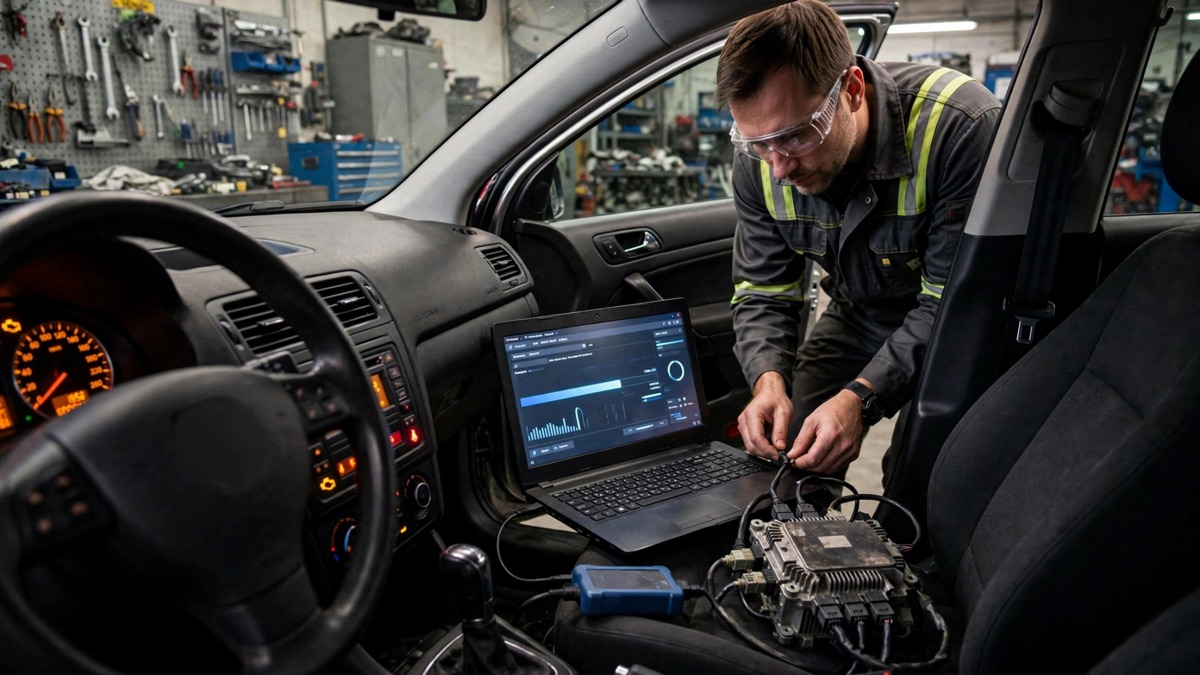
Alt text : Technician programming used ECM
This is where buying used control modules goes wrong most often. Before you buy, establish which of three categories your part falls into.
• Plug and play. No programming needed. Common on older vehicles and on some non-powertrain modules.
• Requires programming. The unit works but must be flashed and configured to your VIN. A used body control module from a late-model vehicle usually lands here.
• Locked or virgin-only. The module can’t be reused from another vehicle at all, or only if it’s never been paired.
Ask the seller directly which category applies. A seller who deals in used electrical auto parts every day will know the answer for your specific application, and the good ones will tell you the cost of programming before you commit.
Cloning and pre-programming
Many suppliers will clone your old module’s data onto the replacement before shipping. If your original still communicates, cloning preserves your VIN, mileage and immobilizer data, and the part arrives ready to install. Expect to send your old unit in first, which adds a week.
Where cloning isn’t possible, budget $100 to $300 for dealer or locksmith programming, more on European vehicles. Ask your shop what they charge before you buy the part, not after.
Matching the part number exactly
Never order an automotive computer module by year, make and model alone. Used control modules are cataloged by part number, so get the number off the label on your existing unit. Hardware and software revisions matter, and a module with the same base number but a different suffix can behave differently or refuse to communicate.
Send the seller your full VIN, a photo of the module’s label, and a note on your engine, transmission and trim. If the vehicle has been repaired before, say so: a prior owner’s module swap leaves you chasing a part number the factory never built.
What used control modules cost
Indicative ranges only. Programming, where required, is separate.
| Module type | Typical used price | New equivalent |
|---|---|---|
| Engine control module | $90 to $400 | $500 to $1,500 |
| Body control module | $70 to $300 | $400 to $1,200 |
| ABS control module | $80 to $350 | $500 to $1,600 |
| Transmission control module | $80 to $300 | $400 to $1,000 |
| Instrument cluster | $100 to $450 | $600 to $1,800 |
| Airbag control module | $50 to $200 | $300 to $900 |
A used ABS module paired with a $150 programming fee still lands well under half the dealer route in most cases. On airbag modules, note that many must be reset after a deployment, and some jurisdictions restrict reuse of restraint components entirely.
Where to buy and what to ask
Salvage yards with electronics inventory, specialist suppliers and rebuilders all sell used control modules. Rebuilders repair the known failure points, which is often the better answer when a part has a recurring fault. A used ABS module for a truck with a documented pump-motor issue is the classic example.
Whichever you choose, ask these questions before paying:
1. Was the module tested on a bench or in a running vehicle?
2. What’s the donor’s year, VIN and mileage?
3. Does it need programming, and can you supply it pre-programmed?
4. What’s the return window if it turns out to be locked?
5. Is the warranty voided if a non-dealer attempts programming?
That last question catches people out. Some sellers of used electrical auto parts consider any failed programming attempt as buyer damage, which turns a returnable part into a paperweight.
Testing and installation
Used control modules are static-sensitive, so disconnect the battery and let the system discharge before you touch anything. Handle the board by its casing and keep it in the antistatic bag until the last moment.
Check the connectors on your side too. If the original died from corrosion or a chafed harness, the replacement will follow it. Repair the wiring first.
Frequently Asked Questions
Do used control modules always need programming?
No. Older vehicles, especially pre-2005, often accept a matching module with no programming at all. Most newer vehicles require the module to be flashed and matched to your VIN. Ask which applies to your year and trim before ordering, since the labor cost differs sharply.
Can I use a used ECM from a different model year?
Sometimes, but only when the part number and software revision are compatible. Manufacturers change calibrations mid-year without changing the badge on the car. Match the number on the label, not the model year, and confirm your engine, transmission and emissions package with the seller first.
How long do used control modules last?
There’s no wear-out schedule the way there is with mechanical parts. A module that survived a decade in a dry spot will often outlast the vehicle. Failures come from moisture, vibration and voltage events, so a unit from a dry, undamaged donor is a reasonable long-term bet.
Is a used automotive computer module covered by warranty?
Most sellers offer 30 to 90 days, covering the part alone. Programming costs and diagnostic labor are almost never included. Read the terms about programming attempts, since some warranties end the moment a third party tries to flash the unit.
Conclusion
Sourcing used control modules is mostly an information problem rather than a hunting problem. Quality Auto Parts can help you get the exact part number off your old unit, match it with your VIN and photo of the label, and settle the programming question before money changes hands. Ask how it was tested, check what the return window covers, and repair whatever caused the original failure so the replacement doesn’t follow it. Done in that order, the used route usually halves the bill. Photograph your module’s label and have your VIN ready before you request quotes from Quality Auto Parts. If you’re not sure whether your vehicle needs programming, an experienced parts specialist can check the application and tell you what the total cost will look like. Quality Parts. Better Value.