codes, compare prices, and avoid common mistakes that cause costly returns.
Someone clipped you in a parking garage, or a delivery van took the mirror off in a narrow street. The housing is hanging by its wiring harness, the glass is scattered, and the dealer quotes $580 for the assembly plus paint. For a mirror. That number is why so many drivers go looking for used side mirrors instead. Quality Auto Parts makes it easier to find a replacement without paying dealer-level prices.
The catch is that mirrors are far less generic than they look. One model year can have six or seven versions of the same-looking mirror, and the wrong one either doesn’t plug in or plugs in and half the functions stay dead. Before buying, check the exact vehicle details and mirror features. Quality Auto Parts can help you find the right used assembly for your vehicle rather than leaving you with an expensive mismatch.
Why mirrors cost so much new
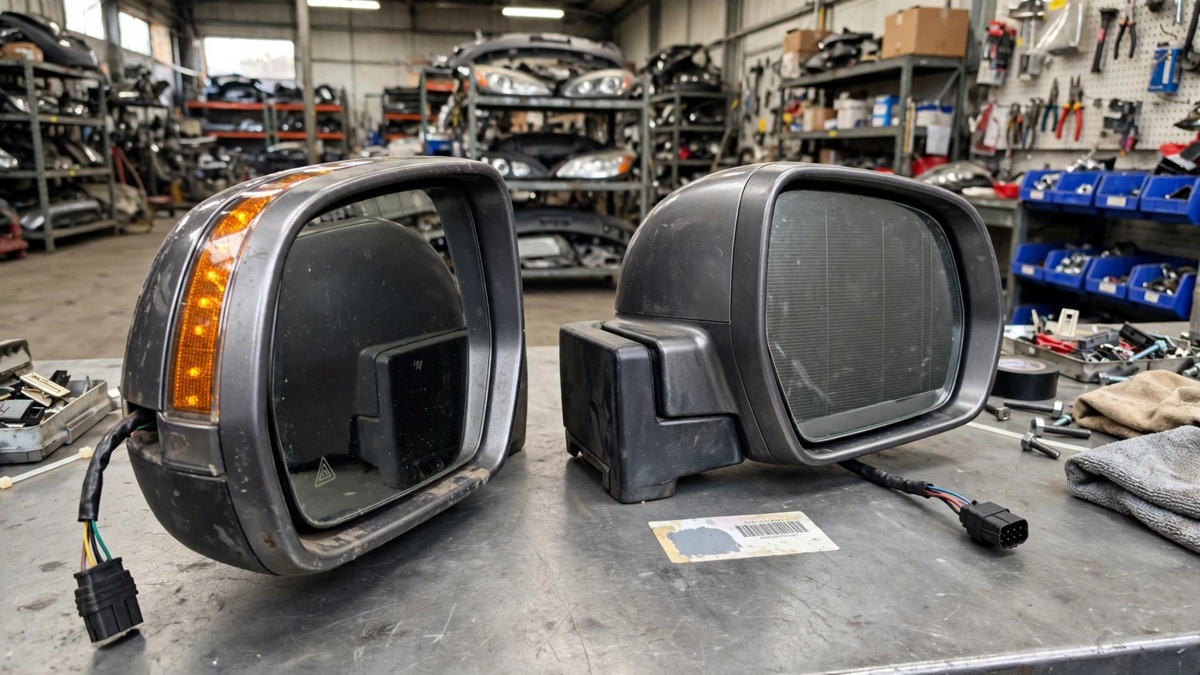
A modern mirror isn’t a piece of glass in a plastic shell. It can contain a folding motor, glass adjustment motors, a heating element, a turn signal, a puddle lamp, a blind spot indicator, and on some trucks a second convex spotter glass with its own motor. Each of those options changes the part number and the connector pin count.
Dealers price the assembly as one unit, unpainted. Add color-matched paint and a shop’s labor to transfer the glass, and the total climbs fast. Good used side mirrors already have the paint, the wiring and the correct optics.
What used side mirrors actually include
When a yard lists used side mirrors, most of the time you’re getting the full assembly: housing, mounting bracket, motors, glass and pigtail. Sometimes the glass has been robbed for a separate sale, or the pigtail was cut short during removal. Both are worth confirming; a cut connector turns a bolt-on into a splicing job.
Matching features before part numbers
Work through the option list on your own mirror before you shop:
• Power fold versus manual fold
• Heated glass (look for a defroster symbol or a two-wire element)
• Integrated turn signal in the housing
• Blind spot monitoring light in the glass
• Memory positioning, common on higher trim levels
• Camera for surround-view systems
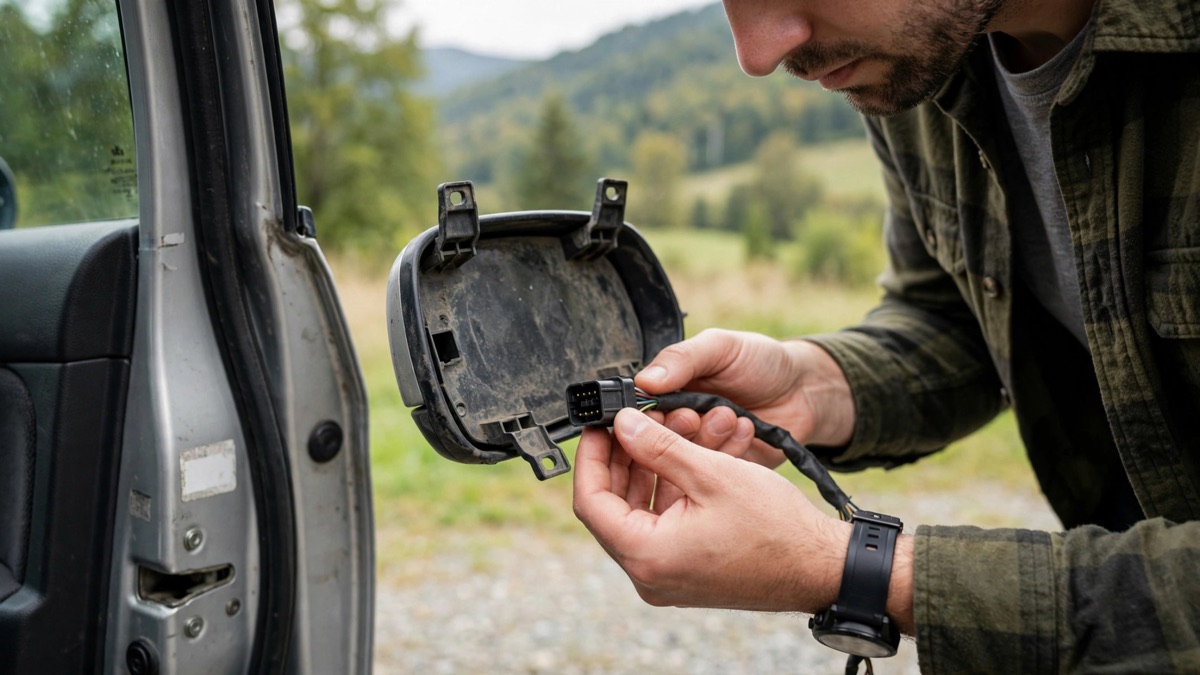
Count the pins in your connector and photograph it. That photo settles more fitment questions than the year and model ever will, and any seller of used auto body parts will ask for it.
Paint codes and color matching
Your paint code lives on the driver’s door jamb sticker, sometimes in the glovebox or under the hood. Give that code to the seller and ask them to check it against the donor vehicle. Even then, expect a slight difference: eight years in direct sun won’t match a garaged panel.
If the vehicle is a common silver or white, matching used side mirrors is usually easy. On reds, deep blues and pearl finishes, plan on a small blend at a body shop.
Where to find used side mirrors that fit
Alt text : Checking side mirror connector and tabs
You have four realistic sources, and they suit different buyers.
• Salvage yards with online inventory. Best mix of price and fitment help, since staff can pull the donor VIN and check options.
• Nationwide used parts networks. Wider stock for uncommon trims, though you’re trusting the listing.
• Local self-service yards. Cheapest by far, often $25 to $60, but you pull it yourself and there’s no warranty.
• Marketplace and forum sellers. Occasionally excellent, occasionally a broken housing wrapped in a towel.
Searching local inventory the right way
Regional supply matters more than people expect. In a large metro the part turns up within a day; in a rural area you may wait a week. A search for used body parts Austin TX, for example, surfaces both full-service yards and self-service lots, and the full-service ones are worth calling first because they can check the donor’s option list for you. Buyers running used body parts Austin TX searches are usually after something within driving distance, which is smart on a part this fragile.
If a local yard doesn’t have your mirror, ask them to check their network. Most yards trade daily with others nearby, and a part sourced that way still carries their warranty rather than a stranger’s promise.
Ordering used auto body parts online
Online sellers of used auto body parts can generally search by interchange number, which groups every trim and year sharing the same physical part. Give them your VIN, the connector photo and the paint code, then ask three questions: is the glass intact, is the pigtail full length, and are the mounting tabs unbroken. Tabs are the sneaky failure: a mirror can look flawless and still have a hairline crack where it bolts to the door.
What used side mirrors cost
Prices vary by vehicle and by how loaded the mirror is. Treat these as indicative ranges rather than quotes.
| Mirror type | Typical used price | Notes |
|---|---|---|
| Manual, no power | $20 to $45 | Common on older base trims |
| Power only | $40 to $95 | Widely available |
| Power, heated, signal | $80 to $180 | Most common modern setup |
| Power fold with blind spot | $150 to $350 | Trim-specific, harder to source |
| Camera or memory equipped | $200 to $500 | Often needs matching module setup |
Against a $400 to $700 dealer assembly plus paint, even the top of that range saves real money. Compare against new aftermarket too. Aftermarket replacement auto parts often undercut used on price but skip the paint, and the housings on cheaper units can fit loosely enough to buzz at highway speed.
Buying used doors and other body panels together
If the impact took more than the mirror, price the surrounding panels too. Used doors arrive either as a bare shell or as a complete unit with glass, regulator, lock and interior panel, and the complete version saves hours of transfer work. Doors move by freight rather than parcel, so budget for that.
Order the mirror and door from the same donor when you can. Same paint code, same age, same fade. Buying used car body parts as a matched set avoids the mismatched-panel look of a piecemeal repair.
Inspecting the part on arrival
Used side mirrors travel badly. Glass is fragile, housings crack under compression, and boxes get thrown. Work through this before the seller’s inspection window closes:
1. Open the box on camera and photograph any damage.
2. Check the glass for cracks, delamination and silvering loss at the edges.
3. Flex the mounting tabs gently and look for stress marks.
4. Compare the connector pin for pin against your old mirror.
5. Bench test the motors and heater before installation if you can.
Most sellers of used side mirrors offer a 30 to 90 day warranty on function. Cosmetic condition is sold as-is, so trust the photos over the description.
Frequently Asked Questions
Will used side mirrors from a different trim level fit my car?
Physically, often yes. Electrically, frequently not. Base and loaded trims share housings but use different connectors and pin counts, so a heated mirror with a signal won’t work on a plug wired for basic power adjustment. Match the pin count first and the trim badge second.
Do I need to program a replacement mirror?
Most don’t need programming. Mirrors with memory positioning, blind spot monitoring or cameras sometimes need a scan tool to register with the body module, particularly on European vehicles. Ask the seller whether the donor had the same options, and check with a shop before ordering camera-equipped units.
How much do used side mirrors cost compared with new?
Expect roughly a third to half of dealer pricing, and the used part usually arrives already painted. A loaded mirror that lists at $550 new often lands between $150 and $300 used. Self-service yards go lower still if you’re willing to pull it yourself.
Can I buy used doors and mirrors from the same donor vehicle?
Yes, and it’s worth asking for. A single donor gives you matching paint code, matching fade and matching hardware. Many yards will ship both on one pallet, which cuts freight compared with two separate used car body parts shipments. Ask early, before the donor gets dismantled further.
Conclusion
Finding good used side mirrors comes down to three photographs and one number: a shot of your connector, a shot of the mirror on the car, a shot of the paint code sticker, and your VIN. With those in hand, Quality Auto Parts can help match the part quickly. Check the mounting tabs, confirm the pigtail is full length, and inspect the glass the day it lands. Compared with new replacement auto parts, a used assembly usually turns up already painted and ready to bolt on.
Get the color code and connector photo together before you start calling around. If you’re unsure which version your vehicle uses, Quality Auto Parts can use your VIN to identify the right assembly and help point you toward the correct part. Find Quality Parts for Less.