The battery light flickers on during a night drive, the headlights dim at idle, and by morning the car won’t crank at all. Nine times out of ten that’s a charging fault, and the dealer quote for a brand-new unit lands north of $500 before labor. A used alternator from a reputable recycler like Quality Auto Parts often costs a fraction of that.
The catch is that not every salvage part deserves your money. Some are pulled from low-mileage wrecks with 30,000 miles on the odometer. Others sat in a rain-soaked yard for three winters with the connector open to the weather. Telling those apart is the whole game, and Quality Auto Parts can help you find a dependable used replacement without paying full retail prices.
Why a Used Alternator Is Often the Smarter Buy
Alternators are built to be rebuilt. The case, rotor, stator and pulley are heavy steel and copper pieces that outlast the vehicle around them. What actually fails is a short list of wear items: brushes, bearings, the voltage regulator, sometimes a diode in the rectifier bridge. A unit pulled from a car totaled at 40,000 miles has most of its service life ahead of it.
Price is the obvious draw. Depending on application, a used alternator typically runs $60 to $180, against roughly $180 to $400 for a decent remanufactured unit and $350 to $700-plus for OEM new. Treat those as indicative ranges. A diesel truck or European luxury application sits well above them.
A second reason matters more than price on older vehicles: original equipment fit. On a 2009 model with a superseded part number, a recycled factory unit beats an aftermarket approximation that fights your bracket, belt path and plug.
Where to Buy Used Alternators You Can Actually Trust
Not all sources are equal, and the cheapest listing rarely wins once warranty and freight are counted.
Full-service auto recyclers
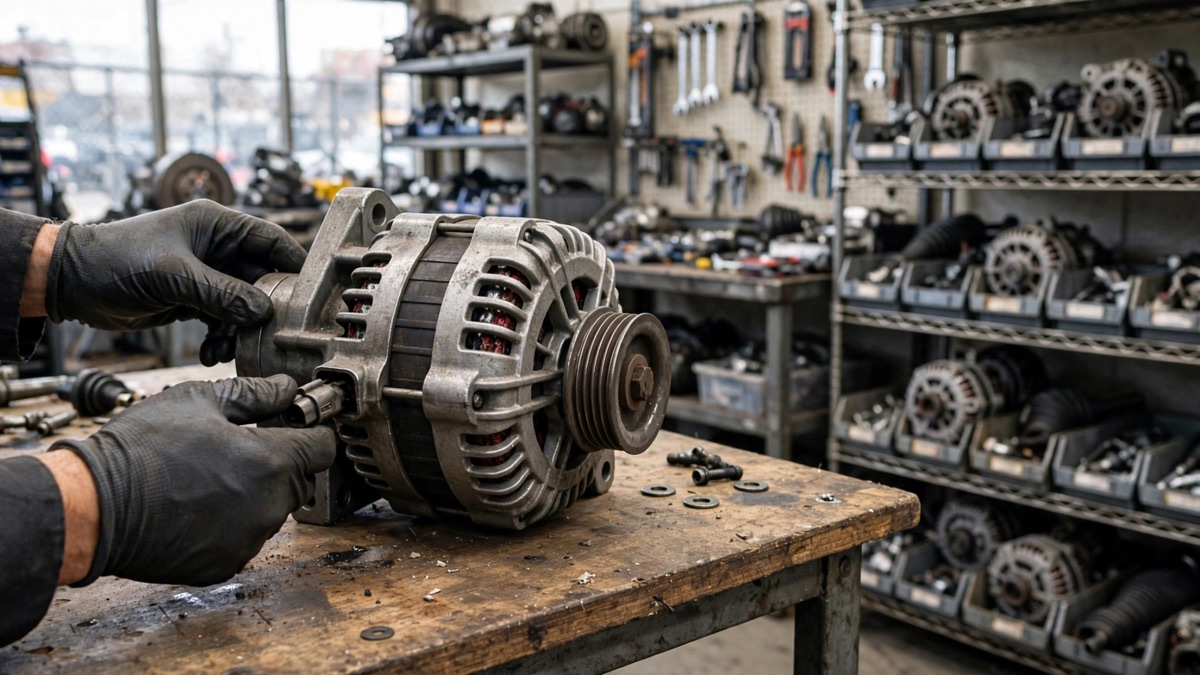
These yards pull, clean, test and inventory parts themselves. They log donor mileage, run each used alternator on a bench, and tie a stock number to the donor vehicle. You pay more than at a self-service yard and get a tested part with a written warranty. For used automotive electrical parts, this is usually the sweet spot.
Self-service (you-pull-it) yards
Cheap, sometimes remarkably cheap, and entirely at your own risk. You bring tools, pull the part yourself, and usually get no warranty or a very short exchange window. Fine if you can bench-test first.
Online used parts networks
A good broker queries hundreds of yards at once and comes back with several used alternators at different grades and prices. This is the fastest route for an uncommon application. Ask who holds the part, who pays return freight, and whether the quote includes the core charge.
Independent rebuilders
Local rebuilders suit older or unusual vehicles, since they’ll often rebuild the exact unit you bring in. Turnaround is typically two to five days.
| Source | Indicative price | Typical warranty | Best suited to |
|---|---|---|---|
| Full-service recycler | $90 to $180 | 90 days to 1 year | Most drivers wanting tested parts |
| Self-service yard | $25 to $60 | None, or 7 to 30 days | DIYers who can test before fitting |
| Online parts network | $80 to $200 | 90 days to 1 year | Rare or discontinued applications |
| Local rebuilder | $110 to $250 | 6 months to lifetime | Older vehicles, keeping your core |
Match a Used Alternator to Your Vehicle Before You Pay
This is where most bad purchases start. Two cars from the same year and trim can carry completely different charging hardware depending on the tow package, heated windshield or start-stop system. A used alternator that looks identical on the shelf may still be wrong for your build.
Start with the VIN and the interchange number
Give the seller your full 17-digit VIN. A decent counter person decodes the build and pulls the interchange number, the industry code that says which parts across which years and models are functionally identical. That interchange separates real replacement auto parts sourcing from guesswork.
Check amperage, pulley and plug
Three details cause most fitment failures:
• Output rating. A 90-amp unit where a 150-amp belongs keeps the battery alive but struggles with heated seats, a winch or an aftermarket stereo.
• Pulley type and groove count. Six-groove serpentine versus five, and clutch pulleys versus solid, are not interchangeable in practice.
• Connector and regulator control. Many post-2005 vehicles run computer-controlled charging over a LIN or PWM signal. A self-regulating unit in that socket will overcharge or never charge properly.
How a Used Alternator Should Be Tested and Graded
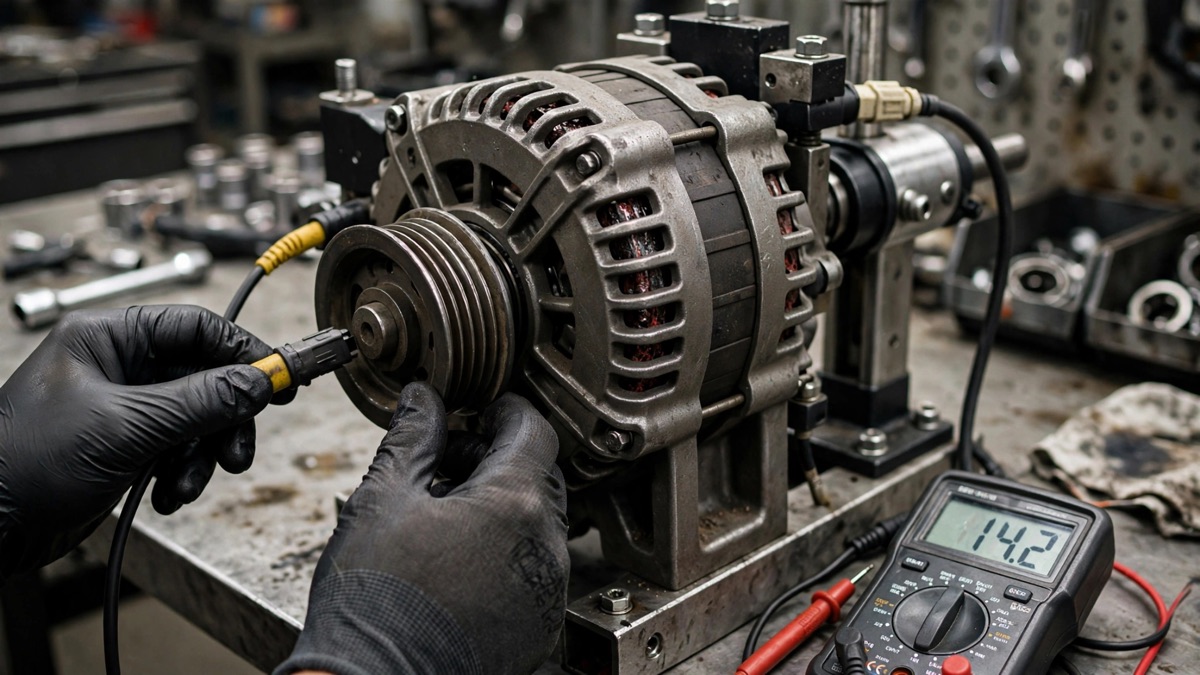
Alt text : Technician testing used alternator on bench
Ask what the used alternator went through before it hit the shelf. A serious operation bench-tests at multiple RPM points, confirming rated output and ripple, and spins the unit to listen for bearing noise. They should also know the donor vehicle’s mileage.
Most recyclers grade on an A/B/C scale. Grade A generally means under about 60,000 donor miles and no visible damage, Grade B sits in the middle, and Grade C means high mileage or cosmetic damage. On electrical components, Grade C is rarely worth the saving. Quality used auto parts suppliers publish the grade openly rather than making you ask twice.
Warranty, Core Charges and Returns on Used Auto Parts
Read these three lines before you pay:
1. Warranty length and type. Ninety days is common, six months to a year is better. Check whether it’s replacement-only or refunds cash, and whether labor is excluded.
2. Core charge. Expect roughly $20 to $60 held until your old unit ships back. Keep the box it arrived in.
3. Return window and freight. Thirty days is typical. Ask who pays return shipping on a wrong-fit part versus a failed one.
What to Send When You Request a Used Alternator
Suppliers can only match what you give them. Send this in one message and a firm quote usually comes back the same day:
• Year, make, model, trim and engine size
• The full VIN
• The number stamped or stickered on your existing unit
• A clear photo of the plug and the pulley
• Whether the car has a tow package, start-stop or upgraded factory audio
• Your ZIP code, for a real shipping figure rather than an estimate
Costs, Installation and What Still Goes Wrong
Swapping a used alternator runs one to two hours of labor on most front-wheel-drive cars, more if it sits low behind the engine. Budget $90 to $250 in shop time on top of the part.
Before you blame the alternator, have the battery load-tested and the belt and tensioner checked. A failing battery destroys a healthy charging unit, and a worn tensioner will squeal through a brand-new one within weeks. If the light returns days after fitting used automotive electrical parts, suspect the battery, a corroded ground strap or the main charging cable rather than the part you just bought. The same diagnostic order applies to most replacement auto parts.
Frequently Asked Questions
How long does a used alternator usually last?
It depends on donor mileage and storage. A tested part from a low-mileage wreck commonly gives several more years of normal driving, while one from a 180,000-mile vehicle may last a year. Ask for donor mileage, and pair the part with a healthy battery.
Can I test a used alternator before installing it?
Yes, and you should. Most auto parts stores bench-test a loose unit free, checking output voltage and current under load. That five-minute check catches worn brushes and noisy bearings before you spend two hours fitting it. Self-service yard purchases especially deserve this step.
Is a rebuilt unit better than a used one?
Rebuilt units get new brushes, bearings and often a new regulator, so they carry longer warranties. Used originals keep factory fit and cost less. On a newer vehicle with computer-controlled charging, an OEM recycled part often behaves better than a budget rebuild.
Do used auto parts come with any warranty?
Reputable suppliers of quality used auto parts warranty most items for 90 days to a year, covering the part but not labor. Self-service yards typically offer little or nothing. Get the terms in writing on the invoice, including the return window and who covers freight.
Conclusion
Buying a used alternator well comes down to four things. Give Quality Auto Parts your VIN, insist on a tested and graded part, confirm the amperage, pulley and plug match your build, and read the warranty before you pay. Do that and you’ll spend a third of dealer money on hardware that fits the way the factory intended. Skip those steps and you’ll do the job twice. Sorting out the battery and belt at the same time is worth the extra hour.
If you’re weighing up your options, Quality Auto Parts can help you speak with an experienced parts specialist who works from your VIN to get answers matched to your vehicle.