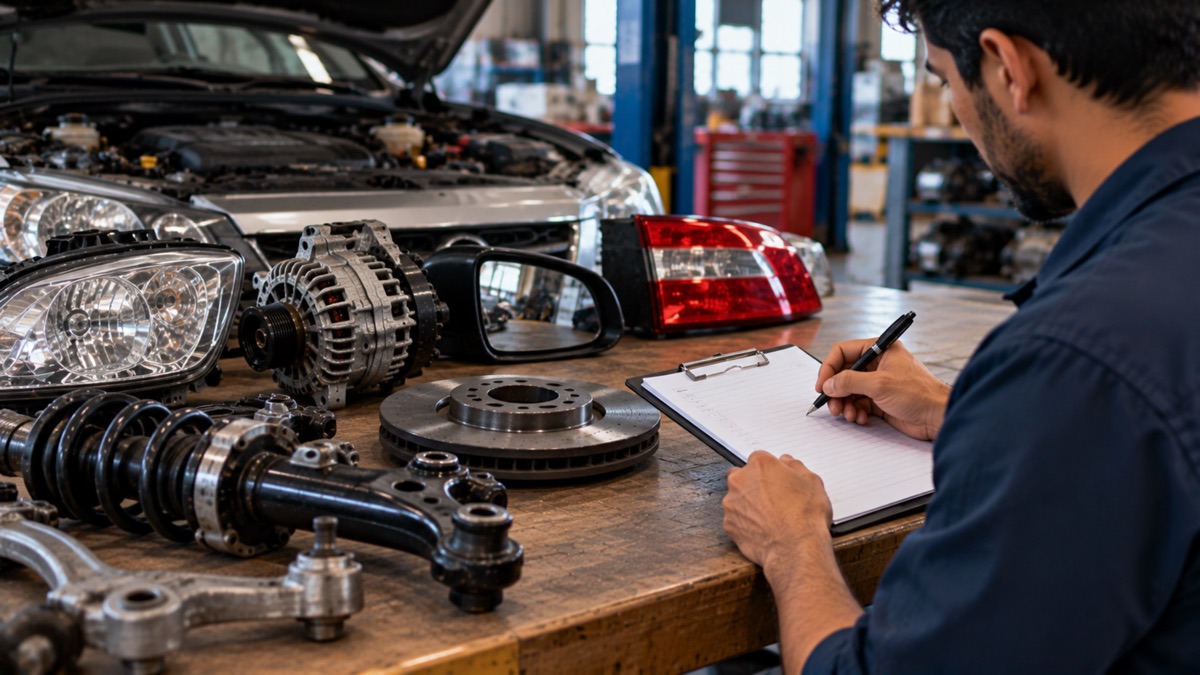
A friend spent nine days trying to buy a rear tailgate. Three suppliers quoted, two quotes were for the wrong trim, and the third part arrived with the wrong camera opening. The details he provided were accurate, but incomplete.
That’s a common cause of slow or failed purchases. A used auto parts request needs enough information for a supplier to identify one specific component. Knowing what to include in a used auto parts request can help avoid mismatches, and the checklist takes only a few minutes to prepare. Quality Auto Parts can help you gather the right details. Contact Quality Auto Parts to get started.
Why a Used Auto Parts Request Gets Ignored
Suppliers work through inbound messages in order of how quickly each can be answered. A note reading “need a transmission for a 2013 Escape” sits at the bottom of that pile, because answering it means a phone call.
Meanwhile, an auto parts request with a full VIN, a photo of the transmission ID tag and a stated budget gets quoted in ten minutes. Suppliers aren’t being difficult. They’re triaging, and completeness is what moves you up the queue.
Vehicle Details: The Non-Negotiables
The VIN, in Full
Seventeen characters give a recycler the model year, assembly plant, engine family, body style and restraint configuration. From that they can pull the original build record instead of inferring from a generic catalog, which is what makes VIN-based matching so much more accurate than a dropdown search.
Find it on the driver-side dashboard through the windshield, on the door jamb sticker, or on your registration. Send all seventeen. A partial VIN is close to useless, because the digits identifying plant and options sit in the middle.
When the VIN Isn’t Available
Sometimes the donor car is long gone. In that case, list year, make, model, trim, engine displacement, transmission type, drive layout and any factory option affecting the part, such as a towing package or a cold-weather package. It’s slower, but a well-described vehicle still lets you request a car part with reasonable confidence.
Part Details That Actually Identify the Component
Naming the part is the easy bit. Identifying it is the work. Include the position and side, always described as seen from the driver’s seat, and any number stamped, cast or printed on the original component. Alternators carry case tags, transmissions carry ID plates, modules carry printed part numbers, and cylinder heads carry casting marks.
Add photographs. Three is plenty: the part in place, the part removed, and a close shot of the tag with the grease wiped off. Shoot in daylight rather than with a flash, which blows out the stamped characters you need readable.
Where a Used Auto Parts Search Falls Short Without Numbers
Filters can only narrow by what the catalog knows. If a component changed partway through a production run, a used auto parts search on year and model will happily return both versions and leave you to guess. The OEM number is what breaks the tie, and it’s why suppliers ask for it before anything else.
Condition, Grade and Budget
Being vague about condition costs you time. Most recyclers grade on donor mileage and damage zone, and stating what you’ll accept lets them filter immediately:
| Grade | What it usually means | Sensible for |
|---|---|---|
| A | Low donor mileage, no damage in that area | Engines, transmissions, visible panels |
| B | Mid-range mileage, light wear | Most mechanical replacements |
| C | Higher mileage or cosmetic damage | Brackets, interior pieces, budget jobs |
| As-is | Untested, no warranty | Rebuilders and salvagers |
Say your budget too. People worry that naming a number invites a higher price; in practice it does the opposite, because it stops a supplier quoting an A-grade unit when a B-grade one would have suited. As a rough sense of scale, a used alternator often sits in the 60 to 200 dollar band, a used engine anywhere from around 800 to several thousand. Indicative only.
Delivery and Timing Information
Two lines in your auto parts request prevent most unpleasant surprises. State whether the delivery address is residential or commercial, since freight to a residential address frequently needs a liftgate at additional cost. And state your deadline honestly, including whether the vehicle is drivable in the meantime.
Heavy items change the calculation. Engines, transmissions, doors and bumper assemblies move on pallets by freight rather than parcel service, with longer transit and an expectation that you inspect before signing the delivery receipt. Mention upfront if you can’t unload a pallet.
The Complete Used Auto Parts Request Checklist
Copy this and keep it somewhere. Every item earns its place:
1. Full 17-digit VIN, or complete vehicle description with trim and engine.
2. Part name, position and side.
3. OEM, casting or tag number from the original part.
4. Two or three clear photographs.
5. Grades you’ll accept, and whether you need it tested.
6. Budget range.
7. Deadline, and vehicle drivable or not.
8. Delivery address type and unloading capability.
9. Phone number and email you check.
Nine lines. A used auto parts request containing all of them can usually be quoted without a single follow-up question, which is the whole objective.
What You Can Leave Out of a Used Auto Parts Request
Plenty of people write three paragraphs about how the failure happened. It rarely helps. Suppliers don’t need the diagnostic story, the mechanic’s opinion, or the history of the car unless something in it changes what fits. The exceptions are worth knowing:
• Mention it if the vehicle already has a replacement engine, transmission or module fitted, because the VIN will then describe a configuration the car no longer has.
• Mention any accident repair near the part in question.
• Mention aftermarket modifications that alter mounting points or wiring.
Otherwise, keep it factual and short. Nobody reading a hundred inbound messages a day rewards prose.
After You Send It
A used auto parts request for a common item is often quoted within hours. Engines, transmissions and unusual trim pieces can take one to three days, particularly if the supplier needs to confirm a donor vehicle is still available to dismantle. If you hear nothing after two working days, follow up once with the same details rather than starting a fresh request an auto part enquiry elsewhere. Duplicate requests through multiple channels slow things down.
When quotes come back, compare landed cost rather than headline price. Part, shipping, core charge and warranty term together decide which offer is actually better, and a cheaper part with a short warranty and heavy freight often isn’t.
Frequently Asked Questions
How detailed does a used auto parts request need to be?
Detailed enough that nobody has to ask a follow-up question. In practice that means the VIN, the part with its position and side, a number off the original component, photographs, and your budget and deadline. Everything beyond those is optional, and most explanation of the failure itself is unnecessary.
Can I request a car part without knowing what it’s called?
Yes, and it happens constantly. Photograph the component from two or three angles, describe where it sits and what it does, and include your vehicle details. Experienced parts staff identify components visually every day, and a clear photo beats a confidently wrong part name.
How is a used car parts request different from ordering new?
A new order is a catalog transaction; the part either exists or it doesn’t. A used car parts request depends on what donor vehicles a recycler currently holds, so availability, grade and price all vary by week. That’s also why supplying complete information matters far more.
Is there a charge to request an auto part quote?
Submitting a request and receiving quotes is normally free with no obligation to buy. Costs start once you accept a quote. Be wary of any service charging a fee simply to search inventory or to reveal a supplier’s contact details, since that isn’t standard practice in this market.
Conclusion
Think of the message you send as a specification rather than an enquiry. A complete used auto parts request identifies one vehicle, one component, and one set of acceptable conditions, allowing a supplier to respond without needing to call. That can turn a nine-day search into a same-afternoon quote. Gather the VIN, part numbers, photos, and your requirements before writing, and the process can become less frustrating and more cost-effective.
Getting confusing quotes for a part? Contact Quality Auto Parts to review your vehicle and part details, check availability and pricing, and explore more options in the collection. Reach out to learn more and get help with your request.