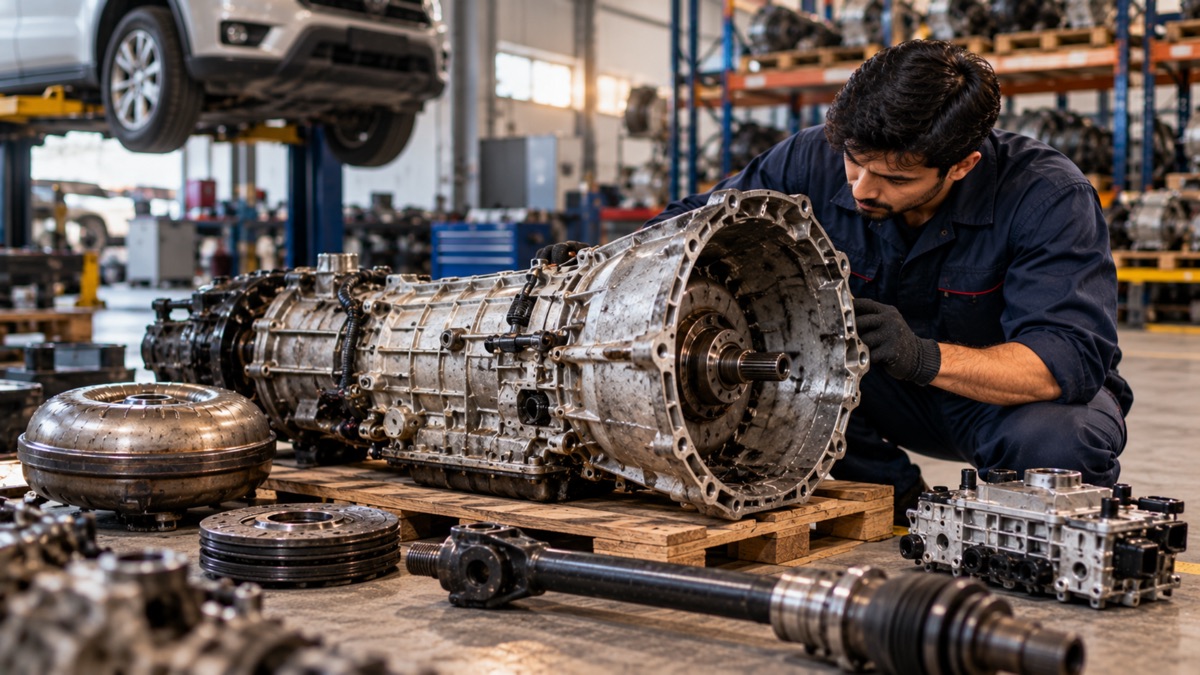
Your gearbox starts slipping on the highway at 118,000 miles, and the rebuild quote comes back at $3,200. A used transmission from a low-mileage donor might cost a third of that, freight included. It can be a sensible option, but units that look identical may still differ mechanically or electronically. That’s why checking used transmission fitment and condition before you order matters.
Many returns stem from a missing tag photo, an unshared VIN, or an overlooked installation step. Quality Auto Parts can help you check compatibility and ask the right questions before buying. Share your vehicle details with Quality Auto Parts to help avoid a mismatch and a week of downtime.
Why a Used Transmission Fits On Paper but Not in the Car
Bolt pattern is the least of your worries. Plenty of units share a bellhousing and nothing else. Gear ratios and final drive vary by engine, trim and axle package, so a used transmission from a 2.4-litre car will often bolt to a 3.5-litre engine, then shift badly or throw ratio-error codes within fifty miles.
Drivetrain layout is the next trap. A two-wheel-drive unit has a different tailhousing and output shaft than the all-wheel-drive version, and a transfer case adapter isn’t a bolt-on fix. Manufacturers also split production mid-year, which is how buyers end up with the right model year and the wrong valve body. On late-model vehicles the control module carries calibration data tied to the original car, so the used transmission that fits physically may still need flashing before it drives properly.
Reading the Tag: VIN, Interchange and Build Date
Every used transmission carries an identification tag, stamping or barcode from the factory. That code, not the vehicle description, is what a recycler matches against.
Where the identification number lives
Look for a metal tag on the case, usually near the bellhousing or on the pan rail, or a barcode sticker on top of the housing. On many vehicles the transmission code also appears in the door jamb option list or the RPO sticker in the glovebox or spare wheel well. Photograph all of them. If your old unit is already out and the tag is unreadable, casting numbers on the case body give a recycler a starting point.
Why year, make and model isn’t enough
Interchange databases group parts by application, not by marketing name. One model year can carry three or four distinct part numbers depending on engine, drive type, tow package and emissions calibration. Sending your full 17-digit VIN lets the yard query the exact build record, which is the single highest-value thing you can do when buying used transmissions from any source.
Automatic Versus Manual: Different Checks Entirely
The inspection you should ask for changes completely between the two.
Buying a used automatic transmission
Nobody road-tests a used transmission on a shelf. What a serious yard can do is inspect the pan, check fluid colour and smell, look for clutch material on the magnet, rotate the input shaft, and confirm the case and cooler lines are undamaged. Ask whether the torque converter is included and whether it was flushed. A used automatic transmission shipped with a contaminated converter will kill itself on the new fluid within weeks, and most warranty claims that get denied trace back to exactly this.
Buying a used manual transmission
Here you can learn more by hand. A used manual transmission can be shifted through every gear on the bench, and the input shaft should turn smoothly with no notchiness or grinding. Ask about bearing noise recorded from the donor, synchro condition, and whether the clutch fork, release bearing and pilot bearing are included. They usually aren’t, and replacing them while the unit is out costs a fraction of doing it later.
What a Used Transmission Assembly Should Include
“Assembly” means different things at different yards, so confirm the contents in writing before you pay:
• Torque converter: commonly included on automatics, but not always. Ask directly.
• Control module or valve body: sometimes attached, sometimes removed. Programming may still be needed.
• Bellhousing and tailhousing: confirm these match your drivetrain, not just the model.
• Sensors and solenoids: frequently pulled and sold separately.
• Fluid: almost never included. Budget a full fill of the correct specification.
• Mounts, brackets and cooler lines: usually your responsibility.
A complete used transmission assembly costs more up front and less overall, because a missing solenoid pack ordered mid-install adds days to the job.
Mileage, Grade and Realistic Pricing
Donor mileage matters more than calendar age. A ten-year-old unit with 55,000 miles and clean maintenance history is usually a safer buy than a five-year-old unit with 140,000 hard miles.
| Donor mileage | Typical grade | Indicative price band | Sensible use |
|---|---|---|---|
| Under 60,000 | A | Higher end of the range | Vehicles you plan to keep several more years |
| 60,000 to 120,000 | B | Mid range | Most everyday repairs |
| Over 120,000 | C | Lowest | Older vehicles, short-term keepers |
As a rough guide, common passenger-car units often land somewhere between $600 and $1,800, while heavy-duty truck and less common applications run higher. Treat those as indicative bands that move with availability, not quotes. Freight is a real cost too: a used transmission ships palletised, adding roughly $150 to $400 depending on distance and whether you have a dock.
Warranty, Core Charges and Freight on Used Transmissions
Warranty terms on used transmissions usually run from 90 days to a year, occasionally longer on drivetrain with an extended option. Read what’s covered. Parts-only replacement is standard; labour cover costs extra and is normally capped. The conditions matter more than the headline number: most policies require installation by a licensed shop, a new filter and fluid, a flushed or replaced cooler, and a fresh torque converter seal.
Core charges catch first-time buyers off guard. You’ll often be billed an extra $100 to $400 that’s refunded when your old unit goes back on the pallet the new one arrived on. Keep the pallet and the paperwork. Cores usually have a return window of 30 days or so, and a missed window means the charge stands.
How to Order a Used Transmission Without an Expensive Mistake
1. Send the full 17-digit VIN, plus photos of the transmission tag and any RPO sticker.
2. State engine size, drive type, trim, and whether the vehicle has a tow package.
3. Ask what was inspected, what the donor mileage is, and how it was verified.
4. Confirm in writing what ships with the unit and what doesn’t.
5. Get the warranty length, the core charge, the core return window and the freight cost as numbers.
6. Ask whether module programming is required, and who does it.
Buyers who supply this upfront get quoted faster and more accurately. Used OEM transmissions from a properly documented donor are a solid repair path, but only when the paperwork matches the vehicle in your driveway.
Frequently Asked Questions
How many miles is too many on a used transmission?
There’s no hard cutoff, but most buyers look for donors under about 100,000 miles for a daily driver. Above that, the price should drop noticeably and the warranty becomes the deciding factor. Maintenance history and fluid condition tell you more than the odometer reading alone.
Do I need to reprogram the module after fitting one?
Often, yes, on vehicles from roughly the mid-2000s onward. Adaptive shift strategies and immobiliser links mean a used automatic transmission may need the module flashed to your VIN before it shifts correctly. Ask the seller whether programming is required and budget shop time for it.
Are used OEM transmissions better than remanufactured ones?
They’re different trade-offs. Used OEM transmissions are original factory units at a lower price with shorter warranties. Remanufactured units cost more but carry replaced wear components and longer cover. For an older vehicle you’ll keep two or three years, a good used unit usually makes better financial sense.
What is a core charge on a used transmission assembly?
It’s a refundable deposit on your old unit, typically $100 to $400. When you return the failed gearbox within the stated window, that amount comes back to you. Recyclers use cores for rebuildable stock, so keep the shipping pallet and follow the return instructions exactly.
Conclusion
Ordering a used transmission is mostly a documentation exercise. Match the tag and VIN rather than relying on the model name, ask what was inspected and the donor mileage, confirm exactly what ships in the crate, and review the warranty before paying. Then budget for freight, fluid, a filter, and any programming your vehicle needs. Done carefully, this can keep a sound vehicle on the road for a fraction of a rebuild.
Unsure which unit fits your vehicle? Contact Quality Auto Parts with your VIN and transmission tag photos. Get in touch to check compatibility, availability, pricing, and other options in the collection.