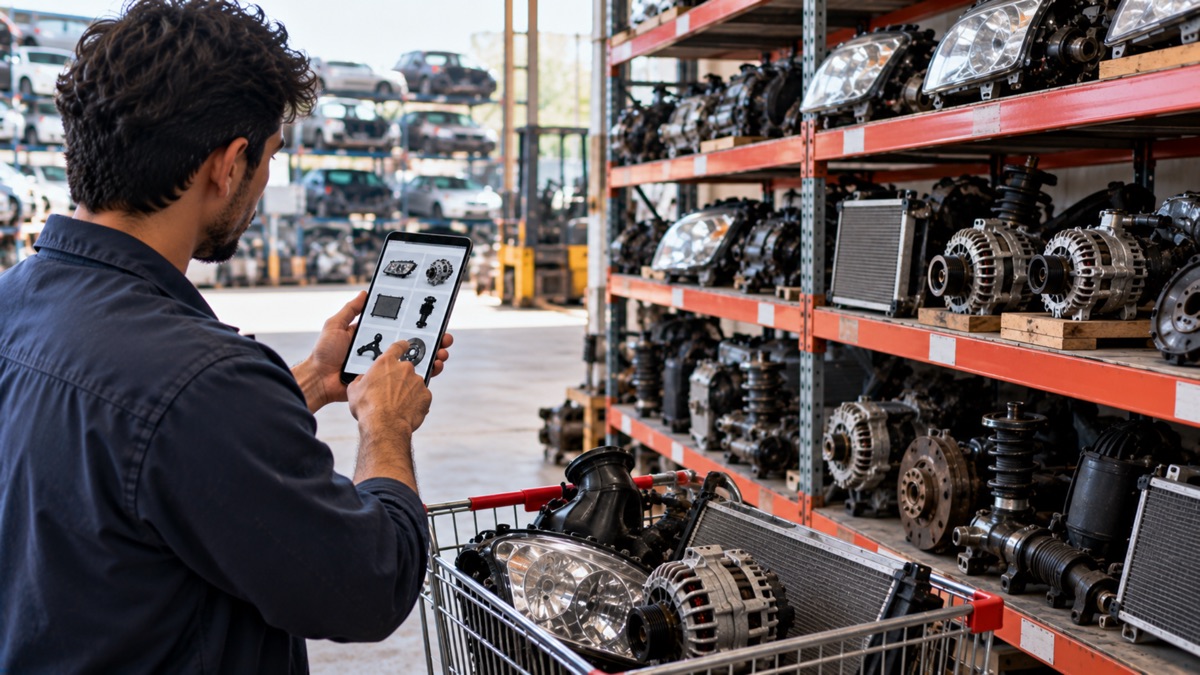
You type “2016 Honda Accord alternator” into a site, get 340 results, and every one shows the same generic stock photo. Half don’t list mileage, and none says which alternator variant fits. Twenty minutes later, you’re no closer to finding the right part.
That’s why used auto parts search platform features matter: a site with millions of listings is only useful if it can identify which parts fit your vehicle. Quality Auto Parts can help you understand what to look for when comparing search tools. Contact Quality Auto Parts to learn more about finding compatible parts.
What a Used Auto Parts Search Platform Is Really Doing
Behind the search box sits a matching problem. Recyclers catalog used automotive parts against interchange numbers, which group components that physically fit across different models and production years. Your job, and the platform’s, is to turn a vehicle description into the right interchange, then show only the stock that carries it.
Everything else is packaging. Filters, photos, checkout flow, seller ratings, all of it helps, but none of it fixes a bad match. If a platform is guessing at fitment, you will find out in your driveway with the part half-installed.
Feature 1: Matching by Vehicle, Not by Keyword
VIN Decoding That Actually Changes Results
A platform that accepts your VIN and then returns the exact same list it would have shown for year, make and model is doing nothing with it. Test this. Enter a VIN, then enter just the vehicle description, and see whether the result count moves. On any car with trim-dependent parts, and that’s most of them, it should.
Interchange Coverage and Sub-Model Splits
Good systems know that a part changed mid-year, that the towing package version uses a different bracket, and that the hybrid variant shares nothing with the standard car. When you find used auto parts online through a system with real interchange data, the listing will usually tell you which other vehicles the part also fits. That cross-reference is a strong signal the catalog is genuine.
Features 2 and 3: Live Inventory and Honest Grading
Stale listings are the biggest single frustration in a used auto parts search. A part sold three weeks ago should not still appear as available. Look for platforms that show a last-updated timestamp, or that pull directly from yard inventory systems rather than from a monthly uploaded spreadsheet.
Grading is the second half of the same problem. Reputable listings state donor mileage, a grade, and the damage zone of the donor vehicle. A used part finder that shows only a price and a picture is asking you to accept unknown risk. Mileage on a used engine changes its value by hundreds of dollars, and that number should never be a mystery.
Features 4 and 5: Transparent Pricing and Real Shipping Numbers
Price alone tells you little. What matters is the landed cost, which means part price plus shipping plus any core charge, minus whatever the core refund brings back. A cheap transmission with a 400 dollar freight bill loses to a pricier one that ships from two states away. Ranges here are indicative and shift with fuel and distance.
Watch for these specifics in any listing:
• Whether a core charge applies, and how much of it is refundable
• Whether the quoted shipping assumes a commercial address with a dock
• Whether liftgate service costs extra on freight items
• Who pays return shipping if the part doesn’t fit
• Whether the item ships crated or on a pallet
Platforms that hide all of this until the final checkout screen are not saving you money. They’re deferring the bad news.
Features 6 and 7: Warranty Terms and a Reachable Human
Warranty terms on used parts typically run 30 to 90 days for parts only, with extended options sometimes available on engines and transmissions. What matters more than the length is whether the term appears on the listing page before you commit. If you have to email someone to learn the warranty, the answer will change depending on who replies.
The seventh feature is the least technical and the most predictive: can you reach a person who knows parts? Complicated requests, rebuilt vehicles, and obsolete trims all need judgement. A phone number answered by someone who asks for your VIN is worth more than any filter interface.
Marketplace, Auto Parts Locator Network or Direct Yard?
| Platform type | Best for | Trade-off |
|---|---|---|
| Open marketplace | Common bolt-on parts, price comparison | Fitment accuracy varies by seller |
| Auto parts locator network | Hard-to-find or regional stock | Quotes may take hours, not seconds |
| Direct recycler site | Engines, transmissions, warranty clarity | Smaller catalog, one location’s stock |
| Request-based service | Anything unusual or trim-specific | Requires you to write a good request |
Most people end up running two kinds of used auto parts search. A marketplace handles the mirror and the taillight; a locator network or request service handles the drivetrain part nobody stocks. There’s no single best answer, only the right tool for the part in front of you.
Red Flags in a Used Auto Parts Search
Stock Photography and Copy-Paste Descriptions
If a used part finder shows catalog renders instead of photos of the actual shelf item, the seller may not physically hold the part. Real recyclers photograph what they pulled, scratches included. A used automotive parts listing with three angles and a visible tag is worth twice one with a manufacturer image.
Fitment Claims That Are Too Broad
A listing claiming to fit eleven model years across four nameplates is either citing genuine interchange data or hoping you won’t check. Cross-reference the OEM number yourself. Two minutes of verification beats a week of return shipping.
Testing a Platform in Ten Minutes
Before you trust any used auto parts search with a real order, run a dry run using a part you already know. Pick something from a vehicle in your driveway, then check:
1. Does entering the VIN change the results, or not?
2. Is donor mileage shown on mechanical parts?
3. Are shipping and core charges visible before checkout?
4. Is the warranty stated on the listing page?
5. Can you reach a human within one call?
Three or more failures and you should find used auto parts somewhere else. This ten-minute check has saved more people money than any coupon code.
Frequently Asked Questions
Is a used auto parts search cheaper than buying new?
Usually, yes. Used OEM components commonly land somewhere between 30 and 70 percent below new dealer pricing, though the gap narrows on high-demand or newly released models. Savings are largest on expensive assemblies like engines, transmissions, body panels and electronic modules, and smallest on cheap consumables.
Can I search for used auto parts online without a VIN?
You can, and for body panels, glass and wheels it often works fine. For anything electronic, drivetrain-related or affected by a mid-year change, searching without a VIN raises your odds of a wrong part significantly. If you have the VIN, use it every time.
How do I know a listed part was actually tested?
Ask directly and get it in writing. Alternators, starters and modules can be bench tested; engines can be compression tested; transmissions can be inspected for fluid condition and metal. A seller who can describe the specific test performed is more credible than one who simply says “tested and working.”
What if the part arrives and doesn’t fit?
Photograph everything before installing, including the tag and the packaging, and report the mismatch inside the stated inspection window. Most sellers will exchange or refund a genuine fitment error, but the window is often short and installation usually voids returns. Never fit a part you’re unsure about.
Conclusion
The best used auto parts search tools eliminate listings that can’t fit your vehicle and clearly describe the condition of the remaining options. Filters, ratings, and discounts come after that. Judge a platform by whether your VIN changes the results, whether mileage and grade are stated, and whether the total cost is visible before checkout. These details can save time and help you feel more confident about what’s arriving.
If you’re getting vague or conflicting fitment information, contact Quality Auto Parts with the part and vehicle details. Ask about compatibility, current pricing, and more options in the collection—or reach out to learn more.