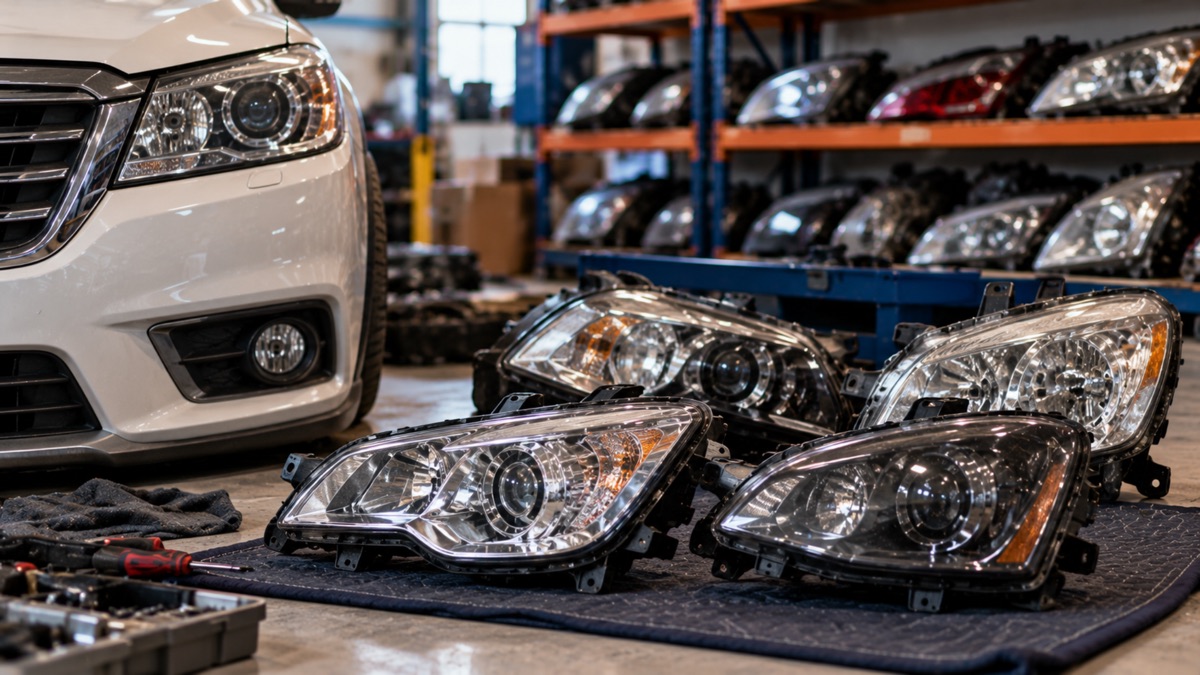
A cracked lamp housing after a low-speed parking lot bump is one of those repairs that feels wildly out of proportion to the damage. The dealer quotes $700 for one side on an ordinary sedan, more if it has adaptive or LED lighting. Used headlights for your car from a matching donor often cost $90 to $250 and retain the factory casting, brackets, lens coating, and connector.
The catch is fitment. Lamp assemblies can change across model years, so check the part number before ordering to avoid a return. Quality Auto Parts can help you confirm the details. Share your vehicle information with Quality Auto Parts to find a suitable match.
Why Used Headlights Usually Beat the Alternatives
You have three routes to replacement auto parts here: a new OEM assembly, an aftermarket copy, or a factory unit from a salvage vehicle. New OEM fits perfectly and costs the most. Aftermarket assemblies are cheap, but lens plastic and internal reflectors are often lower grade, beam patterns can be sloppy, and some units aren’t certified for road use in every state.
Used headlights sit in between and, for most repairs, win on value. You’re buying the original part, which means the mounting tabs line up, the beam pattern matches the other side, and the plastic ages at the same rate as the lamp you’re keeping. The trade-off is condition: a used lens may show haze or micro-scratching. On a five-year-old car, that’s usually irrelevant. On a two-year-old car with pristine lighting, ask for a low-mileage donor and photographs in daylight.
Match the Part Number, Not the Model Year
Almost every fitment mistake traces to the same shortcut: searching by year, make and model. That description isn’t precise enough for used headlights.
Where the number is stamped
Look on the back of your existing lamp, near the mounting flange or on the housing rib. You’ll usually find a manufacturer part number, sometimes a supplier code from a lighting maker, and often a date stamp. Photograph all of it before ordering. Also photograph the connector: pin count and shape are the fastest way for a recycler to confirm you’re being sent the right variant.
The option traps that catch buyers
The same body can carry three or four lighting variants in one model year. Base halogen, projector halogen, HID, full LED, plus adaptive systems that steer the beam with the steering wheel. Add auto-levelling and cornering lamps, and the count of distinct assemblies grows fast. Sending your full 17-digit VIN lets a supplier check the exact build sheet, which is worth doing for lighting and for any other used body parts you order at the same time.
Halogen, HID and LED: Get the Technology Right
Swapping technologies isn’t a bolt-on job. Used headlights have to match the lighting system your car was built with. An HID assembly needs a ballast and igniter your halogen car doesn’t have. LED units usually need a driver module and often communicate with the body control module, so a mismatched lamp can throw a fault light or simply not illuminate. If your car left the factory with halogen, source a halogen unit unless you’re prepared for wiring work and possible coding.
Ask which components are included. Many salvage lamps ship without bulbs, and HID assemblies frequently arrive with the ballast removed and sold separately. Confirm before you pay, because a ballast bought after the fact can cost as much as the housing.
Grading Used Headlights and Used Tail Lights Honestly
Lighting is graded on cosmetic and structural condition rather than mileage. What matters is the lens, the tabs and the seal.
| Grade | Condition | What it means for you |
|---|---|---|
| A | Clear lens, all tabs intact, no moisture staining | Fit and forget, priced highest |
| B | Light haze or minor scuffing, tabs intact | Fine after a polish; the sensible buy on older cars |
| C | Heavy haze, yellowing, one repaired or missing tab | Budget option, expect to restore the lens |
Used tail lights follow the same logic but fail differently. Their common issues are cracked lens segments, brittle mounting studs and corroded bulb sockets. Ask for a photo of the socket side, not just the pretty face, on any used tail lights you’re considering.
Checks to Run Before You Pay
Whatever grade you settle on, run these checks before paying for used headlights.
• Mounting tabs: the most common failure point. One snapped tab means a lamp that never sits flush. Ask for a photo of every tab.
• Moisture staining: a white tide mark inside the lens means the seal has failed. Walk away.
• Lens clarity: haze polishes out, deep crazing doesn’t.
• Connector condition: check for melted pins or green corrosion.
• Internal reflector: flaking chrome inside the housing kills beam quality even if the lens looks fine.
• Adjuster screws: these seize and snap. A frozen adjuster makes aiming impossible.
Run the same checklist across other used car body parts you’re sourcing for the repair. Grille clips, bumper brackets and mounting panels are usually damaged in the same impact, and buying them together saves a second freight charge.
Shipping and Returns on Used Auto Body Parts
Used headlights are fragile and awkward to ship. A properly packed assembly arrives double-boxed with foam around the lens and the connector taped down. Ask how the seller packs used auto body parts before ordering, and photograph the box before opening it if there’s any visible crush damage, because transit claims depend on that photo.
Freight cost is worth checking too. A single lamp ships as a parcel for $15 to $40, but pair it with a bumper cover or a fender and you’re into oversized shipping. Bundling used car body parts into one shipment is almost always cheaper than sourcing each piece separately, and it means one return process if something arrives wrong.
Read the return window before you buy. Thirty days is common on used body parts and most replacement auto parts, though electrical items run shorter. Test-fit the lamp the day it arrives rather than waiting for your body shop appointment.
How to Ask for the Right Used Headlights
Send four things and you’ll cut the back-and-forth to one message: the full VIN, a photo of the part number on the back of your old lamp, a photo of the connector, and which side you need. Say driver or passenger side explicitly, because left and right conventions differ between suppliers.
Then state the condition grade you want and your timeline. If you’re paying for a paint blend and a shop slot on Friday, say so. A recycler who knows the deadline will tell you whether a matching unit is on their shelf or has to come from a partner yard three states away, which changes delivery by days.
Frequently Asked Questions
Do used headlights come with bulbs?
Often not, and it varies by seller. Halogen bulbs are cheap to replace, but HID and LED components are not, so confirm in writing whether the bulb, ballast or driver module is included. Assume you’ll need new bulbs and budget accordingly, then treat anything included as a bonus.
Can I fit a lamp from a different trim level?
Sometimes, but check the wiring first. A projector or LED unit needs the electrical architecture that came with that trim, and fitting one to a base-spec car can mean a new harness, a module and coding. If the connector pin count differs from your original, treat it as a different part.
How do I fix hazy lenses on used headlights?
A polishing compound and a UV-resistant clear coat restore most lightly hazed lenses in about an hour. Deep crazing or internal fogging can’t be fixed from the outside. If a lamp is cloudy on the inside, the seal has failed and the assembly will keep collecting moisture.
Are used tail lights safe to buy second hand?
Yes, provided the lens is uncracked and the socket is clean. Check for water staining, brittle mounting studs and corrosion on the contacts, all common on older vehicles. A quick continuity check before installation confirms the brake, tail and indicator circuits work as they should.
Conclusion
Buying used headlights is straightforward once you stop searching by model name and start matching part numbers, connectors, and lighting technology. Photograph your old lamp, send the VIN, ask for daylight images of the tabs and lens, and confirm what’s included before you pay. Choose a grade that suits your car’s age rather than paying for perfection you won’t notice. Handled this way, a repair that started as a $700 dealer quote may cost much less.
Not sure which variant your vehicle takes? Contact Quality Auto Parts with your VIN and a couple of photos. Get in touch to check fitment, current prices, and available options in the collection.