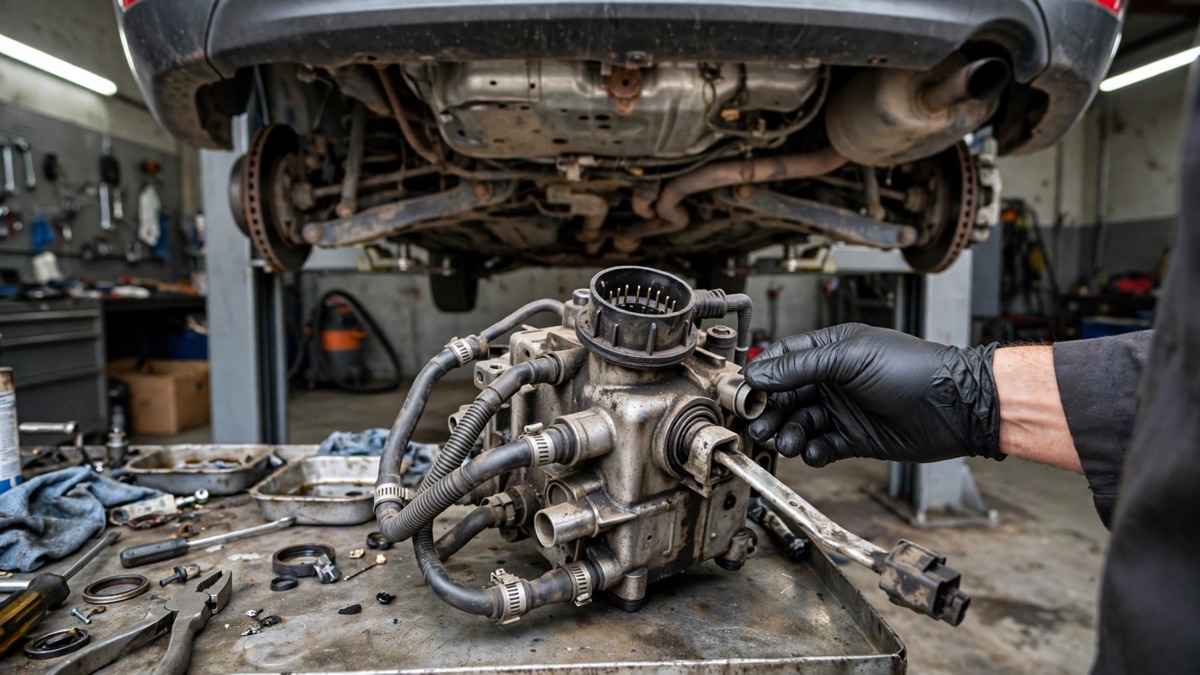
The car cranks longer than it should, stumbles on hard acceleration, and last week it stalled at a light and restarted fine. Then you notice the whine from the tank has turned into a groan. That’s a classic fuel delivery story, and it’s the point where most people start pricing out a used fuel pump against a new OEM assembly costing several times more. Quality Auto Parts can be a useful source when comparing used fuel pump options for your vehicle.
A used fuel pump is a reasonable recycled buy, but it needs more care than a starter or a blower motor. Pumps wear on the inside where you can’t see, and tank modules vary wildly between trims. Compatibility and condition are the whole job. Before choosing a replacement, Quality Auto Parts recommends paying close attention to the vehicle’s year, make, model, engine and exact pump assembly specifications.
How a Fuel Pump Fails, and How to Be Sure
Most modern pumps sit inside the tank, cooled and lubricated by the fuel around them. They wear from running low on fuel, from contaminated fuel, and from a clogged filter making them work against restriction. Brushes wear, impellers erode, pressure drops off under load.
Symptoms Worth Trusting
Extended cranking after the car has sat overnight suggests the pump isn’t holding residual pressure. Hesitation or sputtering under heavy throttle points to a pump that can’t hold volume when demand rises. A loud whine from the tank is a warning, not a verdict. Sudden no-start with strong cranking and no fuel pressure is the clearest sign of all.
Tests Before You Spend Money
Check the fuel pump fuse and relay. Listen for the two-second prime when you turn the key to run. Put a gauge on the rail and compare against factory spec at idle and under load, then watch how fast pressure bleeds off after shutdown. A clogged filter, a failed relay or a chafed harness wire can imitate a dead pump exactly, and all three cost far less to fix.
In-Tank Modules vs Standalone Pumps
This distinction drives most of the price difference. A standalone unit is the bare motor and impeller, sometimes with a strainer. A module is the full assembly: pump, reservoir bucket, level sender, a regulator on many designs, and the top hat with its electrical and fuel line connections.
Modules cost more but avoid transplanting a used fuel pump into your old housing, and they replace the level sender at the same time. If your fuel gauge has been reading oddly, a complete module is the better buy.
Why a Used Fuel Pump Can Be the Right Call
New OEM modules on trucks, SUVs and European models run into the several hundreds of dollars. Cheap aftermarket pumps have a poor reputation for exactly the failure you’re trying to avoid: pressure that falls away after a few thousand miles. A used fuel pump from a low-mileage donor is an original factory unit built to the tolerances your engine management expects.
The same argument runs through used mechanical auto parts generally. Original components from lightly used donors hold up better than budget replacements, which is why used mechanical auto parts sell steadily even to shops that could fit new. A used fuel pump paired with a new filter is a repair that lasts.
Matching a Used Fuel Pump to Your Vehicle
Fitment errors are common because fuel systems change with details buyers rarely think about: engine size, forced induction, flex-fuel capability, tank size, drivetrain, and returnless versus return-style systems.
Start With the VIN
The 17-digit VIN captures build details a year-make-model lookup never sees. Give the full VIN to your supplier and let them run it against interchange data. That step alone prevents most returns on used automotive parts of this type, and it costs you nothing.
Check These Physical Details
Before your old assembly goes in the bin, compare it against the incoming part:
• Module height and bucket diameter, which must suit tank depth
• Lock ring or bolt pattern on the tank flange
• Electrical connector pin count and keying
• Fuel line fitting sizes and quick-connect style
• Level sender type and its resistance range
• Whether a pressure regulator sits inside the module
Photograph the old unit from several angles, including the top hat, before you send your request.
Judging Condition on a Recycled Pump
You can’t see internal wear, so judge what you can. Look at the strainer sock for heavy debris or rust staining, which tells you the donor tank was dirty. Check the top hat for cracked plastic, damaged threads and brittle O-rings. Sniff for varnish or stale fuel, a sign the donor sat for a long time.
Ask whether the pump was powered up and pressure-tested, and at what pressure. Serious sellers of quality used auto parts do this and say so plainly. Ask for donor mileage too, because pump wear tracks mileage closely.
Grading, Testing and Warranty on Quality Used Auto Parts
Recyclers grade used automotive parts so buyers can compare offers on a common footing. Terminology varies between yards, but the framework is consistent.
| Grade | Typical meaning | Best suited to |
|---|---|---|
| A | Donor under ~60k miles, tested, clean strainer | A vehicle you plan to keep |
| B | Donor around 60k to 150k miles, pressure verified | Most everyday repairs |
| C | Higher mileage or cosmetic damage, functional | Older vehicle, tight budget |
Warranty terms matter more than grade on fuel components, because dropping a tank twice is expensive. Thirty days is a common floor across used auto parts, 90 days is reasonable, and some suppliers extend six or twelve months on tested items. Labour is almost never included. Check the return window separately and keep the packaging for a week.
Cost, Core Charges and Shipping
Pricing is indicative and depends on platform. A recycled standalone pump for a common sedan often lands between $40 and $90, while a complete module for a truck, SUV or European model runs $120 to $350. New OEM modules on the same vehicles sit two to four times higher.
Some suppliers apply a core charge, often $25 to $75, refunded once your old unit arrives. Weight is modest, usually 3 to 10 pounds, so ground shipping is cheap. Some carriers restrict fuel-wetted components, so ask how the seller drains and packages assemblies.
Sending a Part Request That Works
Suppliers can only match what you describe. When requesting replacement auto parts for a fuel system, send:
1. Full 17-digit VIN
2. Year, make, model, engine and drivetrain
3. Tank size if your model offered more than one
4. Whether you need the pump alone or the complete module
5. OEM part number from the old unit if legible
6. Photos of the top hat, connector and fittings
Suppliers with used auto parts inventory across several yards can usually confirm an exact interchange within a day when a request reads like that. The same holds for any replacement auto parts enquiry: anything vaguer invites a guess.
Frequently Asked Questions
Is buying a used fuel pump risky?
Less than people assume, provided it’s tested and graded. The genuine risks with a used fuel pump are internal wear you can’t see and a dirty donor tank. Both are managed by asking for donor mileage, insisting on a pressure test, and choosing a supplier with a real warranty rather than the lowest price.
Should I replace the fuel filter at the same time?
Yes, on any vehicle with a serviceable filter. A clogged filter is often what killed the original pump, and refitting one in front of a used fuel pump repeats the failure. On vehicles with the filter built into the module, fitting a complete assembly handles it automatically.
How long does a recycled fuel pump last?
A tested used fuel pump from a low-mileage donor commonly runs for years. Longevity depends on donor mileage, filter condition and your habits, particularly how often you run the tank near empty. Fuel cools and lubricates the pump, so driving on a quarter tank shortens the life of any pump.
Do I need to drop the tank to fit one?
Often, yes, though a good number of vehicles have an access panel under the rear seat or in the boot floor, which turns it into a one-hour job. Check your specific model before deciding whether to do it yourself. Work outdoors, depressurise the system first, and keep ignition sources well away.
Conclusion
Diagnose properly before you spend. Check the relay, the fuse and the filter, put a gauge on the rail, and confirm you’re chasing a pump and not a wiring fault. Once you’re sure, a used fuel pump from graded, pressure-tested inventory at Quality Auto Parts gives you an original factory component at a fraction of dealer pricing, and a sensible warranty covers most of the risk that’s left. Send your VIN, say clearly whether you want the pump or the full module, ask for donor mileage, and replace the filter while the tank is open.
If you’re unsure which part of the fuel system is at fault, a short conversation with an experienced parts specialist or a trusted mechanic will save you dropping the tank twice. Quality Auto Parts can help you find the right replacement part for your vehicle. Get in touch today for a quick quote.