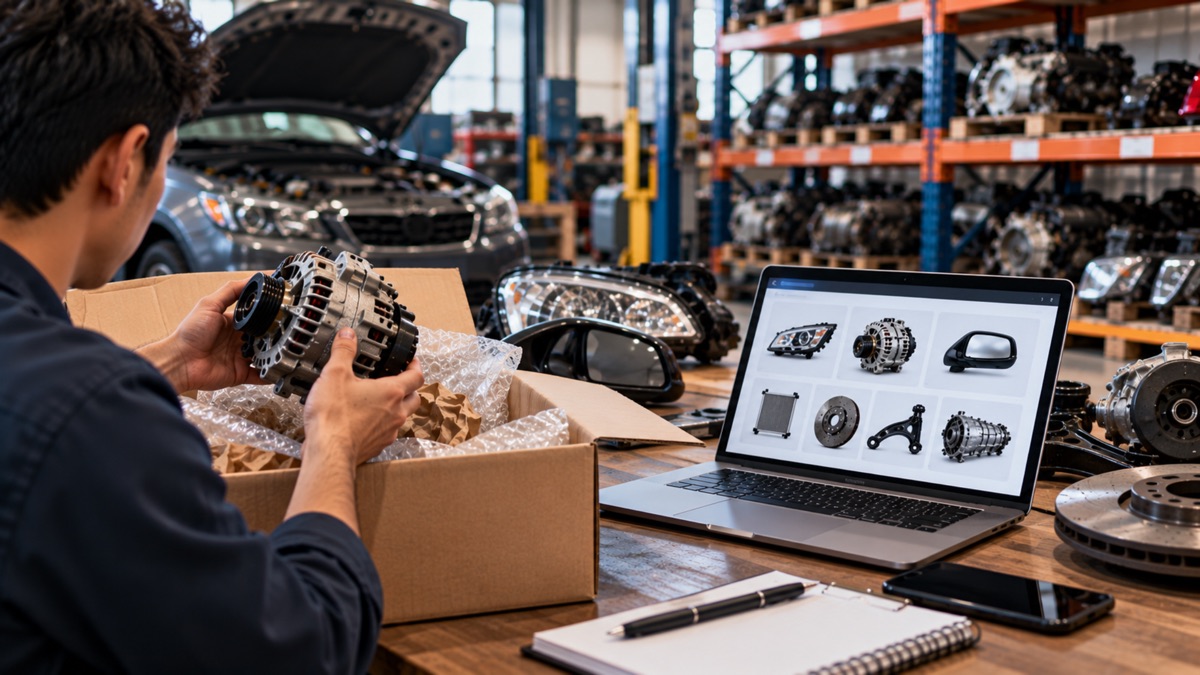
The dealer quotes $1,240 for a rear tail light assembly on a six-year-old crossover, and the insurance check doesn’t stretch that far. You start pricing used auto parts online and find the same assembly listed at $180, $310, and $495 across three sites. All claim it fits, but only one has verified the match.
That gap is where buyers can get caught out. The parts may be fine, but fitment, return windows, and freight arrangements can cause trouble if no one explains them before delivery. A used auto parts online checklist can help you compare those details. Quality Auto Parts can help you check fitment and delivery terms. Contact Quality Auto Parts before ordering to review your options.
Why Used Auto Parts Online Beat Dealer Counter Pricing
A used original part comes off a real vehicle, which means it was built to the same tolerances as the one you’re replacing. That matters for body panels, where aftermarket stampings often need shimming to line up, and it matters for electronics, where an aftermarket module may not talk properly to the rest of the car.
Cost is the other half. Used car parts commonly run 40 to 70 percent below new dealer pricing, sometimes more on discontinued platforms. On a vehicle worth $7,000, spending $2,400 at the dealer counter on a transmission you can source used for $900 is a bad trade, and most owners know it. The trick is buying carefully enough that you don’t spend the savings twice.
Get the Vehicle Details Right Before You Search
Your VIN Does Most of the Work
Every serious seller of used auto parts online wants the 17-digit VIN before quoting. It resolves trim, build plant, engine family, transmission type and emissions package, all of which change part numbers on cars that look identical in a photo. A 2018 sedan in base trim and the same car in a towing package can use different radiators, different fans and different wiring.
Give the full VIN, not a partial. Add the mileage and describe the failure, because a good counterperson will occasionally tell you the part you asked for isn’t the part that’s broken.
Part Numbers, Interchange and Used OEM Auto Parts
The OEM number stamped or stickered on the old component is your strongest cross-reference. Interchange data then tells you which other years and models share that exact component. This is why used OEM auto parts are often available for your car even when your specific model year shows nothing in stock. Photograph the old part from three angles, including the connector, and send those images with your request. Connector count and plug shape have killed more sensor and module orders than anything else.
How Used Automotive Parts Are Graded
Most yards listing used auto parts online work to a shared grading language. It isn’t legally standardised, so ask what the letters mean at that supplier, but the framework holds up.
| Grade | What it means | Typical use |
|---|---|---|
| A | Under 15,000 miles per year of age, no damage | Body panels, low-mile drivetrain |
| B | Under 15,000–19,999 miles per year of age, minor blemishes | The bulk of used automotive parts sold |
| C | Higher mileage or repairable cosmetic damage | Budget repairs, non-visible components |
For mechanical items, grade matters less than testing. Ask whether an alternator was bench tested, whether a transmission was pressure checked, and whether an engine had compression numbers recorded. A supplier who can quote you real test results is a supplier who has something to lose.
What Used Auto Parts Online Typically Cost
Pricing moves with demand, donor availability and mileage, so treat these as indicative ranges rather than quotes:
• Alternators and starters: roughly $60 to $180, usually tested before shipping.
• Body panels (door, fender, hood): $120 to $600 depending on size and paint code availability.
• Headlight and tail light assemblies: $90 to $450, higher for LED or adaptive units.
• Transmissions: $700 to $2,400, plus freight and a core charge.
• Engines: $900 to $3,500 depending on cylinder count and donor mileage.
Compare like with like. A $700 transmission with a 30-day warranty and a $250 core charge is rarely cheaper than an $880 unit with a one-year warranty and free freight to a commercial address.
Warranty, Returns and Core Charges
This is the section most people skip, and the section that decides how your month goes. Standard coverage on used auto parts for sale through established suppliers runs 30 days to a year, occasionally longer on drivetrain items with a paid extension. Read the exclusions. Warranties usually cover the part itself, not the labor to install it, and many require installation by a licensed shop with an invoice on file.
Return windows are separate from warranty. Most used auto parts online carry a window of 14 to 30 days, and restocking fees of 15 to 25 percent are common on non-defective returns. Electrical components are frequently sold as final sale once installed, because there’s no way to prove they weren’t damaged by the vehicle’s fault.
Core charges apply to rebuildable items. You pay a deposit, ship your old unit back, and get refunded. Keep the packaging the new part arrived in, since sending the core back in it is usually the requirement.
Freight, Shipping Damage and Delivery Realities
Small Parts Versus Freight Items
Sensors, mirrors, modules and alternators ship by regular parcel carrier and arrive in a few days. Engines, transmissions, doors, hoods, bumpers and full assemblies go by LTL freight on a pallet. Freight is where quotes diverge, because delivery to a commercial shop with a dock costs far less than a residential drop needing a liftgate appointment.
Inspect Before You Sign
Photograph the pallet before you sign the bill of lading. If the crate is crushed or the panel has a fresh crease, note it on the delivery paperwork. Signing clean and calling two days later is the fastest way to lose a damage claim, and carriers rarely bend on that.
Judging Whether a Seller Is Worth Your Money
Everyone selling used auto parts online sounds equally confident on a landing page, so judge behaviour instead. Good sellers ask for your VIN before quoting. They give you a stock number and the donor vehicle’s mileage. They tell you the warranty term in writing, in the quote, not buried in a policy page. They answer the phone.
Weak sellers quote instantly with no questions, use stock photography instead of a picture of the actual shelf item, and get vague about who pays return freight if the part doesn’t fit. If you’re pricing replacement auto parts across several sites, ask each one the same three questions and compare the answers rather than the prices. The cheapest listing of used car parts is rarely the cheapest repair.
Frequently Asked Questions
Is buying used auto parts online safe for major repairs?
For most repairs, yes, provided the supplier tests drivetrain items and offers a real warranty. Engines, transmissions and rear differentials are routinely sourced this way by professional shops. The risk isn’t the part being used, it’s buying from someone who won’t stand behind it or verify fitment first.
How do I know the part will fit my car?
Send the full VIN and photos of the old component, and ask the seller to confirm the OEM or interchange number in writing. Fitment confirmed against a VIN is far more reliable than a website filter. If a seller can’t reference a part number, keep looking.
Can I return a used part if it doesn’t work?
Usually, within the stated window, though terms differ between sellers of used auto parts for sale. Expect a restocking fee on non-defective returns, and expect to pay return freight unless the seller shipped the wrong item. Defective parts under warranty are typically replaced or refunded, but you’ll need the installation invoice.
Are used OEM parts better than new aftermarket ones?
Often, for fit. Used OEM auto parts were built to factory tolerances, so panels align and electronics communicate correctly. New replacement auto parts win on wear items where age matters, such as suspension bushings or cooling components. Choose OEM when precision matters and new when condition matters more.
Conclusion
Buying used auto parts online works well when you treat it as a matching exercise rather than a price hunt. Lead with your VIN, ask for the part number, understand what the grade describes, and review the warranty and return terms before paying. Ask about freight early if the item needs a pallet, and inspect it before signing. These steps can help you save compared with dealer pricing and avoid the frustration of reordering the wrong part.
Unsure which version your vehicle needs? Get in touch with Quality Auto Parts with your VIN and a few photos. Ask about fitment, current prices, and more options in the collection—or reach out to learn more about your choices.