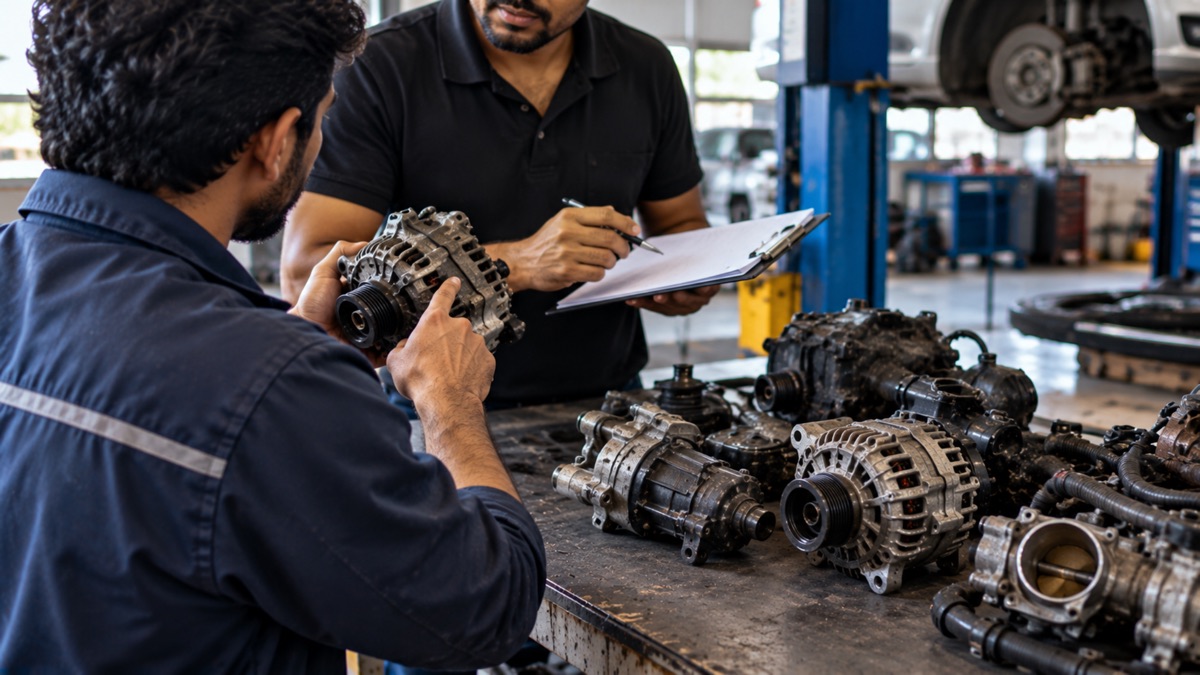
A customer’s Silverado is on your lift with a cracked transfer case, the bay is booked through Thursday, and the unit that arrived this morning has the wrong output shaft spline count. The request included only the year, make, and model, which wasn’t enough to confirm fitment.
Sourcing used auto parts for mechanics means matching a specific component to a specific vehicle, including midyear production changes that may not appear in a standard parts book. Many bad matches trace back to missing details in the request. Quality Auto Parts can help you identify the information to provide. Contact Quality Auto Parts to discuss sourcing options for your shop.
What Happens to Your Request on the Other End
Your request doesn’t walk out to a shelf. It goes into an inventory system that searches by interchange number, a code that groups parts sharing the same fit across different models and years. A single Ford alternator interchange might cover four nameplates and six model years. A different one, visually identical, covers none of them.
The person reading your request is converting your words into that number. Give them a VIN plus a clear note on mounting and connector type, and it takes a minute. Give them “alternator for a 2014 Ford,” and they either guess or call you back. Guessing is how you lose an afternoon.
Start With the VIN, Not the Vehicle Description
Why the VIN Beats Year, Make and Model
Two trucks built four months apart on the same line can carry different brackets, pulley offsets and amperage ratings. The VIN encodes engine family, build plant and trim, letting a recycler pull the original build sheet instead of guessing from a catalog. For engines and transmissions it matters even more, since tag and calibration codes vary within a single model year.
Send the full seventeen characters. Not the last eight, and not an angled photo of a dusty door jamb sticker. If the vehicle already carries a replacement engine, say so, because the VIN will then mislead everyone downstream.
Interchange Numbers, Casting Marks and Tags
The fastest requests include the number stamped on the failed part. Alternator case tags, transmission ID tags, ECU part numbers and cylinder head casting marks all narrow a search instantly. Wipe the grease off and photograph it in daylight. When a tag is unreadable, describe what you can see: connector shape, pin count, pulley type, bolt pattern.
Why Used Auto Parts for Mechanics Requests Differ From Retail Orders
A retail buyer needs one part and can wait. A shop needs the part that fits, inside a window, with a return path if it doesn’t. So state your deadline, your willingness to take a comparable interchange, and whether the vehicle is drivable meanwhile.
It also changes how you talk about condition. Used auto parts for repair shops are judged mostly on tested function and remaining life, not on cosmetics under the hood. Used auto parts for body shops flip that entirely, since a fender with a clean mounting flange but a dented lower edge is still scrap if the customer is paying for a factory-finish repair. In practice, used auto parts for repair shops move faster when the request answers the yard’s questions upfront.
What Every Used Auto Parts Request Should Include
Build a template once, save it in your shop management system, and stop retyping it every time you request a car part. At minimum, a used auto parts request should include:
| Field | Why it matters |
|---|---|
| Full 17-digit VIN | Pulls exact build data, not catalog guesses |
| Part name and position | Front left, rear upper, driver side |
| OEM or casting number | Removes ambiguity entirely |
| Engine and transmission code | Critical for drivetrain and ECU matches |
| Photos of the failed part | Confirms connector and bracket style |
| Acceptable grade | A-grade, B-grade, or “any functional” |
| Deadline and ship-to type | Commercial address with a dock, or residential |
| Contact for follow-up questions | A person, not a general inbox |
Two extra lines help: whether you’ll take a part off a higher trim if it bolts up, and whether the customer has approved a used part at all. Nothing wastes a yard’s time like a cancelled hold.
Grading and Testing Used Auto Parts for Mechanics
How Grading Usually Works
Most recyclers grade used auto parts by mileage and damage. A-grade usually means lower recorded mileage and no impact damage in that zone, B-grade sits in the middle, and C-grade is functional but rough. Donor mileage should appear in writing before you pay. Buying used auto parts for mechanics work without that number is guesswork.
Ask what testing was done. A bench test on a starter, a compression check on an engine, a fluid inspection on a transmission are all reasonable to request. If nobody can say how a unit was tested, price it accordingly.
Return Windows, Cores and Freight Costs
Typical return windows on used auto parts run somewhere in the 30 to 90 day range, and labor is almost never covered. Core charges on units like alternators, starters and calipers are common and usually sit in the 25 to 150 dollar band depending on the part, refunded when the old unit ships back. These are indicative ranges only.
Check who pays return freight. On a transmission, return shipping can run into the hundreds of dollars and quietly erase the savings that made the used part attractive.
Freight, Timing and Bay Scheduling
Heavy items change the math on used auto parts for mechanics. A bare alternator moves on standard ground service. An engine, transmission or full door assembly moves by freight, needs a pallet, and often needs a dock or liftgate. Get the freight quote before you commit the bay.
Build slack into what you promise the customer. A part shipping three states away on Thursday is not landing Friday. Book the job for the day after estimated arrival, not the day of.
Mistakes That Cost Shops the Most Time
• Sending a partial VIN or a blurry tag photo, then waiting a day for the callback.
• Requesting “the same one” without noting that the vehicle already has a replacement part fitted.
• Failing to inspect and photograph the delivered unit within the inspection window.
• Accepting a verbal warranty and having no written terms when something fails.
• Ordering to a residential address for a freight-only item.
Fixing those five costs nothing. Skipping them costs a bay day each time.
Frequently Asked Questions
How long does it take to source used auto parts for mechanics?
Common items like alternators, starters, mirrors and bolt-on panels are often located same day and shipped within 24 to 48 hours. Engines, transmissions and less common trim can take several days to locate and a week or more to arrive by freight, especially if the donor vehicle still needs to be pulled.
Do I need the VIN to request a car part?
Not always, but it changes your odds substantially. Body panels and glass can often be matched on year, make, model and trim. Anything electronic, drivetrain-related, or affected by mid-year production changes really should be matched by VIN or by the number stamped on the original part.
Are used parts covered by any warranty?
Most reputable suppliers offer a parts-only warranty, commonly 30 to 90 days, with longer terms sometimes available on engines and transmissions at extra cost. Labor is rarely included. Always get the term, the exclusions, and the return freight responsibility in writing before you authorise the order.
Can body shops use the same request process?
Largely yes, though used auto parts for body shops need extra detail on paint code, trim level, and any sensor or camera mounts in the panel. Photograph the damaged area and the undamaged mounting points, and state clearly whether minor cosmetic flaws are acceptable to the customer.
Conclusion
Better sourcing of used auto parts for mechanics isn’t about calling more yards. It’s about sending a request that can be answered without a phone call: include the full VIN, a photo of the part tag, the acceptable grade, and a realistic deadline. Shops that standardize this process can reduce wrong parts, return shipments, and bays sitting idle. Used auto parts can be a reliable supply line when requests include the right details.
Reworking your shop’s sourcing process? Get in touch with Quality Auto Parts to discuss your typical requests, check available parts and pricing, and explore the collection. Reach out to learn more and identify any details that could improve your matches.