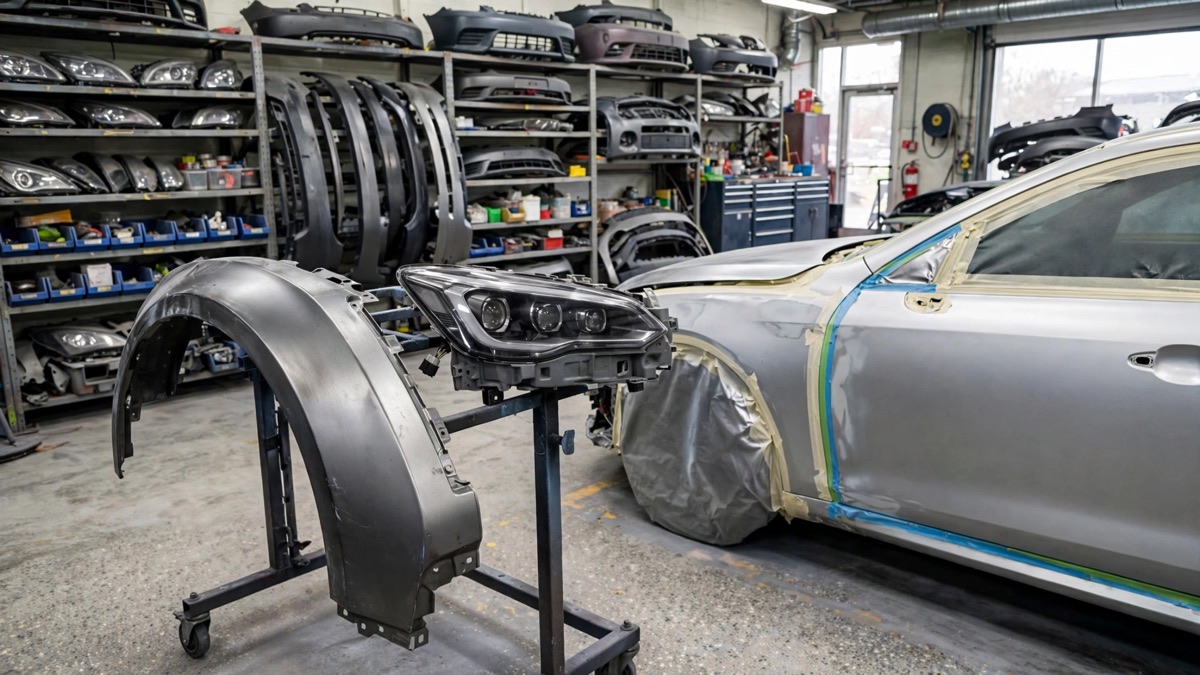
A quarter panel and a headlight assembly are holding up a repair that’s otherwise ready for paint. The estimate went out Tuesday, the insurer approved on Thursday, and the shop is now on day six waiting for a callback about a part that three yards probably have on a shelf. Sourcing used auto parts for body shops falls apart at exactly this point, and it usually isn’t a supply problem. Quality Auto Parts helps make the search process more focused by connecting repair needs with available used parts. It’s an information problem. The requests going out are too vague to be priced quickly, so they sit in a queue behind requests that aren’t. Tightening how your shop writes and sends a request is the cheapest cycle-time improvement available. Working with Quality Auto Parts can also help shops provide clearer part details and move toward faster sourcing decisions.
Why Sourcing Used Auto Parts for Body Shops Eats Cycle Time
Every day a vehicle sits waiting for a panel is a day of rental cost, a day of bay occupancy and a day closer to a customer complaint. Most shops track cycle time obsessively but treat parts sourcing as something that happens to them.
The delay rarely comes from availability. It comes from round trips: a yard replies asking which side, you reply, they ask whether the panel has a sensor cutout, you check the car, they’ve already sold it. Three exchanges over two days for information that fits in one message. Shops that source used auto parts for body shops efficiently front-load all of it into the first send.
What Goes Into a Strong Auto Parts Request
The fields that decide response speed
An auto parts request should be readable in fifteen seconds and answerable without a follow-up question.
• Full 17-character VIN, not just year, make and model
• Part named with side and position, plus factory part number if legible
• Colour code from the door jamb sticker for painted panels
• Acceptable grade range, and whether repairable damage is acceptable
• Delivery ZIP, plus whether you have a forklift or need a liftgate
• Target date, stated honestly rather than “ASAP”
• Whether the job is insurer-approved and which insurer
Photos that save a phone call
Two or three photos remove most ambiguity: the damaged area from a metre back, a close-up of the mounting points and connectors, and the door jamb sticker. For used auto body parts especially, a photo of the bracket area tells a yard instantly whether your bumper had parking sensors, a tow hook cutout or a headlight washer.
Used Auto Body Parts, Aftermarket or New OEM
Each option wins in different circumstances, and a shop that defaults to one of them for every job is leaving money or quality on the table.
| Option | Typical cost vs new OEM | Best for | Watch out for |
|---|---|---|---|
| Used OEM panel | 40–65% less | Older vehicles, sensor-heavy panels, colour-matched doors | Transit damage, minor dents needing prep |
| Aftermarket new | 25–50% less | High-volume models, bolt-on covers | Gap and fitment variation, insurer restrictions |
| New OEM | Baseline | Late-model vehicles, ADAS-critical structures | Cost, backorder lead times |
Used car body parts carry an underrated advantage on late-model vehicles: sensor brackets, clips and mounting tabs are factory-correct, so an assembly bolts on without persuading. That saves hours the estimate never accounted for.
Getting Used Parts Onto the Estimate
Insurers frequently prefer recycled parts because they lower indemnity cost, and many policies explicitly permit them on vehicles past a certain age. What causes friction is documentation, not policy. Note the part type on the estimate line, record the supplier, the grade and the interchange number, and keep the invoice.
Where you should push back is on structural and safety-relevant components. If a panel carries a radar bracket or a camera mount, the calibration requirement follows the part, and that has to be on the estimate too. Have that conversation before the part is ordered, not after. Keeping replacement auto parts decisions documented also protects the shop if a customer questions the repair later.
Grading, Interchange and What Actually Arrives
Reading the grade
Most recyclers use a shared grading scale. Grade A means low mileage for the year with no visible damage, B means average condition with minor cosmetic flaws, and C covers repairable damage or higher mileage. For a door skin going under paint, a B grade with a small ding is often the smart economic call. For a chrome trim piece nobody will refinish, only A makes sense.
Freight and packaging
Panels, doors, hoods and bumper covers move as freight, not parcel. That means a pallet, a commercial carrier and a delivery window rather than a tracking number that updates hourly. Budget two to five business days for regional shipments and inspect on arrival before signing. Note damage on the delivery receipt at the moment of delivery, because claims filed afterwards are hard to win.
Building a Repeatable Workflow for Used Auto Parts for Body Shops
The shops that consistently beat their cycle-time targets treat sourcing as a defined process rather than a phone habit.
1. Blueprint the vehicle fully before requesting anything, including teardown where possible.
2. Send one complete request covering every part the job needs, not one per part.
3. Send it to more than one supplier simultaneously and compare grade, price and freight date together.
4. Confirm the interchange number in writing before paying.
5. Photograph parts on arrival, before they leave the receiving area.
6. Log supplier performance so you know who actually delivers on the date they quote.
That last point compounds. After a few months you’ll know which suppliers of used auto parts for body shops hit their dates and which quote optimistically, and you can route urgent jobs accordingly.
Mistakes That Add Days to a Repair
Ordering before teardown is the expensive one. Hidden damage behind a bumper cover changes the parts list, and a second order means a second freight window. Guessing at trim level is another; a request that says “Sport” when the car is a base model produces a panel with the wrong sensor provisions.
Then there’s the quiet one: nobody inspects the part until the day it’s needed. A panel sitting in receiving for four days with unnoticed transit damage becomes an emergency on the morning it goes into the booth.
Frequently Asked Questions
How quickly can a shop get quotes on used auto parts for body shops?
Complete requests with a VIN and photos usually come back within a few hours to one business day. Vague requests take longer because the supplier has to ask questions first. Sending to multiple suppliers at once shortens it further and gives you a grade and price comparison.
Will insurers pay for used car body parts?
Often yes, particularly on vehicles a few years old, since recycled parts reduce claim cost. Policies vary by carrier and state, so confirm on the specific claim. Document the supplier, grade and interchange number on the estimate line to avoid a supplement dispute later.
What’s the fastest way to request a car part for a repair in progress?
Send one message containing the VIN, the part with side and position, colour code, delivery ZIP and your target date, plus photos. If you request a car part this way, most suppliers can quote without a follow-up call, which is where the lost days usually accumulate.
Are recycled panels safe for structural repairs?
Non-structural panels are widely accepted. Structural and ADAS-related components need more care: follow the manufacturer’s repair procedures, confirm the part is undamaged, and budget for any required calibration. Discuss anything structural with your estimator and the insurer before ordering rather than afterwards.
Conclusion
Faster sourcing of used auto parts for body shops comes down to how much information leaves your shop in the first message. Blueprint the car properly, send one complete request with the VIN and photographs, ask for the interchange number, and be realistic about the date you actually need the part. Inspect on arrival and note damage on the delivery receipt. None of that costs money, and together it can pull days out of a repair that would otherwise stall while waiting for replacement auto parts that were sitting on a shelf the whole time. Quality Auto Parts helps body shops streamline the search for suitable recycled and used OEM parts.
If your shop is looking to tighten its sourcing process, talking through your requirements with an experienced recycled parts supplier is a practical place to start. Quality Auto Parts can help you find the right part for your repair needs. Need a part quickly? Contact Quality Auto Parts today and start your search.