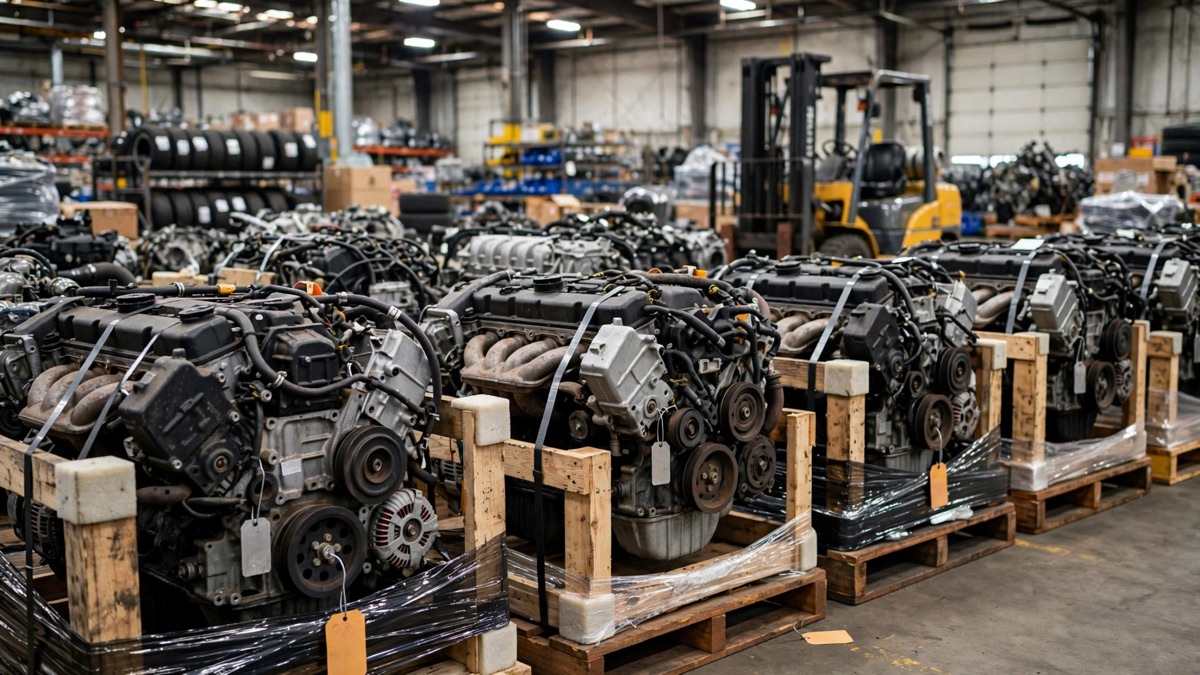
Ten years ago, replacing a blown motor meant calling three local yards and taking whatever showed up. Now, Quality Auto Parts makes it easier to compare a dozen used engines online in an afternoon, filter by mileage, and have a pallet at your shop by the end of the week. The convenience is real. So is the risk, because a listing photo tells you almost nothing about what happened inside that block.
An engine is the single most expensive used part most people ever buy. Spend twenty minutes checking the right things and you avoid the two outcomes nobody wants: a motor that arrives incomplete, or one that knocks within a month. With Quality Auto Parts, taking the time to verify the engine's condition, compatibility, mileage, and included components can help you make a more confident purchase.
Why buyers moved to used engines online
Local supply is limited by whatever wrecked nearby. National inventory systems changed that. A yard in another state can list its stock, quote freight, and ship a crated motor to your door, which means uncommon engines are no longer a six-week wait.
Pricing got more transparent too. You can see what the same engine code sells for across several sellers, which makes a padded quote obvious. The trade-off: you’re buying something you can’t put your hands on, so the burden shifts to asking better questions.
What a listing actually tells you
Most used engines online listings give you three things: mileage, a donor description and a stock number. Each deserves a second look.
Mileage claims
Mileage on used engines online comes from the donor odometer, and it’s only as good as the record behind it. Ask whether the figure is verified against a title or an auction record, or whether it’s an estimate. A difference between 78,000 verified and “approximately 80,000” is the difference between a documented part and a guess.
Low mileage isn’t automatically better either. A 60,000-mile engine from a vehicle that sat for four years can have more corrosion issues than a well-maintained 120,000-mile unit.
Donor vehicle history
Ask how the donor was wrecked. Rear impact and side impact donors are ideal, because the engine bay never absorbed the hit. Front-end collisions can bend accessory brackets, crack the oil pan, or hint at harder impact loads through the block.
Flood history matters more than most buyers realize. Water in the intake or crankcase leaves rust on cylinder walls that no external inspection will reveal.
Match by VIN and engine code
Two vehicles with the same badge and year can use different engines, so ordering used engines online by displacement alone is the most common mistake buyers make. You need the engine code, which lives in the VIN on most vehicles and on a stamped pad or sticker on the block itself.
Interchange numbers for used car engines
Sellers catalog used car engines by interchange, which groups every year and model sharing the same physical assembly. When a seller offers a motor from a different year, ask what changed between them. Common differences that bite people include variable valve timing hardware, injector style, cam sensor location and flexplate bolt pattern.
What transfers from your old engine
Most used engines arrive as long blocks or complete units without accessories. Plan on transferring:
• Intake manifold and throttle body
• Alternator, starter, power steering pump and AC compressor
• Wiring harness and most sensors
• Flywheel or flexplate
• Engine mounts and brackets
Budget a few hundred dollars for parts worth replacing while everything is apart: timing components, water pump, thermostat, rear main seal and every gasket you’re already exposing.
Long block, complete engine or drop-in
The listing word matters more than the price. Sellers of used replacement engines usually offer three tiers:
• Long block. Block, crank, rods, pistons, heads. No accessories or intake. Cheapest, most labor.
• Complete engine. Long block plus intake, often with accessories attached. Middle price, less transfer work.
• Drop-in unit. Complete and run-tested before removal. Highest price, lowest risk.
Among used replacement engines, the drop-in tier usually pays for itself in reduced shop labor on a daily driver you plan to keep. For an older vehicle where the goal is simply getting it running, a long block plus your existing accessories is the sensible economy.
How used engines online are tested
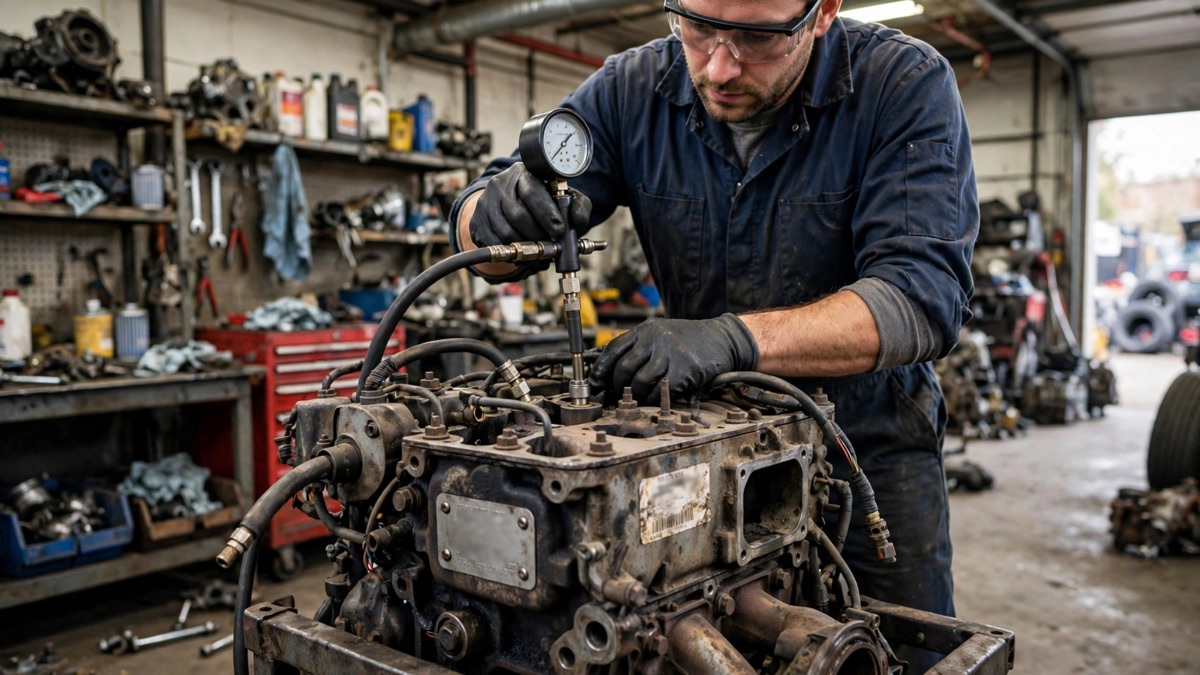
Alt text : Compression test on used engine
Testing claims vary from serious to meaningless. “Started and ran in the vehicle” is worth something. “Turns freely by hand” is worth very little. Ask which of these the seller performed:
• Compression test on every cylinder, with figures provided
• Leak-down test, which reveals where compression is escaping
• Oil pressure reading at idle
• Run time on a test stand, and for how long
Reputable sellers of used OEM engines will send you the compression numbers rather than describing them. If the numbers vary more than about ten percent across cylinders, ask why before you order.
What used engines online cost
Prices depend on engine family, mileage and how complete the unit is. These ranges are indicative and move with availability.
| Engine type | Typical used price | Notes |
|---|---|---|
| 4-cylinder economy car | $700 to $1,800 | Widely available, cheap freight |
| V6 sedan or crossover | $1,200 to $2,800 | Timing job often worth doing |
| Domestic V8 truck | $1,800 to $4,500 | Popular codes stay in demand |
| Turbocharged 4-cylinder | $1,800 to $4,000 | Confirm turbo included or not |
| Diesel truck engine | $4,000 to $9,000 | Emissions hardware adds cost |
Set that against a rebuild at $3,500 to $7,000 with labor, or a remanufactured long block that typically runs 1.5 to 2.5 times the used price with a longer warranty.
Warranty, core charges and freight
Warranty terms on used engines online separate serious sellers from the rest. Standard coverage on used auto engines runs 90 days to 12 months, parts only. Extended terms and labor coverage exist for an additional fee, and on a job with 10 to 15 hours of shop labor, that coverage is often worth buying.
Read the exclusions closely. Nearly every warranty on used auto engines is voided by skipping the oil and filter change at installation, reusing the old thermostat, or not flushing the cooling system. Keep receipts from day one.
Engines ship on pallets by freight, typically $200 to $500. Most sellers charge a core deposit, refunded when your old motor goes back on the same pallet, drained and complete. Stripped cores get rejected.
Submitting a request that gets a straight answer
Sellers of used engines online respond faster when you give them everything at once:
1. Full 17-character VIN and the engine code from the block.
2. Whether you need a long block, complete or drop-in unit.
3. Transmission type, since flexplates and sensors differ.
4. Delivery address type, plus your target install date.
Frequently Asked Questions
Are used engines online reliable enough for a daily driver?
Generally yes, if you buy tested stock with documented compression figures and a real warranty. Thousands of vehicles run daily on used engines with no issues. The failures usually trace back to unverified mileage, no testing, or an installation that skipped fluids and timing components.
How long does shipping take on used engines online?
Most sellers ship within two to five business days of payment, and LTL freight adds three to seven days. Plan for one to two weeks door to door. If a shop is holding a bay, confirm the ship date in writing before booking labor.
Should I buy used OEM engines or remanufactured ones?
Used OEM engines cost less and come from a known production line, which suits older vehicles and tighter budgets. Remanufactured units cost more but arrive with new wear components and longer warranties. If you plan to keep the vehicle five or more years, remanufactured often makes better sense.
What voids a used engine warranty most often?
Skipping the required oil, filter and coolant service at installation. Reusing a failed thermostat or a clogged radiator is the next most common cause, since overheating damage is easy for a seller to identify. Missing installation paperwork from a licensed shop also causes denied claims.
Conclusion
Shopping for used engines online gives you selection and pricing that local yards can’t match, but it also puts the verification work on you. Quality Auto Parts recommends confirming the engine code against your VIN, asking for compression numbers rather than adjectives, finding out how the donor was wrecked, and reading the warranty exclusions before you pay. Then budget for freight, the core deposit, and the timing parts and gaskets you’ll replace while the engine is out. Have your VIN, engine code and target install date ready before you start requesting quotes. If you’re unsure which build your vehicle uses, Quality Auto Parts can help confirm it in minutes and steer you away from the wrong interchange. Shop Smarter for Auto Parts .