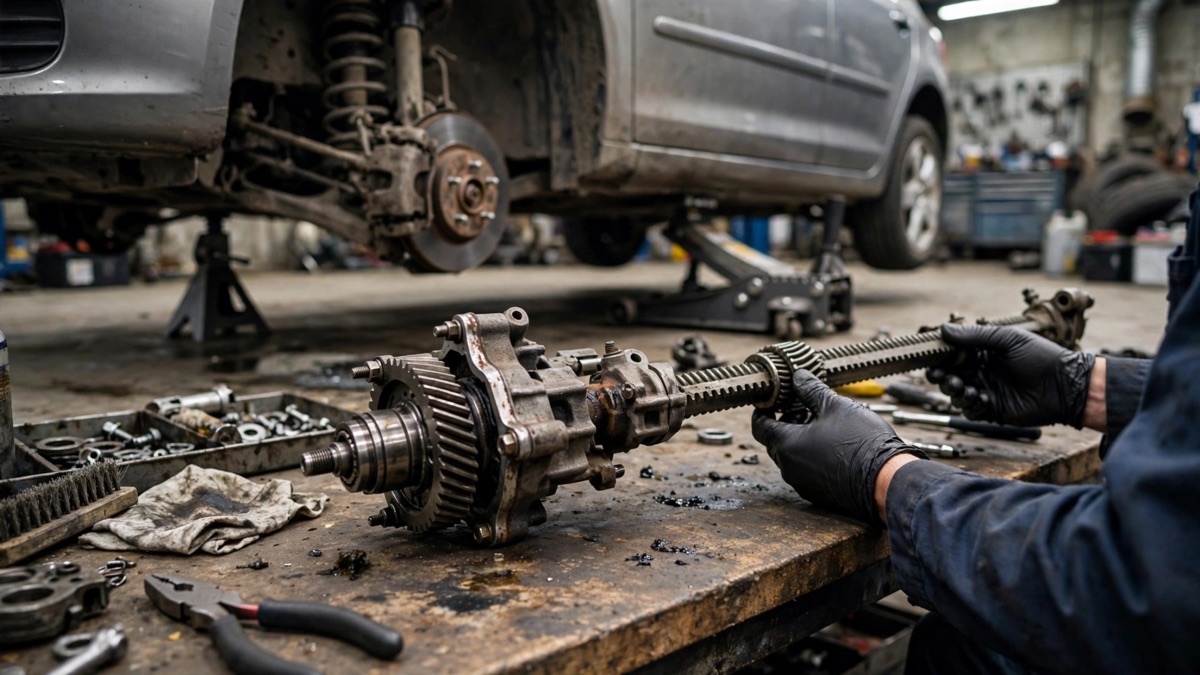
The steering wheel has gone vague on-centre, there’s a whine when you turn at low speed, and there’s a puddle of red fluid on the driveway under the front crossmember. That combination usually means the rack is done. A used steering gear from a low-mileage donor is often the most sensible way out, well below dealer money. Quality Auto Parts can help you find a suitable replacement based on your vehicle’s exact requirements.
Steering components carry real safety weight, so this isn’t a part to buy carelessly. The good news is that steering gears are easy to inspect and easy to grade, and the fitment rules are strict enough that a proper VIN match gets it right almost every time. With Quality Auto Parts, checking the right part and confirming compatibility can make the replacement process easier.
What a Steering Gear Actually Does
The steering gear converts rotation of the steering wheel into side-to-side movement at the tie rods. Everything about how a car feels through corners passes through this assembly, which is why worn units feel wandering or unpredictable.
Rack and Pinion vs Recirculating Ball
Most cars and crossovers use rack and pinion: a pinion gear on the steering shaft drives a toothed rack side to side. Full-size trucks and body-on-frame vehicles often use a recirculating ball box driving a pitman arm. They fail differently. Racks leak at the inner seals, while gear boxes develop sector shaft slop that shows up as dead space at the wheel.
Hydraulic, Electric and Electro-Hydraulic
Hydraulic units run off a belt-driven pump and are simplest to swap. Electric power steering builds the assist motor and control module into the rack, making matching far more demanding, since calibration and connector pinouts vary by trim. Know which one you have before you shop for a used steering gear.
Signs Your Steering Gear Is Failing
Fluid loss is the most obvious. Look for wetness at the rack boots or input shaft seal, and check whether the reservoir keeps dropping. A steady whine that rises with engine speed suggests the pump is starving, usually because of a leak in the system.
Play is the other big category. If you can rock the wheel an inch before the front tyres move, something in the linkage is worn. Have someone turn the wheel while you watch the rack, tie rod ends and bushings. Clunking over bumps, uneven wear on the inner tyre edges, and steering that pulls harder one way all point the same direction.
Why a Used Steering Gear Often Beats a Reman
New OEM racks are among the pricier front-end parts on many vehicles, and budget remanufactured units have a mixed record. Rebuild quality varies between shops, and a reman that leaks at six months costs you the labour twice.
A used steering gear pulled from a low-mileage salvage vehicle is an original factory assembly with original seals, tolerances and calibration. On an electric rack that last point matters a great deal. Across used mechanical auto parts, an original component from a 45,000-mile donor usually outperforms a rebuilt one at similar money. It’s why a used steering gear is often the first option a good shop suggests.
Matching a Used Steering Gear to Your Vehicle
This is where orders go wrong. Two vehicles with the same badge and year can use different racks depending on drivetrain, suspension package and whether variable-ratio steering was specified.
Start With the VIN
Your 17-digit VIN encodes build details a year-make-model search misses. Hand the full VIN to your supplier so they can run it against interchange data. It’s the highest-value thing you can do to avoid a return.
Then Confirm the Physical Details
Before your old unit goes in the scrap pile, check it against these points:
• OEM part number cast or stamped on the housing
• Port fittings, thread size and orientation on hydraulic units
• Electrical connector pin count and shape on electric racks
• Mounting bolt spacing and bushing style
• Inner tie rod thread pitch, since a mismatch means new tie rods too
Photograph the old assembly from several angles, including the ports or connector.
Inspecting Used Steering Parts on Arrival
Unbox and check before anything goes near the car. Turn the input shaft lock to lock by hand. It should feel smooth, with no gritty spots or notches. Look for weeping at the boots, torn clamps, damaged threads and impact marks on the housing. Good suppliers of used steering parts pressure-check units before shipping, but a five-minute inspection at your end is worth doing.
Used Suspension Parts Worth Doing at the Same Time
The rack comes out with the tie rods disconnected and the front end apart, and that access is worth using. Tie rod ends, sway bar links and control arm bushings are cheap next to the labour of getting back in there. Buying used suspension parts alongside a used steering gear is common for exactly that reason, and it saves a second alignment fee.
Grading, Warranty and What Testing Means
Recyclers grade parts so buyers can compare offers. Terminology shifts between yards, but the structure holds.
| Grade | Typical meaning | Best suited to |
|---|---|---|
| A | Donor under ~60k miles, no leaks, minimal play | A vehicle you plan to keep |
| B | Donor roughly 60k to 150k miles, function verified | Most everyday repairs |
| C | Higher mileage or cosmetic damage, functional | Older vehicle, tight budget |
Ask what testing means to that supplier. On a hydraulic unit it should mean a pressure and leak-down check, not just turning it by hand. On an electric rack it should mean powering the motor and confirming the module responds. Thirty days is the common warranty floor across used automotive parts and used mechanical auto parts generally, 90 days is reasonable, and labour is almost never covered.
Cost, Core Charges and Freight
As an indicative guide, a used steering gear for a common domestic or Japanese sedan often lands between $90 and $250. Trucks, SUVs and electric-assist racks on European models run $300 to $700 or more. New OEM pricing frequently sits two to four times higher.
Expect a core charge, often $50 to $150, refunded once your old unit gets back. Racks are heavy and awkward, typically 25 to 45 pounds and up to four feet long, so freight costs more than on small electrical items. Ask whether a quote includes shipping.
Sending a Part Request That Gets Matched
The answer you get back reflects what you send. When requesting replacement auto parts, include:
1. Full 17-digit VIN
2. Year, make, model, trim and drivetrain
3. Steering type: hydraulic, electric or electro-hydraulic
4. OEM part number from the old unit if legible
5. Photos of the housing, ports or connector
6. Your ZIP code and whether the address is residential or commercial
Suppliers holding used automotive parts inventory across multiple yards can usually confirm an exact interchange within a day when a request looks like that. The same applies to any replacement auto parts enquiry: vague questions get vague answers.
Frequently Asked Questions
Is a used steering gear safe to fit?
Yes, provided it has been inspected, tested and graded, and provided you check it yourself on arrival. Steering gears are mechanical assemblies with no consumable wear items beyond seals and bushings. A used steering gear from a low-mileage donor with no leaks and no play is as sound as the one that came out.
How long does a used steering gear last?
A tested unit from a low-mileage donor commonly runs for years, and many outlast the vehicle they go into. Fluid condition matters more than most people expect: dirty or wrong-spec power steering fluid chews through seals. Flush the system when you fit the gear and keep the pump healthy.
Do I need an alignment after replacing the steering gear?
Yes. Removing and refitting the gear changes toe settings, and driving on incorrect toe scrubs tyres out fast. Budget for a four-wheel alignment as part of the job. Most shops suggest it anyway, and any decent installer will refuse to hand the car back without one.
What is a core charge on a steering rack?
It’s a refundable deposit, commonly $50 to $150, that encourages you to send your old rack back for rebuilding or recycling. You get it returned once the supplier receives the unit in reasonably complete condition, usually inside a window such as 30 days. Keep the box.
Conclusion
Confirm the diagnosis before you spend anything. Check for fluid loss, measure the play at the wheel, and rule out worn tie rod ends and bushings, because these can mimic a bad rack and cost far less. Once you’re sure, a used steering gear from graded, pressure-tested inventory gives you an original factory assembly at a fraction of dealer pricing, with a warranty covering most of the remaining risk. Quality Auto Parts can help you find the right replacement based on your vehicle details. Send your VIN, state the steering type, budget for freight and an alignment, and inspect the unit the day it arrives.
If you’re unsure whether the gear or the linkage is at fault, a short conversation with an experienced parts specialist or a trusted mechanic is the quickest way to avoid buying the wrong component. Quality Auto Parts makes it easier to explore suitable used OEM options. Need the right steering gear? Contact Quality Auto Parts today for help finding a suitable replacement.