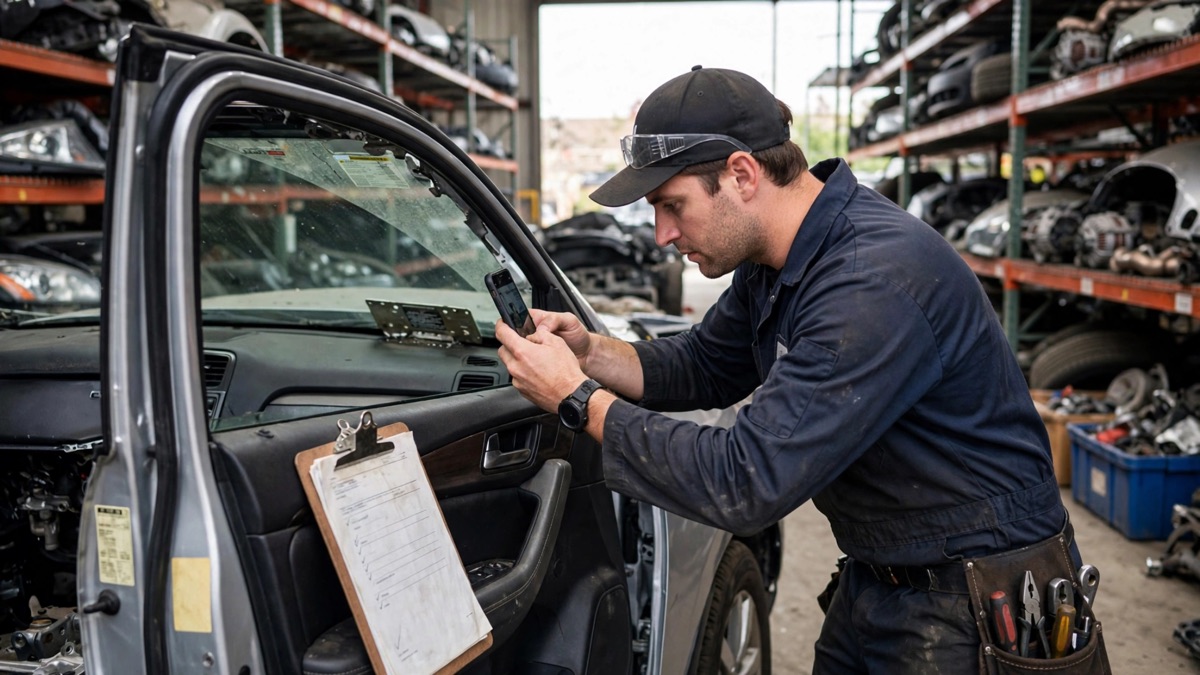
Your alternator gave out on a 2014 Silverado. The dealer wants $480 for a reman unit, and the salvage yard across town says they have one for $140, but only if you can tell them exactly which one. That’s the moment most people find out that “2014 Silverado” isn’t a specific enough answer. Requesting used auto parts by VIN from Quality Auto Parts fixes that in a single step, because the VIN carries build data that a year-make-model search leaves out.
This guide covers what to pull off your vehicle, how to send it to a supplier, and how to read what comes back so the part that shows up actually bolts on. Quality Auto Parts helps make the process of identifying and sourcing the right replacement part easier. Ten minutes of prep saves a return shipment.
Why a VIN Request Beats a Catalogue Guess
Two trucks can roll off the same line in the same month and take different parts. Engine option, transmission code, emissions package, trim level, even the plant that built the vehicle all change what fits. A 3.5L V6 and a 3.7L V6 in the same model year use different accessory brackets.
When you search used auto parts by VIN, the supplier isn’t guessing at any of that. They run your VIN against a build sheet and pull the exact option codes your vehicle left the factory with. That’s the difference between a part that drops in and one that sits on your bench while you argue about restocking fees. Recyclers who inventory used OEM parts index their stock the same way, so a request for used auto parts by VIN gives them a direct lookup rather than a shortlist to work through.
What Your VIN Actually Tells a Supplier
Where to find the VIN on your vehicle
Check the driver’s side dashboard where it meets the windshield, visible from outside. It’s also on the door jamb sticker, your registration and the title. Photograph it rather than typing from memory. A misread 5 for an S sends the request sideways, and a photo also captures the sticker’s paint and axle codes, which matter for panels and differentials.
What the 17 characters break down into
Positions one through three identify the manufacturer and country. Four through eight describe the vehicle: body style, engine, restraint system, series. Nine is a check digit, ten is the model year, eleven is the assembly plant, and the last six are the serial number. Engine data lives in that fourth-to-eighth block, which is why suppliers can find car parts by VIN without asking you to pop the hood.
Ordering Used Auto Parts by VIN Without a Wasted Shipment
A good used auto parts by VIN request is short and complete. Send it once, correctly, and you usually get quotes back the same business day.
1. Photograph the VIN plate and the door jamb sticker.
2. Name the part in plain language plus the position: “front passenger side door mirror, power folding, with blind spot indicator.”
3. Add the OEM part number stamped on the old part if it’s readable.
4. State your mileage tolerance for mechanical parts, and your colour code for painted panels.
5. Say where it ships, and whether that address is residential or a shop with a forklift.
6. Attach a photo of the failed part showing connectors and mounting points.
That last step matters more than people expect. Pin count on an alternator plug or the shape of a bellhousing gets confirmed instantly from a photo, letting the yard catch a mismatch before packing.
Used Auto Parts by Year Make Model: When That’s Enough
Plenty of requests don’t need a VIN. Wear items and generic hardware usually interchange across a whole platform, so searching used auto parts by year make model works fine for wheels, glass, interior trim, tail lights on a single-trim model and most suspension components.
Where that approach starts failing is anything electronic, anything emissions-related, and anything tied to an option package. Engines, transmissions, transfer cases, ECUs, body control modules, instrument clusters, ADAS cameras, headlights offered in both halogen and LED, and any part hit by a mid-year production change all deserve a VIN. Unsure which bucket yours sits in? Send the VIN anyway.
Interchange Numbers, Grading and What “Tested” Means
Reading part grades before you buy
Most recyclers grade inventory on a shared scale. It isn’t marketing language, it describes condition and damage.
| Grade | What it usually means | Typical use |
|---|---|---|
| A | Low mileage for its age, no visible damage | Body panels, engines you’ll keep long term |
| B | Average mileage, minor cosmetic flaws | Most mechanical replacements |
| C | Higher mileage or repairable damage | Budget repairs, non-visible parts |
For mechanical assemblies, ask what “tested” actually covered. A compression and leak-down test on an engine is meaningful. “Ran when pulled” is not a test. On alternators and starters, a bench test under load tells you far more than a spin check.
Interchange numbers
Interchange databases list which part numbers substitute for each other, and they sit behind every search for used auto parts by VIN. A single alternator might appear on four vehicles under one interchange number. If a supplier quotes a part from a model you didn’t expect, ask for that number and confirm it matches. Normal practice, not a red flag.
How to Write a Used Auto Parts Request That Gets a Fast Quote
A vague used auto parts request sits in a queue. A specific one gets priced. However you request an auto part, keep it to a few lines: the VIN, the part with its side and position, your ZIP code, your timeline, and whether you’ll accept a comparable interchange or need an exact factory number. If you’re a shop, say you can receive freight.
Be honest about urgency. If the car is on a lift blocking a bay, say so, because suppliers sort by who has to move fastest.
Used Auto Parts by VIN for Engines, ECUs and Body Panels
Engines and transmissions are where VIN accuracy pays for itself. Long blocks and complete drop-outs vary by emissions calibration, and a mismatch leaves you chasing codes for weeks. Indicative pricing runs roughly $700 to $2,500 for common four-cylinder and V6 assemblies, with core charges and freight on top.
Electronic modules are the other case where you should never skip the VIN. Many ECUs, body control modules and clusters are married to the vehicle and need programming with a factory-level scan tool. Ask before ordering whether the module is plug-and-play, requires cloning, or needs dealer programming, because that labour can cost more than the part.
Painted body panels are simpler, but sourcing used auto parts by VIN still helps. It confirms sensor provisions, mounting tabs and whether your bumper had a tow hook cutout. Paint rarely matches perfectly on a decade-old vehicle, so budget for blending even when the code is right.
Frequently Asked Questions
Can I find car parts by VIN if I only have a photo of the dashboard?
Yes, as long as all 17 characters are legible. Zoom in and check for glare, since the dash plate reflects badly in sunlight. Most suppliers can quote used auto parts by VIN straight from a clear photo. If a character is unclear, the door jamb sticker gives a clean second copy.
Do I need the VIN to request an auto part like brake rotors?
No. Wear items and common hardware usually interchange across a platform, so year, make, model and trim are enough. Send the VIN anyway if the vehicle had multiple brake packages, towing options or a performance trim, because rotor diameter can differ within the same model year.
Are used OEM parts better than aftermarket new?
Often, yes, for fitment and connector compatibility, since they’re the same parts the factory installed. Aftermarket wins on availability and on wear items. For body panels, electronics and anything with sensor mounts, most shops prefer used OEM parts over an economy aftermarket equivalent.
How long does a used auto parts request usually take?
Quotes typically come back within a few hours to one business day. Shipping runs two to five days for small parts and up to a week or more for freight items like engines, doors and hoods that move by pallet on a commercial carrier.
Conclusion
Sourcing used auto parts by VIN is mostly about front-loading the detail. Photograph the VIN, name the part with its side and position, add a picture of the old unit, and state your timeline honestly. That single message replaces three rounds of email and cuts the odds of a wrong shipment sharply. Ask what testing was actually performed, confirm the interchange number when a substitute is offered, and check the return window and core charge before you pay rather than after the box arrives. Quality Auto Parts can help you find suitable used parts by matching your vehicle details carefully. If you’re sorting through options for a specific repair, sending your VIN to Quality Auto Parts is a practical way to get answers matched to your exact vehicle. Send your VIN today and find the right part for your repair.