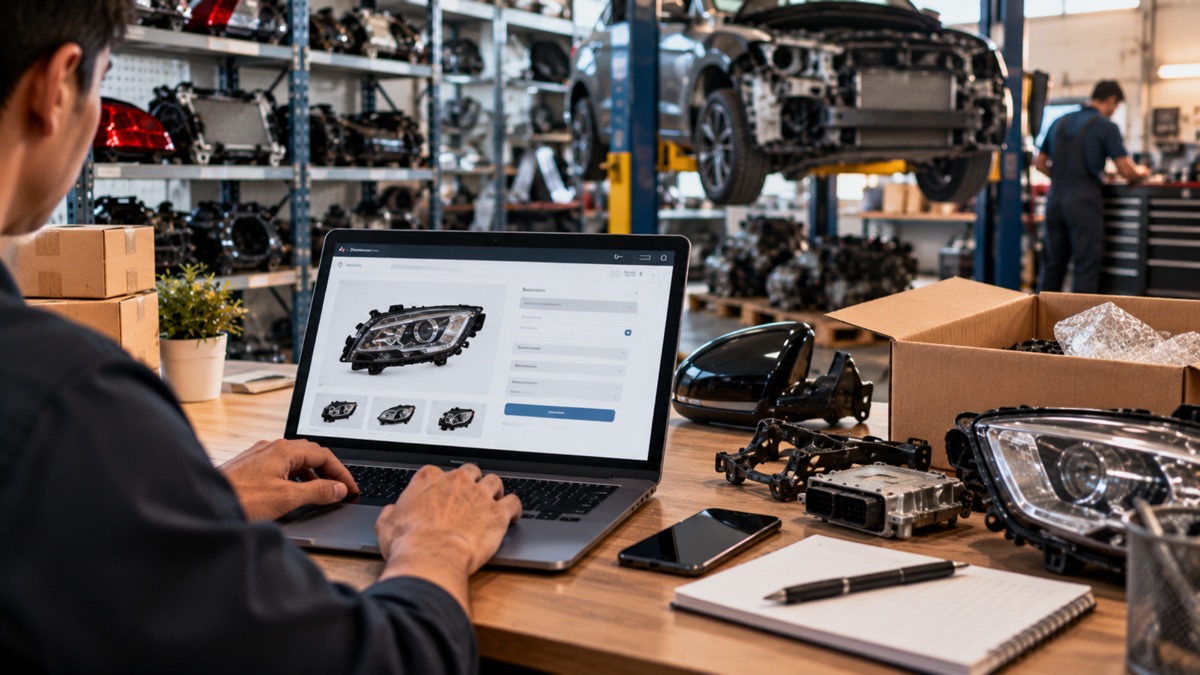
The window regulator in your fourteen-year-old wagon gives up. You look it up and learn that the manufacturer discontinued the assembly six years ago. The aftermarket makes one for the sedan, not the wagon. Three online sellers list it, but all show stock they sold last spring.
This is the reality of owning an older vehicle. A request hard to find car parts submission can send your vehicle details to recyclers and specialist sellers at once, so those with a genuine match can respond. Quality Auto Parts can help you understand what information to provide and what to expect from the search. Contact Quality Auto Parts to get started.
Why Certain Parts Vanish From the Market
Scarcity isn’t random. It follows a few predictable patterns, and identifying yours tells you where to look.
Production simply ended
Manufacturers typically support a model with service parts for around a decade after the last one leaves the line, sometimes less for low-volume components. Once tooling is retired, no new units appear. Everything in circulation came off a vehicle, and the pool only shrinks.
The variant was rare to begin with
Special editions, manual gearboxes, towing packages and single-year interior colours all produce small donor populations. There’s nothing wrong with your searching if you own one. There genuinely aren’t many, which is exactly why a nationwide request outperforms a local one.
Nobody keeps the boring parts
Enthusiast communities hoard engine and body components for desirable models. Nobody stockpiles HVAC blend door actuators or rear seat latches. Those unglamorous items are often harder to source than a whole engine.
What Happens When You Request Hard to Find Car Parts Online
Your submission gets parsed into structured fields, then matched against interchange databases before any human sees it. Those databases record which components carried across model years, platforms and sometimes across brands within a corporate family. That matters enormously for scarce items, because the compatible donor is frequently a model you’d never think to search by name.
Yards holding a match respond directly with a condition grade, donor mileage, a price and a freight estimate. Common items generate replies within a few hours. For genuinely scarce components, expect two to five days, because someone may have to walk a row and check a vehicle that was never fully catalogued.
That last point is the real advantage. A large share of salvage stock is never listed anywhere. It’s still bolted to a car in the back of the lot, invisible to any search engine, and only a direct enquiry surfaces it.
Where Rare Used Auto Parts Actually Live
Four sources cover almost everything when you need to find discontinued auto parts, and each suits a different situation.
• Networked salvage yards. The broadest pool, best pricing, and the natural home for rare used auto parts on vehicles from roughly ten to twenty-five years old.
• Dealer dead stock. Occasionally a franchise still has one on a dusty shelf. Priced high, but genuinely new old stock.
• Specialist dismantlers. Focused on one brand or era, they hold depth that general yards don’t, particularly for European models.
• Reproduction manufacturers. Only viable where a model has enough of a following to justify tooling, so mostly classics and cult vehicles.
A single digital request usually covers the first and third of those in one shot, which is why it’s the sensible starting point for hard to find used OEM parts rather than a last resort.
How to Request Hard to Find Car Parts Without Wasting Weeks
How you request a car part decides most of what comes back to you.
What to include every time
1. The full 17-character VIN, which resolves engine, trim and factory options that the model name hides.
2. The component name in plain words plus any number cast, stamped or printed on the old unit.
3. Photographs showing connectors, mounting points and the part in position.
4. Your zip code, because freight is a real part of the total.
5. A one-line note on what the part is for, since a good parts person will often suggest a workable alternative.
What to stay flexible about
Rigid conditions kill scarce searches. Accept a different colour on a panel you’ll paint anyway. Accept higher mileage on a mechanical unit that’s rebuildable. Accept a scuffed housing on a module that lives behind the dashboard. Every requirement you drop widens the pool, and on genuinely scarce items, flexibility matters more than patience.
Setting a standing request also helps. If nothing exists today, a yard receiving your details will often call when a matching vehicle arrives, and on rare items that can be a matter of weeks rather than months.
Used OEM, New Old Stock or Reproduction?
For discontinued components you usually have three routes. They’re not equivalent.
| Option | Fit and quality | Availability | Indicative price |
|---|---|---|---|
| Recycled OEM from salvage | Factory fit, proven design, wear varies | Widest for 10–25 year old vehicles | 40–70% below original list |
| New old stock (NOS) | Unused, factory correct | Very limited, luck-dependent | Often at or above original list |
| Reproduction / aftermarket | Fit varies, quality varies widely | Only for popular models | Mid-range, unpredictable |
For most drivers, hard to find used OEM parts are the practical answer. They fit because they’re the same components the vehicle was built with, and they cost a fraction of the alternatives. Reproduction parts make sense mainly when nothing recycled exists and the part is simple, like a bracket or a rubber seal.
Costs, Timelines and What to Budget
Scarcity, not condition, drives pricing on discontinued items. A common alternator might sit 60% below new. A discontinued body control module for a low-volume trim can approach dealer pricing simply because three exist in the country.
Budget for the extras too. Core charges on rebuildable units typically run $30 to $150 and come back when you return the old part. Freight on anything pallet-sized runs into the low hundreds depending on distance. Electronic modules may need programming to your VIN, a shop labour charge worth asking about before you buy. Treat all of these as indicative, because they move with specification and distance.
When to Stop Searching and Repair Instead
Sometimes the honest answer is that the part isn’t coming. If four weeks of active searching produces nothing, look at repair specialists instead. Instrument clusters, ECUs, ABS modules and window regulators all have rebuild services, often at half the cost of a scarce replacement. Sending your own unit for repair also sidesteps the programming problem, since the module keeps your VIN.
Frequently Asked Questions
How long does it take to request hard to find car parts and get answers?
Common components return quotes within a few hours. Scarce or discontinued items usually take two to five days while yards physically check uncatalogued stock. If a week passes with nothing, relax your mileage and cosmetic conditions and resubmit rather than concluding the part no longer exists anywhere.
Can I find discontinued auto parts for a twenty-year-old car?
Often yes, though it depends on how many were built. Mechanical and structural components for high-volume models remain reasonably available well past twenty years. Interior trim, colour-matched panels and early electronics are the tough categories, and those are where a nationwide request beats any local search.
Are used OEM parts safe for critical systems?
Generally yes when they’re tested and graded, since they’re the same components fitted at the factory. For brakes, steering, airbags and restraint modules, insist on documented testing, a clear warranty and professional installation. Airbag and restraint components carry extra regulatory conditions, so check what your installer will accept first.
Do I need the VIN to request a car part that’s discontinued?
It’s close to essential. Discontinued components often changed mid-production without any change to the model name, and the VIN is the only reliable way to identify which revision your vehicle received. Without it you’re relying on visual matching, which works for panels but rarely for electronics.
Conclusion
Scarce components aren’t usually extinct; they’re often uncatalogued and scattered across yards you’d never drive past. Requesting hard-to-find car parts digitally puts one accurate description of your vehicle in front of multiple sellers, so those with genuine stock can respond. Include your full VIN and clear, honest photos, and be flexible about colour, mileage, and cosmetic condition. If nothing turns up right away, leave a standing request and consider rebuild specialists for electronics and mechanisms.
Has a discontinued part stalled your repair? Contact Quality Auto Parts to discuss your search, check availability and prices, and explore more options in the collection. Get in touch to learn more and find out what may still be available for your vehicle.