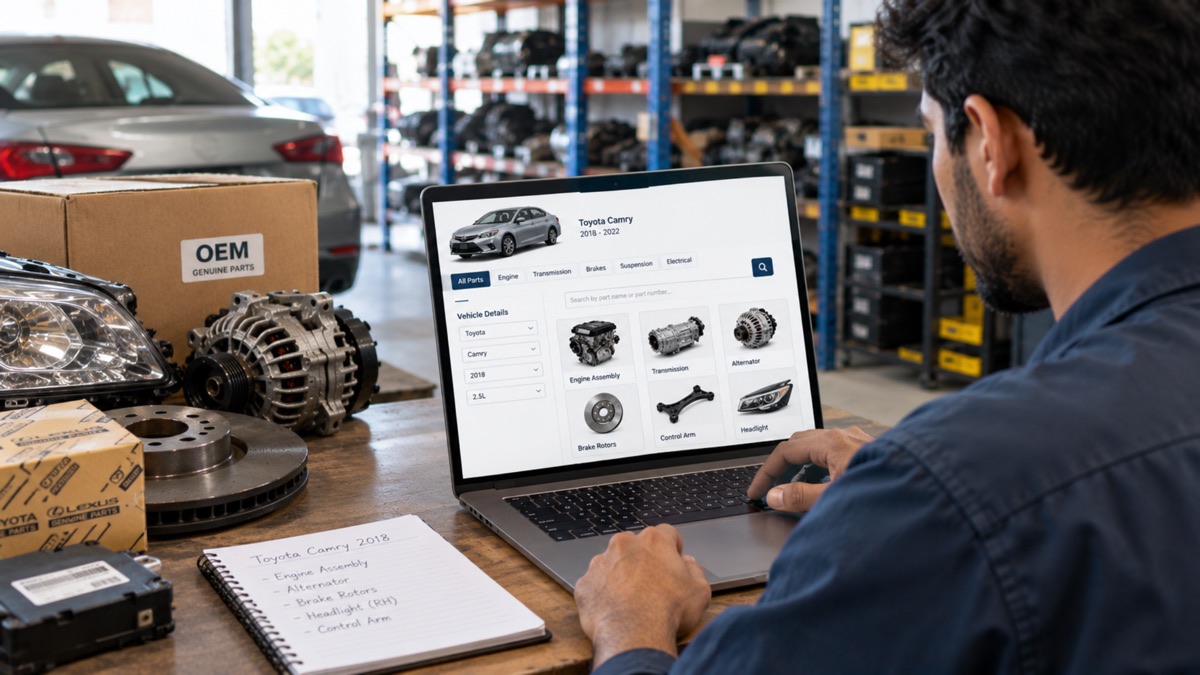
Your shop calls on a Tuesday afternoon. The alternator bracket on your 2013 crossover is cracked, the dealer says the assembly is discontinued, and two salvage yards ask for a number you don’t have handy. That’s when many drivers realize they need a better way to request hard to find car parts by vehicle.
The good news is that finding a rare part is often an information problem. Recycled parts suppliers search inventory across many yards, and the results depend on the vehicle details you provide. Quality Auto Parts can help you prepare the information suppliers need. Share your vehicle details with Quality Auto Parts to explore available options.
Why Certain Parts Vanish From the Shelf
Parts go scarce for boring reasons. A model sells in low volume, the manufacturer discontinues the assembly, and the only source left is a donor vehicle sitting in a yard three states away. Mid-year production changes are the other culprit. A bracket revised in March won’t fit a car built the previous November, even though both wear the same badge.
Option packages narrow things further. Towing packages, upgraded audio, adaptive cruise sensors and heated seat modules all change part numbers, and body panels add paint codes on top. None of this makes a part impossible to source. It just means guessing by year and model alone tends to fail, which is why hard to find used OEM parts need a more disciplined request.
The Vehicle Details That Actually Matter
How Suppliers Search Used Auto Parts by VIN
The 17-character VIN is the single most useful thing you can provide. It decodes engine family, transmission, plant, build date and often the original option content. Suppliers searching used auto parts by VIN rule out near-miss listings before anyone ships a box. You’ll find it at the base of the windshield on the driver’s side, on the door jamb sticker, and on your registration.
Interchange Numbers Help You Find Used OEM Parts by Vehicle
Most recyclers catalog inventory by interchange number, a code that groups parts fitting across multiple years, models and sometimes brands. If you can pull the OEM number cast or stamped on the old part, photograph it. A single number turns a vague search into an exact one, and it’s the fastest way to find used OEM parts by vehicle when the model spans a facelift.
Trim, Options and Build Date
Note trim level, engine size, drivetrain, transmission type and the build date on the door sticker. For electronics like an ECU, add whether the vehicle has push-button start and mention any programming already done. For body panels, give the paint code and say whether the panel carries parking sensors.
How to Request Hard to Find Car Parts Without Guesswork
A good request takes about four minutes to write and saves a week of back-and-forth. Include these:
1. Year, make, model, trim, engine and transmission.
2. The full VIN.
3. The exact part name plus OEM or interchange number if you have it.
4. Clear photos of the failed part, including any stamped numbers and connector plugs.
5. Your ZIP code, whether the address is commercial or residential, and how soon you need it.
6. Whether you’ll accept a different color, a higher-mileage unit, or a repairable part.
That last point matters more than people expect. Buyers who state their flexibility upfront get more options quoted, especially on hard to find used OEM parts. If you’ll take any color on a door shell because you’re painting it anyway, say so, and the search widens nationally.
Reading Grades Before You Agree to Buy
Used OEM auto parts are graded, and the grades are not marketing language. They describe donor mileage and damage on the specific piece.
| Grade | What it usually means | Typical use case | Indicative price vs new OEM |
|---|---|---|---|
| A | Low donor mileage, minimal wear or damage | Engines, transmissions, visible body panels | 30-50% |
| B | Mid-range mileage, minor cosmetic flaws | Doors, hoods, mechanical assemblies | 20-40% |
| C | Higher mileage or repairable damage | Brackets, interior pieces, budget repairs | 10-25% |
Ranges are indicative and move with demand, freight distance and how many donors exist nationally. A common sedan mirror might be $60, while a discontinued module for a low-volume trim can run several hundred used, simply because so few exist.
What Happens After You Submit a Used OEM Parts Request
Verification and Testing
A serious supplier doesn’t just pull a shelf tag and ship. Alternators and starters get bench-tested for output and draw. Engines are checked for compression and, where possible, run. Transmissions are inspected for metal in the fluid. ECUs get scanned for stored faults. Ask what testing was done on your unit and whether results are documented, because that answer separates careful sellers from box-shifters.
Freight, Packaging and Lead Times
Small parts move by ground carriers in three to six business days. Engines, transmissions, axles and body panels ship freight on a pallet, and freight brings its own rules. Residential delivery and liftgate service add cost, and someone must inspect the crate before signing. Photograph any damage before the driver leaves, because a clean signature makes a claim much harder to win later.
Price, Core Charges and Warranty Windows
Three cost items catch people out on a used OEM parts request:
• Core charge. A refundable deposit on rebuildable units like alternators, starters, calipers and ECUs. You get it back when the old part goes back, usually within a stated window.
• Freight. Often $150 to $450 for palletized items, occasionally more for long hauls or difficult delivery addresses.
• Warranty scope. Most used auto parts carry 30 to 90 days as standard, with longer terms sometimes available for an extra fee. Labor is rarely covered. Read what happens if the part fails: replacement, refund, or credit.
Return windows on electrical items are often shorter and sometimes final once installed. Ask whether the warranty survives a driveway installation or requires a licensed shop, since that clause appears more often than buyers notice.
When to Request Hard to Find Car Parts and When to Buy New
Recycled makes obvious sense for body panels, glass, seats, mirrors, wheels, engines, transmissions and modules the aftermarket never bothered to reproduce. Used OEM auto parts also win when fit matters and aftermarket copies are known to sit badly, which is common with hoods and headlight assemblies.
Buy new instead for wear items: belts, filters, brake pads, water pumps, sensors that fail from age rather than impact. If the repair cost approaches the vehicle’s value, price the whole job first, labor included. Sometimes the honest answer is that the car isn’t worth fixing, and a good supplier will say so rather than sell you a transmission.
Frequently Asked Questions
Do I really need my VIN to request hard to find car parts?
You can start without it, but expect slower and less accurate results. The VIN confirms engine, transmission, build date and factory options, which is what separates a fitting part from a returned one. It takes ten seconds to read off your registration and removes most of the guesswork.
How long does sourcing a discontinued part usually take?
Common parts are quoted the same day and delivered within a week. Genuinely rare items can take a few days just to locate, then several more for freight. If a supplier promises an obscure module overnight without checking anything, be skeptical. Honest lead times are a better signal than fast promises.
Are used OEM parts safe for critical systems?
Structural, airbag and braking components deserve extra caution and should be inspected by a qualified technician before installation. Many recycled mechanical assemblies perform reliably for years when tested properly. Ask what was checked, request the documentation, and have a professional confirm the part suits your specific repair.
What if the part arrives and doesn’t fit?
Contact the supplier immediately, before installing anything. Keep the packaging and photograph the tags. If the mismatch came from incorrect vehicle details on your side, expect to pay return freight. If the supplier shipped the wrong interchange, a reasonable seller covers the return and the replacement.
Conclusion
Sourcing gets easier the moment you stop describing your car in general terms. Buyers who learn to request hard to find car parts with a VIN, an interchange number, clear photos and honest flexibility get better quotes and fewer returns than the ones who send a one-line email. Grades, testing notes, core charges and warranty terms are all fair questions before money changes hands, and any supplier worth using answers them plainly.
If you’re chasing a part nobody seems to stock, gathering your vehicle details first and then talking to an experienced recycled parts team is the fastest route to a straight answer.