It usually starts as a hum at highway speed. Then it becomes a whine that changes pitch when you turn, and eventually a shop pulls the diff cover, finds metal flake in the gear oil, and gives you the bad news. A new carrier from the dealer can cost more than the vehicle is worth, which is why most owners start pricing a used axle assembly instead. Quality Auto Parts can be a practical option when you're looking for a replacement without paying dealer-level prices.
That’s a sensible move. But axles are one of the easiest parts to order wrong. Gear ratio, ABS tone rings, brake configuration and mounting points all change within a single model year, and ordering on year and make alone gets you a part that bolts up but never drives right. Quality Auto Parts makes it important to verify the exact axle specifications before purchasing, so you get the correct assembly for your vehicle.
What a used axle assembly actually includes
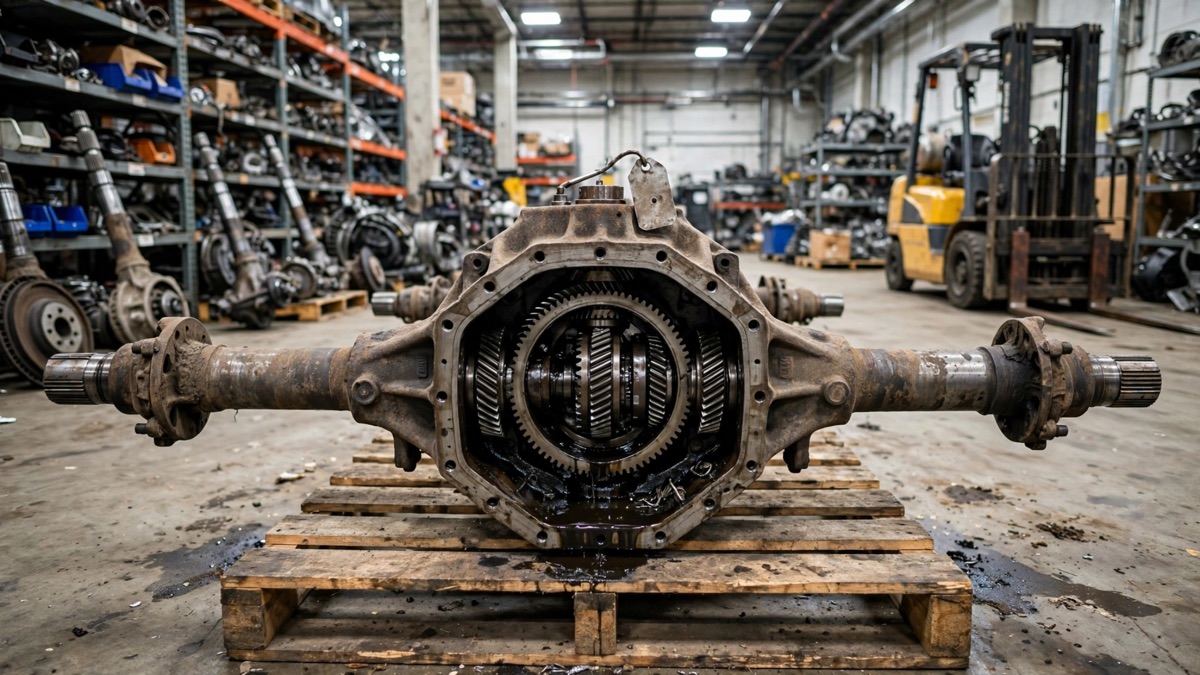
Yards use the word “assembly” loosely, and a used axle assembly can mean three different things. Some listings mean the complete unit: housing, differential carrier, ring and pinion, axle shafts, bearings and seals. Others mean a bare housing with the internals pulled. A third leaves brakes and hubs attached, which saves a weekend of transferring hardware but adds freight weight.
Before you compare two quotes, read what’s physically in the crate. A $450 quote that excludes shafts and brakes isn’t cheaper than a $650 complete unit once you’ve bought the missing pieces at retail.
Used front axle assembly considerations
On a front-wheel-drive car there’s no separate front differential; the gears live in the transaxle and what people call axles are CV shafts. A used front axle assembly becomes a real conversation on 4x4 trucks and SUVs, where the housing carries a disconnect, vacuum actuator or electronic hub arrangement that has to match your truck exactly.
Get the disconnect style wrong and four-wheel drive either won’t engage or won’t release. Confirm the actuator type and shaft design in writing before you pay.
Used rear axle assembly considerations
A used rear axle assembly is the more common swap, and the more forgiving one, provided the gear ratio matches. On most modern vehicles, the powertrain and ABS modules are calibrated around a specific ratio. Put a 3.42 under a truck that left the factory with 3.73 and you’ll get speedometer error, odd shift points, and sometimes a stability light that never goes out.
Width matters too. A used axle assembly off a short-bed truck can sit narrow under a long bed in the same model year.
Why the VIN beats the year, make and model
Your VIN is the single most useful thing you can hand a used axle assembly supplier. It decodes the build sheet: engine, transmission, axle code, brake package and drivetrain option. Two identical-looking trucks off the same lot can carry different rear ends because one was ordered with a towing package.
Send all 17 characters, a photo of the housing tag, and a note about anything already modified. A previous owner’s regear won’t show up in the VIN.
Interchange numbers and used axle parts
Yards catalog used axle parts by interchange number, not by marketing names. The interchange groups every year and option combination that shares the same physical part. When a supplier quotes one, ask which donor vehicle it came from. A part listed for your 2014 may have come off a 2011. That’s usually fine, but you want to check the ratio yourself.
Reading the axle tag
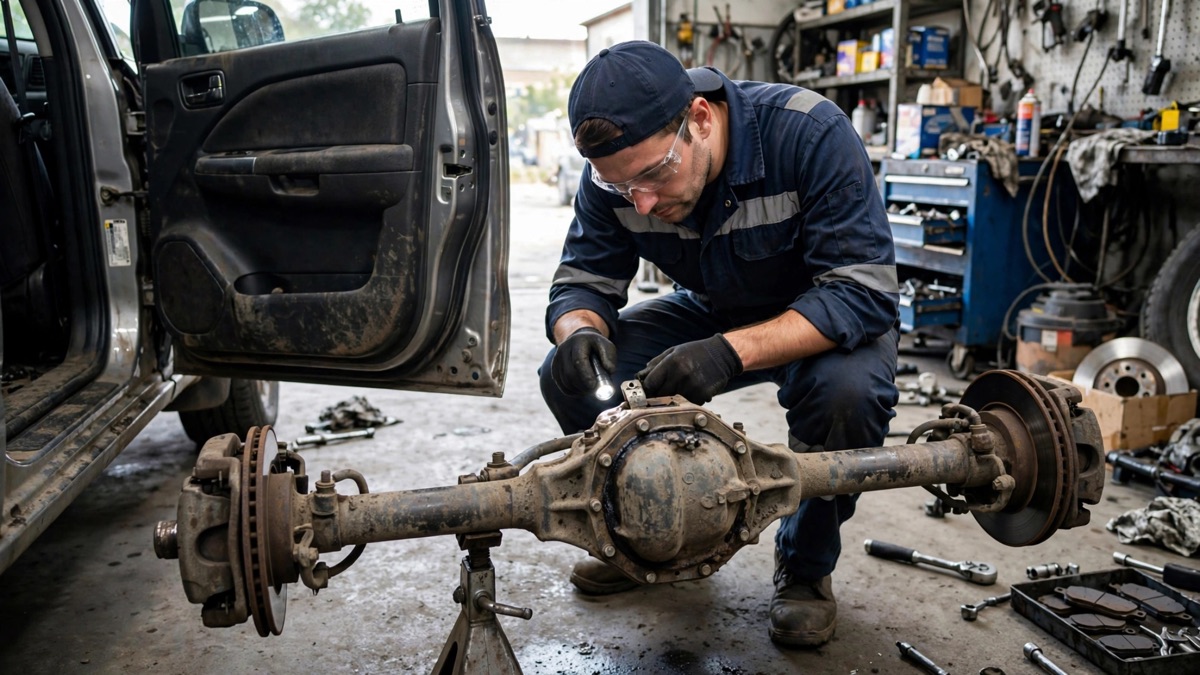
Alt text : Mechanic checking axle tag and gear ratio
Most housings carry a tag with a ratio code, build date and sometimes a limited-slip indicator. Photograph it. If the tag is long gone, count it the old way: mark the driveshaft, rotate the wheels two full turns with one side down, and count driveshaft revolutions. Rough, but it settles a 3.55 versus 4.10 argument in ten minutes.
How a used axle assembly is graded and tested
Good suppliers grade rather than guess. The practical questions are consistent:
• Donor mileage, and whether it’s verified from the odometer or estimated
• Whether the gear oil was drained and inspected for metal
• Backlash and gear pattern check, or at minimum a rotation test for noise
• Whether the donor was a collision vehicle and which end took the hit
A used OEM axle assembly pulled from a low-mileage front-end collision is often the best buy on the lot, because the rear drivetrain never absorbed the impact. Ask for that history. A supplier who won’t say how the donor was wrecked is asking you to accept a known risk.
What a used axle assembly costs
A used OEM axle assembly is priced on availability, freight distance and how complete the unit is. These ranges are indicative, and a specific fitment can sit outside them.
| Vehicle type | Typical used unit | What drives the price |
|---|---|---|
| Compact FWD car (CV shafts) | $45 to $140 each | ABS ring, shaft length, manual vs auto |
| Midsize RWD sedan rear | $250 to $600 | Ratio, limited slip, brakes included |
| Half-ton pickup rear | $400 to $1,100 | Ratio, locker, width, disc vs drum |
| 3/4 or 1-ton truck rear | $700 to $2,000 | Full float design, bolt pattern |
| 4x4 truck front | $500 to $1,600 | Disconnect type, actuator, CV condition |
Compare that against a rebuild. If the housing is straight and only the gears failed, regearing your own unit sometimes lands within a hundred dollars of a used one.
Freight, core charges and heavy used automotive parts
Axles are among the heaviest used automotive parts anyone ships. A complete truck rear can pass 250 pounds, which puts it on a pallet with an LTL carrier rather than in a ground parcel network. Expect a separate freight line, commonly $150 to $400 depending on distance and whether you need liftgate service.
Ship a used axle assembly to a shop or commercial address if you can. Residential liftgate service adds cost, and you’ll still need equipment to move the crate.
Some suppliers apply a core charge, refunded when your old unit goes back on the same pallet. Keep the crate and paperwork. Cores get refused for missing shafts or a cracked housing.
Checking the part the day it arrives
Freight claims on a used axle assembly have short windows, often just a few days. Do this before the driver pulls away:
1. Photograph the crate on the truck, before unloading.
2. Note any visible damage on the delivery receipt before signing.
3. Check the tag against the ratio you ordered.
4. Rotate the pinion by hand and listen for grinding or catching.
5. Confirm the warranty start date, which usually begins on delivery.
Most warranties on used drivetrain parts run 30 to 90 days, parts only. Labor is rarely covered.
Frequently Asked Questions
How do I know what gear ratio my vehicle has?
Check the tag on the differential housing first, then the option codes on the door jamb or glovebox sticker. If both are missing, jack the rear wheels, mark the driveshaft, and rotate the wheels two full turns while counting driveshaft rotations. That count gets you close enough to order safely.
Can I use a used axle assembly from a different model year?
Often yes. Interchange catalogs group parts across several years when the housing, width and mounting points are identical. What has to match is the ratio, brake configuration, ABS sensor style and overall width. A supplier working from your VIN will name the safe substitutes.
Is a used axle assembly worth it compared to rebuilding mine?
If the housing is bent, the tubes are damaged, or the vehicle is older and you want a fast, low-cost fix, used generally wins. If your housing is straight and you only need gears and bearings, a rebuild costs similar money and gives you a unit with known history.
What warranty should I expect on used axle parts?
Thirty to ninety days is standard on used axle parts, covering the part alone. Extended coverage of six to twelve months is sometimes offered at extra cost. Read whether the warranty is replacement-only or refund-eligible, and whether it survives if someone other than a professional installs it.
Conclusion
Buying a used axle assembly gets straightforward once you stop shopping by year and model and start shopping by VIN, ratio and interchange. Quality Auto Parts makes the process easier by helping you focus on the details that determine fitment. Confirm exactly what’s in the crate, ask how the donor vehicle was wrecked, budget separately for freight, and inspect the unit before you sign the delivery receipt. Those habits eliminate most of the returns that make people nervous about used drivetrain parts. Take twenty minutes to gather your VIN, a photo of the axle tag and a clear note on your brake setup before you request quotes. Quality Auto Parts can help you talk through the fitment with an experienced parts specialist, making it easier to get an answer matched to your vehicle.Get the Right Part Today.