The clunk over speed bumps got worse, the steering wheel sits slightly off center, and a shop just handed you an estimate with four line items you don’t recognize. New components for a ten-year-old vehicle can approach a third of what the car is worth, which is why plenty of owners start looking at used suspension parts instead. Quality Auto Parts can be a practical option when you know which components are worth buying used and which ones are better replaced new.
That can be a smart call or an expensive mistake, and the difference is which component you’re buying. Some suspension pieces have decades of life left in them. Others are wear items where secondhand means you’re buying somebody else’s problem at half price. With Quality Auto Parts, understanding the condition, compatibility, mileage, and history of the part can help you make a more informed decision before spending money.
Which components are worth buying used
Used suspension parts fall into three groups, and knowing which group a component belongs to saves you from the most common regret.
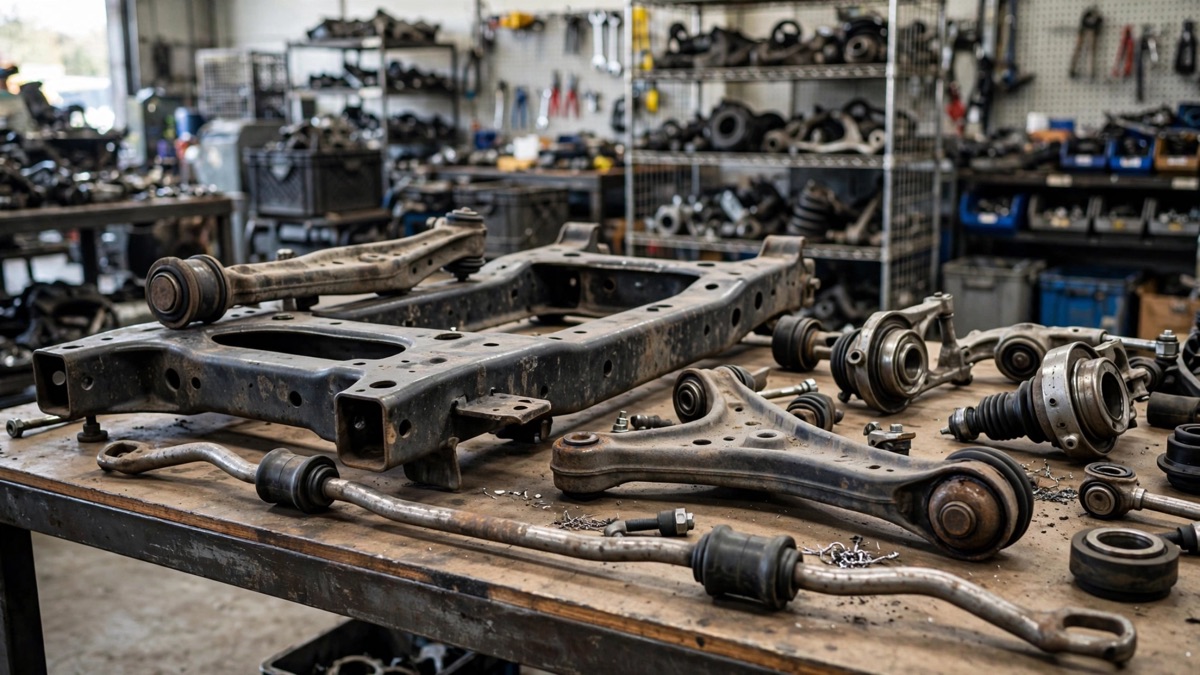
• Usually safe used: knuckles, spindles, hubs with good bearings, subframes, coil springs, sway bars, brackets and mounts.
• Depends entirely on condition: control arms, trailing arms, strut mounts, and anything with rubber bushings.
• Rarely worth it: shocks, struts, and any part where damping performance is the whole point.
That third category surprises people. A damper is a wear item with no external way to prove remaining life, so used shocks and used struts are the one area where the used route often costs more in the long run.
Used shocks and used struts
A shock can lose a large share of its damping ability while still looking clean and holding fluid. Used shocks pulled from a 90,000-mile donor probably have 90,000 miles of fade in them, and you cannot see it. Bounce-testing on a bench tells you almost nothing.
There’s one exception worth knowing. Electronically adjustable dampers on premium vehicles can cost $700 or more each new, and a low-mileage used pair from a wrecked donor is sometimes the only realistic option. In that narrow case, used struts make financial sense. For a common sedan, buy new.
Used control arms and bushings
Used control arms are a genuine bargain when the arm itself is straight and the bushings are intact. What you’re really buying is the casting, the ball joint and the rubber. Look for cracked or split bushing rubber, play in the ball joint boot, and any sign of a rewelded or bent arm.
Aluminum arms are worth extra scrutiny. Corrosion pitting around the bushing sleeves is common in road-salt regions, and a pitted aluminum arm is not repairable.
Matching used suspension parts to your vehicle
Suspension varies more within a model line than almost any other system. The same year and body can carry a standard setup, a sport package with different spring rates and shorter arms, a towing package, or a self-leveling rear.
Start with your VIN and the option codes on the door jamb or glovebox sticker. Then check part numbers stamped or cast into the component you’re replacing. Sellers of used auto parts catalog by interchange number, and a good one will confirm which trims share your exact piece before quoting.
Left, right and drive type
Used suspension parts are handed. A driver-side lower control arm won’t fit the passenger side even though they look like mirror images in a photo. Confirm the side in writing on every order.
Drive type matters too. Front-wheel drive and all-wheel drive versions of the same crossover often use different knuckles and different arm geometry, and the wrong one bolts in far enough to fool you before the alignment shop finds it.
How to inspect used suspension parts
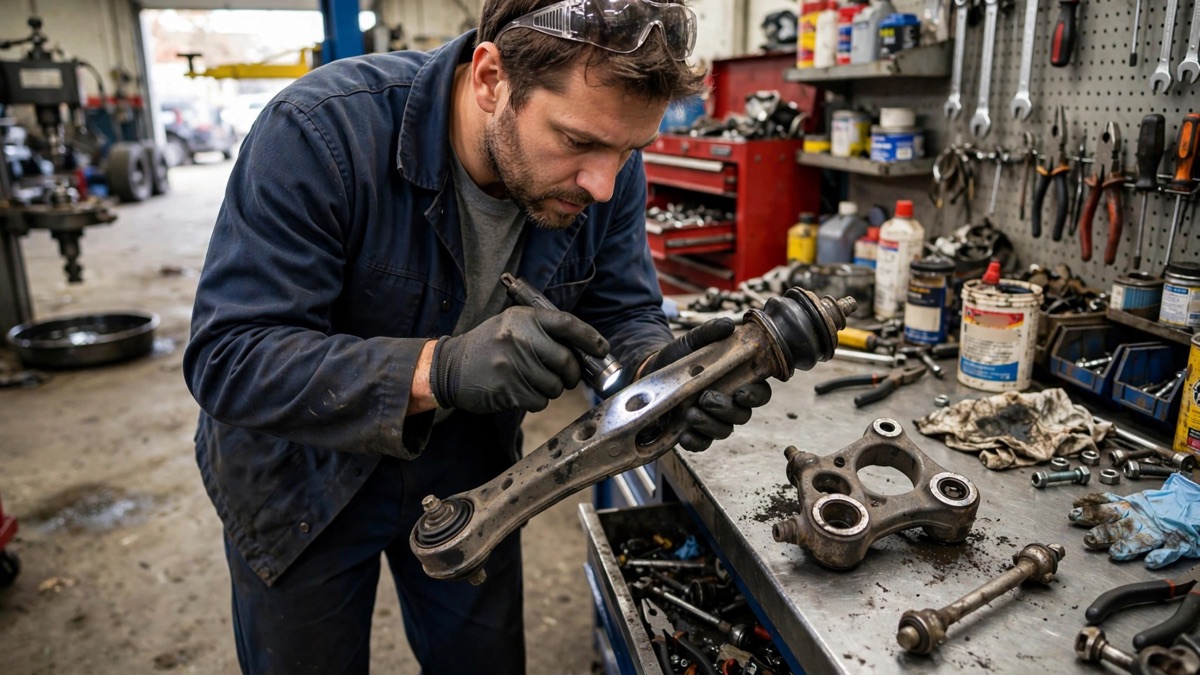
Alt text : Mechanic inspecting control arm bushing
Whether you’re at a self-service yard or unboxing a delivery, used suspension parts deserve the same checks:
1. Sight down the arm or link for bends, and check for weld repairs.
2. Squeeze and twist every bushing. Cracked, separated or oil-soaked rubber is a no.
3. Move ball joints through full travel, feeling for notchiness or free play.
4. Check boots on joints and tie rods for splits, which let grit in.
5. Spin bearings by hand and listen for roughness or grinding.
6. Look for corrosion at bolt holes and bushing sleeves, not just surface rust.
Surface rust on a steel arm is cosmetic and normal. Flaking, layered rust that leaves pits is structural, and no amount of paint fixes it. When in doubt on a safety-critical part, buy new.
What used suspension parts cost
These ranges are indicative and shift with vehicle popularity and region.
| Component | Typical used price | New equivalent |
|---|---|---|
| Lower control arm | $35 to $110 | $90 to $300 |
| Steering knuckle | $50 to $180 | $200 to $600 |
| Complete strut assembly | $60 to $200 | $150 to $500 |
| Rear subframe | $150 to $500 | $700 to $2,000 |
| Air suspension strut | $150 to $450 | $600 to $1,400 |
| Sway bar with links | $30 to $90 | $80 to $250 |
The savings look largest on big, expensive assemblies that rarely wear out, which is exactly where used suspension parts earn their reputation. On small wear items, the gap narrows enough that new parts with a warranty usually win.
Used steering parts and where to draw the line
Used steering parts follow the same logic as suspension, with a tighter safety margin. Steering racks, columns and knuckles are reasonable used buys when they’re free of play and leaks. Tie rod ends and inner tie rods are cheap new, so buying those used saves ten dollars and risks a component that connects your hands to the front wheels.
If you’re sourcing a used steering rack, ask whether it was pressure tested, whether the boots are intact, and whether the pinion turns smoothly across full lock. On electric power steering racks, ask whether the motor and sensor were function tested, since a rack that needs coding to the vehicle adds shop time you didn’t budget for.
Installation, alignment and torque
Two costs get forgotten on this job. The first is an alignment, typically $90 to $150, and it isn’t optional after replacing any arm, knuckle or tie rod. The second is hardware. Many suspension bolts are torque-to-yield or come with crush washers and stretch bolts that should not be reused.
Bushings must be torqued at ride height, not with the suspension hanging. Tighten a control arm bolt with the wheel in the air and the bushing sits permanently preloaded, which tears the rubber within months. Plenty of people blame used suspension parts when the real fault was the installation sequence.
Budget realistically: parts, alignment, new hardware, and a shop’s time if you’re not doing it yourself.
Frequently Asked Questions
Are used suspension parts safe to install?
Structural pieces like knuckles, subframes and control arms are safe when they’re straight, corrosion-free and have sound bushings and joints. Damping and wear items are a different story. Inspect anything you buy, replace boots and hardware, and have the vehicle aligned before you drive it hard.
Should I buy used shocks and struts to save money?
Usually not. Dampers wear invisibly, so a used unit may have most of its life gone with nothing to show for it externally. The exception is expensive electronic or air-adjustable dampers, where a low-mileage used pair from a wrecked donor can be worth the risk.
How do I know a used control arm fits my car?
Match by VIN, trim level and drive type, then compare the casting number on your old arm to the one being sold. Confirm which side it’s for. A seller working from your VIN and interchange number can tell you which model years share your exact part.
What warranty comes with used suspension parts?
Most sellers offer 30 to 90 days on used auto parts, covering the component only. Labor and alignment costs are rarely included. Ask whether the warranty is replacement-only or refund-eligible, and confirm whether it starts on delivery or on installation.
Conclusion
Choosing used suspension parts well comes down to sorting components by how they fail. Quality Auto Parts makes it easier to buy castings, knuckles, subframes and brackets used with confidence, while rubber components should be inspected carefully. Pay for new dampers and tie rod ends unless the price gap is genuinely large. Match by VIN and trim rather than year and model, confirm which side you’re ordering, and budget for the alignment and hardware that always follow. Take photos of the part you’re replacing, including any cast numbers, before you start pricing options. If you’re not certain which version your vehicle uses, an experienced parts specialist at Quality Auto Parts can help decode it from your VIN and point you to the right piece. Ready to Find Your Part?