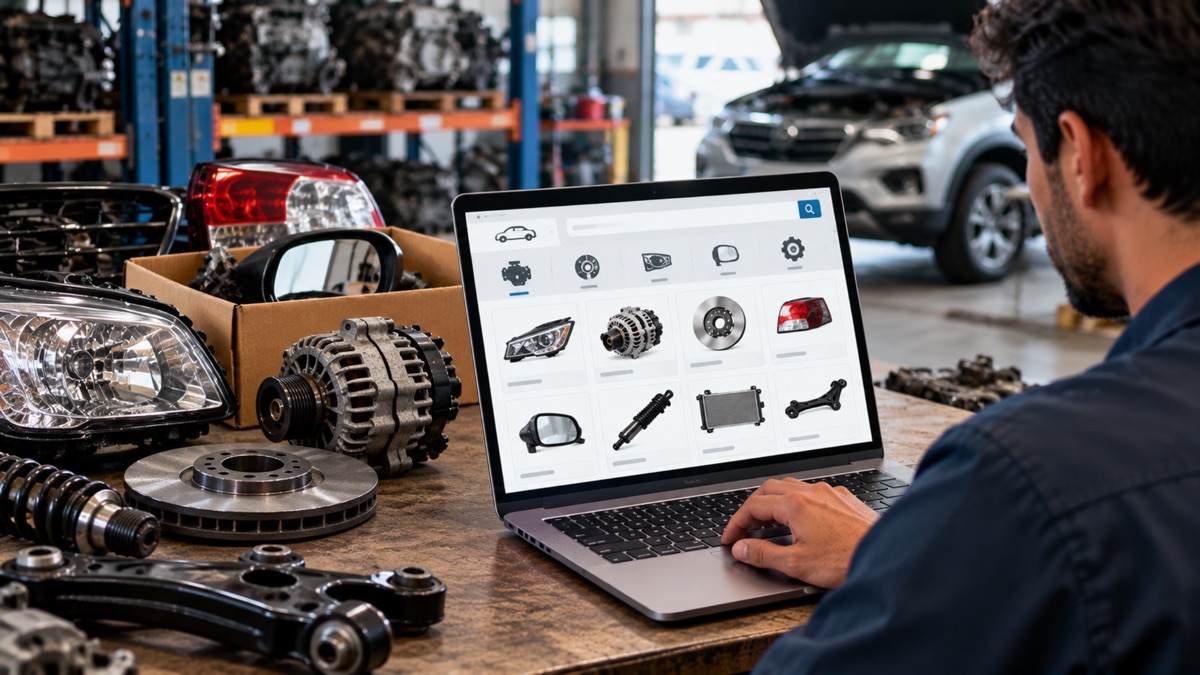
Ten years ago, replacing a cracked taillight housing on a six-year-old sedan meant an afternoon on the phone. You called yards, spelled out your model, and waited while someone checked rows of cars. Today, a used auto parts search can reach thousands of yards at once and return results quickly.
That change has reshaped what drivers expect: clear prices, photos of the actual part, donor mileage, and warranty details. The network works best when you provide accurate vehicle information. Quality Auto Parts can help you understand what details to share. Contact Quality Auto Parts to find compatible options.
What a Used Auto Parts Search Actually Does
Behind a simple form sits a live index of recycler inventory. Independent yards, dismantlers and larger recycling operations upload what they pull, tagged with interchange numbers, donor mileage, grade and location. When you submit a request, the system matches your vehicle against that index and returns every unit that should fit, sorted by condition, distance and price.
The important word is “should.” Software matches numbers. It doesn’t know your car left the factory with a towing package, or that the previous owner already swapped the module. Someone still has to verify the match before the box leaves the shelf, which is why the better platforms pair automated matching with a human check.
Why the Old Way Was So Slow
Phone sourcing failed for structural reasons. Each yard knew only its own lot, and inventory lived in a filing cabinet or someone’s memory. Nobody could tell you the same part sat two counties over at half the price, or let you compare a low-mileage unit against a cheap high-mileage one.
A used auto parts search flipped that. One request reaches inventory nationally, so scarcity gets measured across the whole country instead of one zip code. For common parts this saves time. For discontinued assemblies it’s the difference between a repair and a written-off car.
The Data That Makes a Used Part Finder Work
VIN Decoding and Interchange Numbers
Your VIN decodes engine, transmission, plant and build date. Interchange numbers group parts that fit across multiple years and sometimes multiple brands, which is how a used part finder can suggest a 2015 donor for your 2017 vehicle and be right. Without those two data points, you’re browsing by year and model, which is where mismatches come from.
Grading, Mileage and Photos
Recycled inventory carries a grade describing wear and damage, plus donor mileage. Good listings include photographs of the exact unit rather than a stock image, and note any broken tabs, scratches or missing brackets. If a listing shows a generic photo and no mileage, treat the price as incomplete information.
Where Online Listings Still Fall Short
A used auto parts search hasn’t solved everything. Three problems come up repeatedly:
• Stale inventory. A yard sells a part on a Tuesday and updates the feed on Friday. You order in between and get a cancellation.
• Optimistic grading. Grades are self-reported at many yards. “Grade A” from a careful dismantler is not the same as “Grade A” from a lot clearing space.
• Freight surprises. A $220 tailgate becomes a $520 delivery once palletized freight, liftgate and a residential address are added.
None of this makes buying used auto parts online a bad idea. It means the listing starts the conversation rather than ending it. Ask whether the part is physically in hand and what the delivered total is.
Comparing Your Sourcing Options
| Source | Typical cost vs new OEM | Fit certainty | Usual wait |
|---|---|---|---|
| Dealer, new OEM | 100% | Highest | 1-5 days, longer if backordered |
| Aftermarket new | 40-70% | Varies by part and brand | 2-5 days |
| Online marketplace listing | 25-50% | Depends on seller detail | 3-10 days |
| Recycled supplier network | 20-50% | High when VIN-verified | 2-7 days, plus freight |
Figures are indicative and shift with model, demand and distance. A common alternator might land around $70 to $160 used against $250 or more new. An engine assembly for a mainstream sedan often runs $900 to $2,400 depending on mileage and warranty, before freight.
How to Run a Used Auto Parts Search That Returns Real Results
The fastest way to find used auto parts that actually fit is to treat the request like a parts counter conversation rather than a web form. Include:
1. Year, make, model, trim, engine and transmission.
2. Your full 17-character VIN.
3. The OEM or interchange number stamped on the failed part, if you can read it.
4. Photos of the old part, including connectors and any labels.
5. Your ZIP code and whether delivery is residential or commercial.
6. Your ceiling on price and your deadline.
Then ask three questions before paying: is this unit in stock right now, what testing was performed, and what does the warranty cover if it fails after installation. That one minute separates a used auto parts search ending in a fitted part from one ending in a return.
State your flexibility too. If you’ll accept any color on a fender you’re painting anyway, say so, and a good auto parts locator widens the search across every donor in the network instead of the few matching your paint code.
Costs, Freight and Warranty in an Online Purchase
Freight and Core Charges
The sticker price is rarely the delivered price. Small parts ship ground for $15 to $40. Palletized freight for engines, transmissions and body panels commonly runs $150 to $450, more for long hauls or awkward addresses. Rebuildable units like alternators, starters and calipers carry a refundable core charge, returned when your old unit goes back inside the stated window.
Warranty Terms Worth Reading
Warranty terms vary more than anything else. Thirty to ninety days is the common baseline for mechanical parts, with extended coverage sometimes offered for a fee. Labor is almost never included, which matters when a shop charges eight hours to install a transmission. Check whether a failure means replacement, refund or store credit, and confirm the return window on electrical items.
What a Used Auto Parts Locator Means for Repair Shops
Independent shops have quietly become the heaviest users of a used auto parts locator. A collision estimate that once waited three days for dealer quotes gets built the same morning, with recycled options priced alongside new ones. Insurers often specify recycled parts on older vehicles anyway, so sourcing built into the estimating workflow keeps cars moving through the bays.
For a shop, the wins are cycle time and margin. For the owner, the win is simpler: repairs that would have been uneconomic at dealer prices become worth doing, and a nine-year-old car with a good drivetrain stays on the road.
Frequently Asked Questions
Is a used auto parts search reliable for older vehicles?
It’s often the only realistic route. Once a model passes roughly ten years, dealers discontinue assemblies and aftermarket makers lose interest, while salvage inventory keeps growing. Supply for genuinely old or low-volume vehicles thins out too, so expect longer lead times and be ready to accept a wider range of donor mileage.
How do I know the part will fit my car?
Provide the VIN and, where possible, the number stamped on the old part. Interchange data handles most of the matching, but factory options and mid-year revisions cause exceptions. Ask the supplier to confirm the specific unit against your VIN before shipping rather than relying on the listing alone.
Can I buy used auto parts online without a mechanic?
Yes, and many people do for mirrors, wheels, interior trim and body panels. For braking, steering, airbag or engine components, have a qualified technician inspect and install the part. The saving on the part disappears quickly if a fitment error damages something else.
What happens if the part fails soon after installation?
Contact the seller inside the warranty window with your invoice and the diagnosis. Most suppliers replace the unit or refund the part price. Labor is rarely reimbursed, so ask about that before booking your shop. Keep the original packaging and tags, since returns without them often get refused.
Conclusion
The change here isn’t really about websites. Inventory sitting in scattered yards became visible, comparable, and verifiable, so a used auto parts search can answer in hours what once took days of phone calls. You can weigh a low-mileage part against a cheaper high-mileage one, see the freight cost before committing, and read the warranty terms first. What hasn’t changed is that accuracy starts with you. Send the VIN, send photos, and ask what was tested.
If you’re trying to find used auto parts and every listing looks the same, talking through your vehicle details with an experienced recycled parts team is the quickest way to narrow it down. Contact Quality Auto Parts to ask about fitment, current availability, and prices, or get in touch to explore more of the collection and learn about your options.