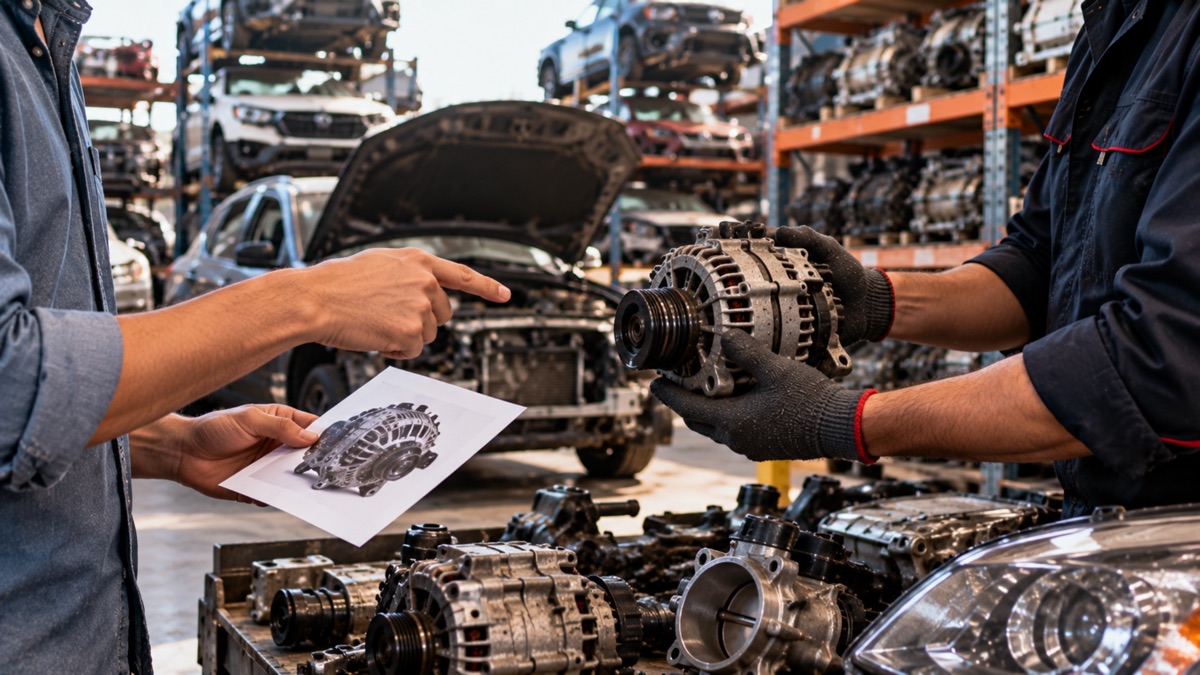
You’ve got a nine-year-old crossover with a dead body control module. The dealer says it’s on national backorder with no estimated date. Two local yards have never had that model come through, and an online listing has vague fitment notes and a seller who won’t answer questions.
This is where how an auto parts request finds difficult parts becomes clear: instead of contacting sellers one by one, you submit your vehicle and component details once. The request can be checked against inventory across many recycling yards, and sellers can respond with what they have available. Quality Auto Parts can help you understand what details to include. Contact Quality Auto Parts to begin your search.
What an Auto Parts Request Actually Is
Strip away the software and it’s a standardised way of asking a question. An auto parts request captures your vehicle identity, the component you need, your condition tolerance and your location, then distributes that record to sellers who can answer it.
The difference from a keyword search is direction. A search makes you guess what a listing might be called and hope someone wrote it that way. A request flips that: you state the need in structured form, and software translates it into part numbers, interchange codes and trade terminology. You never have to know your part is catalogued as an “integrated body module” rather than a “fuse box brain.”
That’s why people who request an auto part rather than browsing tend to get usable answers on obscure components. The system knows the vocabulary you don’t.
Why Difficult Parts Are Difficult
Not every hard search is hard for the same reason, and knowing which problem you have changes how you frame an auto parts request.
Low production volume
A trim level that sold in small numbers means fewer donor vehicles reaching salvage. Manual-transmission variants, work-truck packages and single-year colour options all thin the pool. Nothing is wrong with your search, there simply aren’t many out there, which is when a nationwide used auto parts request beats a local one.
Mid-year engineering changes
Manufacturers revise components quietly. A wiring harness or bracket can change in March of a model year with no name change on the box. If you order by year alone you’re gambling on which revision arrives. The VIN resolves it, which is why every serious used auto parts request asks for all seventeen characters.
The part was never sold separately
Some components only came as part of a larger assembly. You wanted the switch, the factory only sells the whole door panel, and the recycled market becomes the only sensible route.
What Happens to Your Auto Parts Request Behind the Scenes
Once submitted, your record is parsed and matched against interchange databases before it reaches a human. Those databases map which components carry across model years, platforms and sometimes brands. A single request can surface compatible stock from vehicles you’d never think to look at.
Yards holding a match respond with a quote. Each quote should identify the donor vehicle, state mileage where relevant, assign a condition grade and give a shipping figure. Every part request auto parts recyclers receive is logged against live stock, so a quote generally means the item is physically on a shelf, not theoretically available.
Turnaround on a used car parts request is usually a few hours for common items. For genuinely scarce components, allow two or three days while regional yards check inventory that hasn’t been catalogued yet.
The Details That Decide Whether You Get a Match
Weak inputs produce weak results. A part request auto parts specialists can act on straight away includes all of the following:
1. The complete 17-character VIN, from the door jamb sticker, dash plate, registration or insurance card.
2. The component name in ordinary words, plus any number stamped or printed on the old part.
3. Clear photos showing the connector, the mounting points and the part in position.
4. Your zip code, since freight materially changes the total on anything heavy.
5. Your limits on mileage, cosmetic condition and budget, so sellers filter themselves.
If you want to request a car part and genuinely cannot find a number on it, photograph it from three angles anyway. Experienced parts people identify components visually every day, and photos carry an auto parts request further than most people expect.
When to Request a Car Part Instead of Buying a Listing
Both routes have their place. Here’s the honest split:
• Buy the listing when the part is cheap, common, clearly photographed, and the fitment is unambiguous. Mirrors, wheels and interior trim for high-volume models usually fall here.
• Send a request when the part is expensive, electronic, VIN-programmed, safety-related, or when your first three searches turned up nothing convincing.
• Definitely send a request for engines, transmissions, transfer cases, ECUs and airbag modules, where a fitment error costs you both freight and labour.
• Send a request when you need several parts from the same donor vehicle, because one yard shipping four items together saves real money on freight.
A used car parts request also gives you negotiating room a fixed listing never will. Multiple yards quoting the same component against each other tends to tighten the price by itself.
Reading the Quotes You Get Back
Once the offers from an auto parts request start landing, price is the least useful number in isolation. Compare the full picture instead.
| What to compare | Why it matters |
|---|---|
| Condition grade (A/B/C) | Sets expected remaining life and cosmetic state |
| Donor mileage | The single best proxy for wear on mechanical assemblies |
| Warranty length | Commonly 30 to 90 days; longer terms exist for drivetrain |
| Labour coverage | Most warranties replace the part only, not the reinstall |
| Freight and delivery type | Terminal pickup is cheaper than a residential liftgate drop |
| Core charge | Typically $30 to $150 back when your old unit returns |
As an indicative feel, recycled assemblies commonly land 40% to 70% below new OEM pricing, with the gap widest on electronics and body panels. Treat any figure as dependent on grade, mileage and scarcity that week.
Mistakes That Slow an Auto Parts Request Down
Most delays trace back to the same handful of habits, all avoidable in about a minute:
• Submitting the licence plate instead of the VIN, which doesn’t resolve trim or engine options
• Describing a part by the symptom (“the thing that makes the AC stop”) rather than the component
• Refusing anything above 60,000 miles on a vehicle that’s twenty years old
• Paying before confirming the seller’s interchange number matches your vehicle
• Ignoring the return window in the fine print until after you’ve installed it
Frequently Asked Questions
Does an auto parts request cost anything to submit?
Submitting is normally free, and you’re under no obligation to buy from any quote you receive. You pay only when you accept an offer. Be wary of anyone charging a fee just to search inventory, since the standard across the recycled parts trade is quote-first, pay-later.
How quickly will I hear back after I request an auto part?
Common components usually generate quotes within two to four business hours. Rare or discontinued items can take two to three days while yards physically verify stock. If three days pass with nothing, loosen your mileage or cosmetic requirements and resubmit rather than assuming the part doesn’t exist.
Can I request a car part if I only have the year, make and model?
Yes, and for mirrors, panels or wheels that’s often enough. For transmissions, control modules and emissions components, missing the VIN meaningfully raises your odds of a mismatch, because factory build options split fitment in ways the model name never shows.
What if the part I receive turns out to be wrong?
Contact the seller before installing anything and send photos of the difference. Where the fitment error is theirs, reputable yards cover the return freight and replace or refund. Installing first almost always voids the warranty, so always trial-fit connectors and bolt patterns before committing.
Conclusion
The reason an auto parts request works for difficult components is simple: it reverses the search. Instead of guessing which seller might have the part, you provide a precise description of your vehicle and let sellers with available stock respond. Include the full VIN, clear photos, the number from the old unit, and the condition you’ll accept. Compare offers by grade, mileage, warranty, and freight, and confirm the interchange number before paying.
If a part has stalled your repair for weeks, contact Quality Auto Parts to discuss your vehicle and sourcing options. Get in touch to check availability, pricing, and other parts in the collection, and learn more about finding the right match.