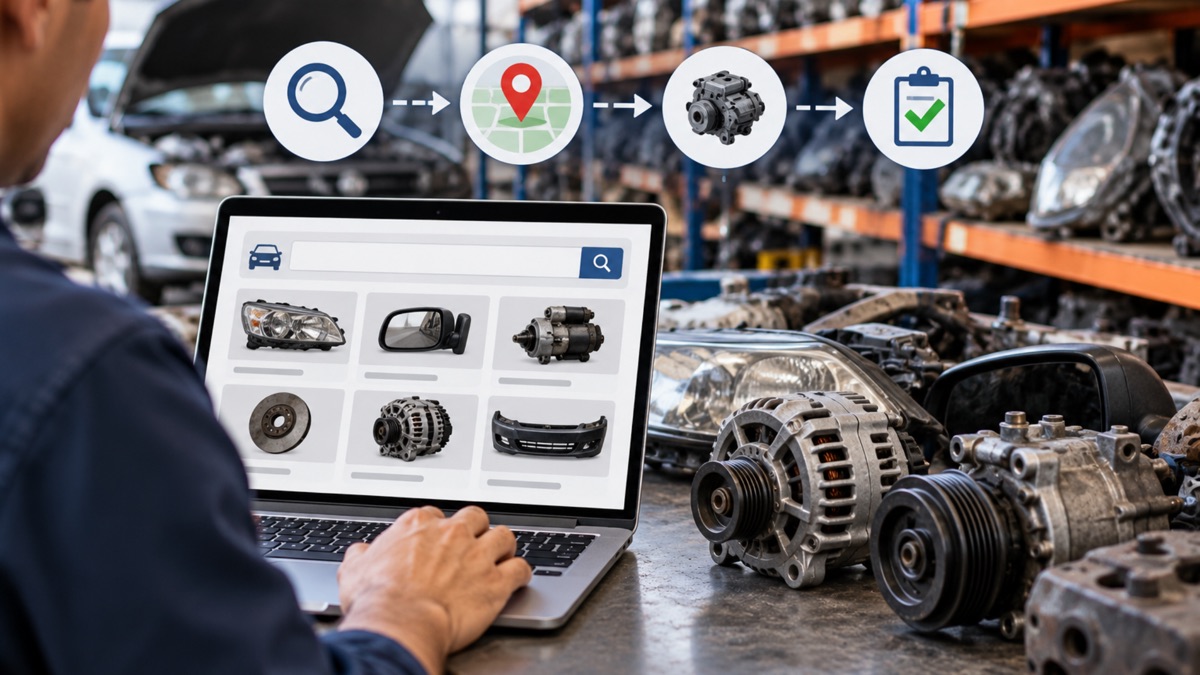
You need a transfer case for a nine-year-old SUV. The dealer wants a small fortune and quotes six weeks. Three salvage yards near you don’t answer the phone, and the fourth has one—but it’s damaged. This is exactly the situation a used auto parts locator is built for: one request sent to a network of recyclers, answered by yards that have your part in stock.
The process is simpler than it sounds. Behind the scenes are shared inventory systems, interchange numbers, and specialists who match parts to vehicles. Quality Auto Parts can help you understand how those matches work and what to ask before you buy. With Quality Auto Parts, you can compare available options and make a more informed choice.
What a Used Auto Parts Locator Actually Does
Think of it as a broker with reach. Instead of you calling yards one at a time, a used auto parts locator takes your vehicle details and part requirement and pushes them into a network where hundreds of recyclers list live inventory. Yards that hold a match respond with condition, mileage, price and availability.
The value isn’t only in speed. A single yard sells you what it happens to have. A network shows you three or four options at different grades and prices, which is how you end up choosing between a 40,000-mile engine with a longer warranty and a 110,000-mile one that costs half as much. Choice is the real product, and it’s why most people who need to find used auto parts in a hurry stop calling yards individually after the first attempt.
How a Used Auto Parts Locator Works, Step by Step
You Submit the Details
Everything starts with your information. Year, make, model, engine, trim, and ideally the VIN. The more complete your auto parts request, the fewer follow-up calls you’ll field and the faster a quote lands in your inbox.
The Request Goes Out to the Network
Your details are converted into interchange numbers, the industry codes that group parts sharing identical specifications across model years and sometimes across brands. That translation is the heart of any used part finder. It’s why a yard can confidently sell you a component pulled from a vehicle you’ve never considered.
Quotes Come Back
Responses usually arrive within hours, occasionally minutes on common items. Each should list donor mileage, grade, price, warranty period and whether freight is included. Compare like with like before you decide.
You Confirm, Pay and Track
Once you approve a quote, the yard pulls and tags the part, tests it where applicable, crates or boxes it and books transport. You get a tracking number. Heavy items move by freight carrier rather than parcel post, which changes both timing and delivery expectations.
Why VIN and Interchange Numbers Beat Model Names
A model name is a marketing label. A VIN is a build record. Within one model year a manufacturer might fit two alternators, three transmission calibrations and several wiring harnesses depending on trim, drivetrain and assembly plant. A used auto parts locator relies on that specificity because “2014 sedan, silver” isn’t enough to identify anything.
Interchange numbers do the second half of the job. They tell a recycler in another state that the module sitting in their 2016 crossover carries the same casting and firmware as the one in your 2014 sedan. That’s how you find used auto parts that were never sold under your car’s badge but fit perfectly.
Reading the Quotes You Get Back
| Quote element | What to look for | Why it matters |
|---|---|---|
| Donor mileage | Stated, not estimated | Directly affects remaining service life |
| Grade (A/B/C) | Explained in writing | Sets your expectation for wear and cosmetics |
| Warranty | 30–90 days standard | Longer terms often available for a small fee |
| Freight | Included or quoted separately | Engines and body panels can add $150–$400 |
| Core charge | Listed up front | Usually $20–$300, refunded on return of the old unit |
Two quotes that look identical on price can differ by two hundred dollars once freight and core charges are counted. Read the whole line, not the headline number, and ask what happens if the part arrives damaged in transit.
Where a Used Part Finder Beats Doing It Yourself
A do-it-yourself used auto parts search works fine for common wear items on popular vehicles. For anything scarce, the maths changes:
• Reach: one afternoon of calls covers maybe eight yards; a network request covers hundreds.
• Verification: brokers check interchange before quoting, which cuts fitment errors sharply.
• Pricing pressure: competing quotes keep numbers honest in a way a single yard never will.
• Logistics: freight for a tailgate or a cylinder head is arranged for you, not left as your problem.
• Recourse: a documented order with warranty terms is easier to resolve than a cash sale at a counter.
The trade-off is straightforward. Buying direct at a self-service yard is cheaper if you’re willing to pull the part yourself and accept it as-is. Everything else favours the network.
Shipping, Timelines and What Actually Goes Wrong
Small electrical parts usually arrive in two to four business days. Engines, transmissions and body panels move on pallets through freight carriers, so plan on three to seven days and confirm whether the delivery address has a forklift or a dock. Residential freight delivery costs more and often requires you to be present.
Things do go wrong, and a decent auto parts locator says so up front. A yard occasionally mislabels a shelf item. A panel gets scuffed in transit. A tested unit fails on the bench after two weeks. None of it is catastrophic if you photographed the packaging on arrival, kept the invoice, and understood the return window before paying. Inspect parts the day they land, even if your mechanic can’t fit the job in until next week.
Making Your Auto Parts Request Work Harder
Give the locator everything at once and you’ll cut a day off the process. A strong auto parts request includes:
1. Full 17-digit VIN.
2. Plain-language description of the part, plus the OEM number if you have it.
3. Photos of the failed component, including connectors and mounting points.
4. Your ZIP code and whether the delivery address is commercial or residential.
5. Your timeline, and whether a higher-mileage part at a lower price is acceptable.
Mention it to the used auto parts locator if your vehicle has been modified or previously repaired. A replaced engine or a swapped transmission means the VIN no longer tells the whole story, and flagging that early prevents a wasted shipment.
Frequently Asked Questions
Is a used auto parts locator free to use?
Submitting a request and receiving quotes normally costs nothing. You pay only for the part, plus freight and any core charge, once you approve a quote. Always confirm there’s no separate search or brokerage fee before proceeding, and get the total delivered price in writing.
How long does it take to find a rare part?
Common items are quoted within hours. Genuinely scarce parts, older imports or low-production trims, can take a few days as requests circulate, which is usually still faster than your own used auto parts search. If nothing surfaces immediately, ask to leave the request open so it triggers when matching inventory arrives.
Can I get a warranty on recycled parts?
Yes. Standard cover runs 30 to 90 days on most items, and extended terms are commonly available on drivetrain components for an additional fee. Warranties typically cover the part rather than labour, so ask specifically about installation costs before you book workshop time.
What if I only know my registration, not the VIN?
A used auto parts locator can often work backwards from a licence plate or registration document, though results are less precise. The VIN is printed on the driver’s door jamb, the base of the windscreen and your insurance paperwork. Two minutes finding it saves far more later.
Conclusion
A used auto parts locator can turn a frustrating search into a manageable process. Provide your vehicle details, and the locator matches them to interchange numbers so recyclers with compatible parts can share prices and warranty information. Compare mileage, condition, and delivery costs before choosing. Complete details—including your VIN and clear photos—help improve the match.
Can’t find the part locally? Contact Quality Auto Parts to ask about available options, current prices, and the wider inventory. Get in touch today for help finding the right recycled part for your vehicle.