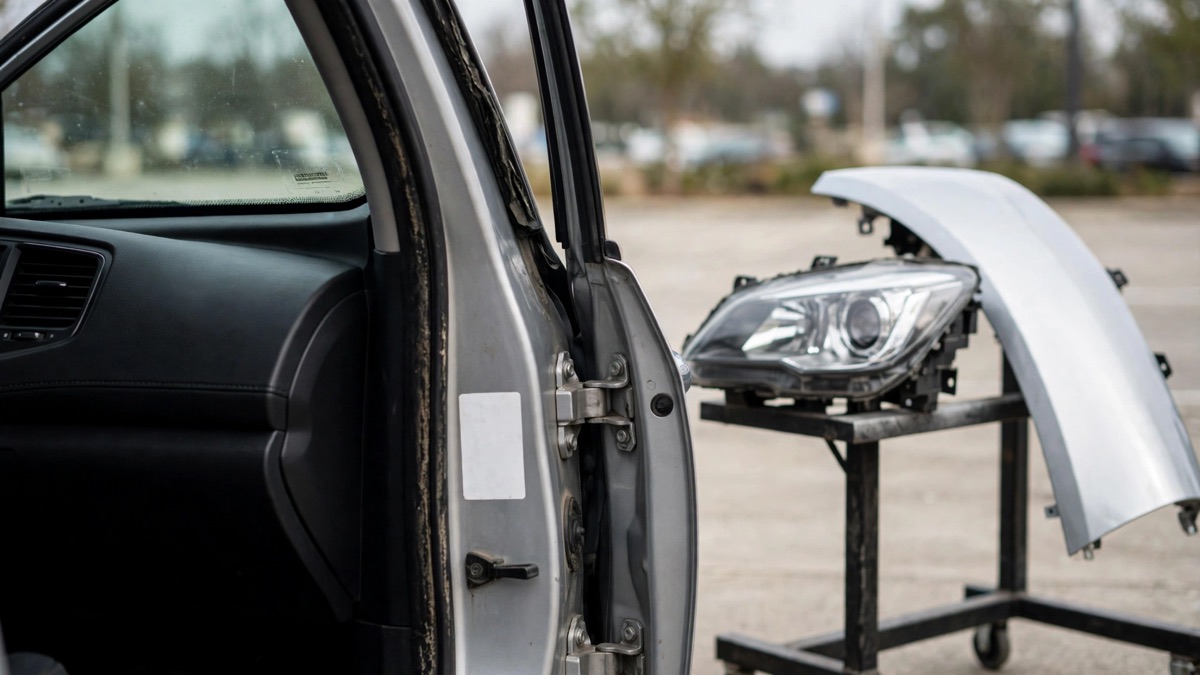
You need a headlight assembly for a 2016 Civic. Search that online and you’ll get halogen units, LED units, one with a projector and one without, and three listings that all claim to fit. Two of them don’t. This is why experienced buyers find car parts by VIN instead of by description: the VIN carries the factory build record, and the description carries whoever typed it. Quality Auto Parts helps buyers find the right replacement by focusing on accurate vehicle and part details. Fitment failures are rarely dramatic. The connector has two pins instead of three, the bracket sits four millimetres off, the module refuses to communicate. Small differences, expensive consequences. With Quality Auto Parts, checking the right specifications before ordering can help you get the correct part the first time. Here’s how to get it right the first time.
What a VIN Tells You That a Listing Doesn’t
Manufacturers build the same model in several configurations across a single year. Engine option, transmission, emissions package, trim, brake package, restraint system and assembly plant all vary, and any of them can change which part number your car left the line wearing.
A VIN resolves that. Suppliers run it against build data and see the option codes rather than guessing from a model name. This is why yards that stock used OEM parts index inventory by VIN-derived data instead of by year and model alone. It’s also why buyers who find car parts by VIN get a confident answer, while a request without one comes back as a question.
How to Find Car Parts by VIN, Step by Step
Locating and photographing the number
The VIN sits on the driver’s side dashboard where it meets the windshield, readable from outside the car. It’s also on the door jamb sticker, your registration and your title. Photograph it. Typing 17 characters from memory is how a 5 becomes an S and a request goes sideways.
While you’re at the door jamb, photograph that whole sticker. It carries the paint code, the axle code and often the trim designation, all of which matter for panels and drivetrain components.
Sending it properly
To find car parts by VIN properly, give the supplier all 17 characters, the part named with side and position, and a photo of the failed component. Ask two questions in the same message: what’s the interchange number, and what donor vehicle is the part coming from. Buyers who find used auto parts efficiently ask both up front rather than after a problem appears.
Interchange Numbers: The Link Between Your VIN and a Shelf
Interchange databases record which part numbers substitute for each other across models, years and brands. Every search for used auto parts by VIN ends at one of these numbers. One alternator may serve four vehicles from two manufacturers under a single interchange code, which is normal rather than a warning sign.
When a supplier offers a part from a vehicle you’ve never heard of, ask for the interchange number and confirm it matches what your VIN returns. Anyone who genuinely searched used auto parts by VIN will have that number in front of them. If the answer is vague, treat it as an unverified match and price the risk accordingly.
When You Can’t Find Car Parts by VIN Alone
Parts the VIN doesn’t fully resolve
A VIN reflects how the car left the factory, not how it looks now. If a previous owner swapped an engine, retrofitted LED headlights, or fitted a different wheel package, your VIN will describe a car that no longer exists in that detail. Aftermarket audio, towing retrofits and replacement bumpers create the same gap.
Read the old part
The fastest fix is the number stamped on the component you’re replacing. Alternators, starters, ECUs, compressors and most modules carry a manufacturer part number on a label or casting. Photograph it and send it alongside the VIN. Where the two disagree, the physical part usually wins, and a good supplier will flag the conflict rather than ignore it.
Find Car Parts by Make and Model: Where That’s Enough
Not every request needs decoding. You can find used auto parts for plenty of components using year, make, model and trim alone, because they interchange across a whole platform.
• Wheels and hubcaps on single-option models
• Glass, mirrors without electronics, interior trim
• Most suspension arms, springs and bushings
• Wear items such as rotors, pads and filters
• Tail lights and bumper covers on vehicles offered in one configuration
Where you should not find car parts by make and model alone is anything electronic, emissions-related, or tied to an option package. Engines, transmissions, transfer cases, ECUs, body control modules, instrument clusters, ADAS cameras and headlights on vehicles offered in two lighting variants all need the VIN. Sending it costs nothing.
Verifying Fitment Before and After Shipping
Even when you find car parts by VIN, confirmation happens twice: once before you pay, once when the box lands. Skipping either is how a repair turns into a return.
| Stage | What to confirm | Why it matters |
|---|---|---|
| Before ordering | Interchange number matches your VIN | Catches wrong-configuration parts |
| Before ordering | Donor year, model and trim | Reveals mid-year production changes |
| Before ordering | Connector count and orientation from photos | Electrical mismatches are common |
| On arrival | Part number against the quote | Picking errors happen in every warehouse |
| On arrival | Physical comparison with the old unit | Bracket and mount differences show instantly |
| On arrival | Damage noted on the delivery receipt | Freight claims are hard to file later |
Compare replacement car parts side by side with the old unit before installing anything. Ten minutes on a bench beats discovering the problem with the car half-apart.
The Real Cost of a Fitment Mistake
The part price is the smallest part of the loss. Return shipping on a heavy component can run $100 to $400, restocking fees typically sit between 15 and 25 percent, and the labour already spent doesn’t come back. On a job where the vehicle is on a lift, a wrong part can also cost you the bay for two more days.
There’s a softer cost too. Once a supplier ships one wrong part, most buyers stop trusting the relationship, when the root cause was often an incomplete request. Choosing to find car parts by VIN takes an extra fifteen seconds and prevents nearly all of it.
Frequently Asked Questions
Can a supplier find car parts by VIN for any vehicle?
For most vehicles sold in the US market, yes. Coverage is strongest on mainstream domestic and Japanese platforms and slightly thinner on low-volume imports and very old vehicles. If build data isn’t available, send photos and the part number from the old component so the supplier can match physically.
Does the VIN tell you the paint colour?
Not directly on most vehicles. The paint code lives on the door jamb sticker, sometimes under the hood or in the trunk. Photograph that sticker alongside the VIN. Even with the correct code, replacement car parts usually need blending on a vehicle more than a few years old.
Are used OEM parts a safe choice compared with new aftermarket?
For fitment, usually yes, because they’re the components the factory installed, with correct brackets and connectors. Aftermarket often wins on price and availability for wear items. For electronics, sensor-bearing panels and anything with a plug, most technicians prefer used OEM parts.
What if I only have a partial VIN?
A partial number rarely works, since the characters that identify engine and options sit in the middle and the serial digits sit at the end. Retrieve the full 17 characters from your registration, insurance document or door jamb sticker before requesting, or you risk an unverified match.
Conclusion
The reliable way to find car parts by VIN is unglamorous: photograph the VIN and the door jamb sticker, name the part with its side and position, send a picture of the old component, and ask for the interchange number in writing. Quality Auto Parts can help make this process easier by guiding you toward the right replacement for your specific vehicle. Then verify again when the part arrives, comparing part numbers and physical mounts before anything gets installed. That routine takes a few extra minutes and removes most of the fitment failures that turn a one-day repair into a week.
If you’re chasing a part for a specific vehicle, sending your VIN to an experienced parts supplier is the quickest route to an answer you can rely on. Contact Quality Auto Parts today and get help finding the right part for your vehicle. Send your VIN today and find the right auto part with confidence.