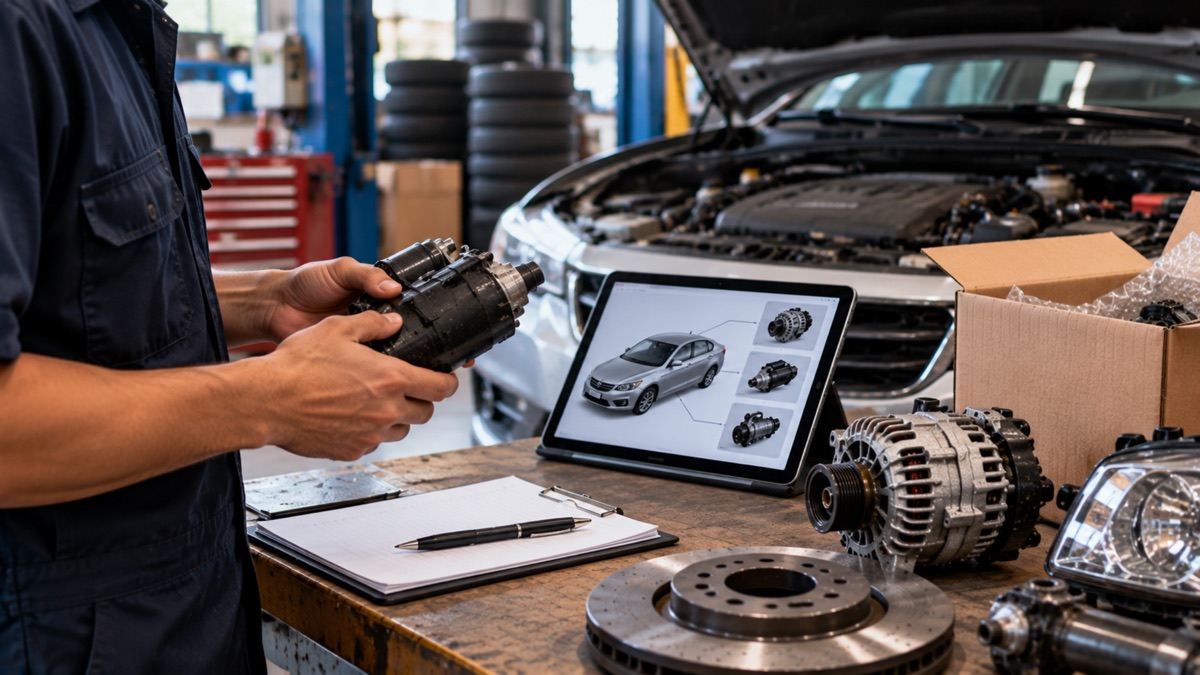
The window regulator arrives, the door card is already off, and the connector has six pins instead of four. The listing said it fit your year and model—but not your trim. Now the car sits with plastic sheeting over the door while you sort out return shipping.
This common used-parts mistake is often preventable. Find replacement parts by vehicle to reduce fitment errors by checking details like midyear revisions, package options, and trim before you order. Quality Auto Parts can help you verify compatibility. Share your vehicle information with Quality Auto Parts to narrow down the right match.
Why Wrong-Part Orders Happen So Often
Manufacturers don’t build one version of a car. A single model year can include a base trim, a sport package, a cold-weather package and a hybrid variant, each with different brackets, connectors, sensors and calibration. Then there are running changes: a supplier switch in March means cars built after that date use a different component with the same outward shape.
Buyers rarely know any of this, and they shouldn’t have to. The problem is that most search boxes only ask for year, make and model, which flattens all that variation into one bucket. The listing isn’t lying. It’s just answering a less precise question than the one you needed to ask.
What It Means to Find Replacement Parts by Vehicle
Configuration, Not Just Description
To find replacement parts by vehicle properly means matching against the actual build: engine code, transmission type, drivetrain, trim level, emissions package, production date and often the paint or interior code. That’s the set of attributes that determines which part number left the factory in your specific car.
Where the Data Comes From
Two sources do the heavy lifting. Manufacturer catalogue data maps build configurations to part numbers. Interchange databases map part numbers to every other vehicle that used the identical component. Together they turn a vague request into a short list of stock numbers that will physically bolt on.
Find Car Parts by VIN: The Most Reliable Route
What Your VIN Encodes
Those seventeen characters carry the manufacturer, the assembly plant, the model year, the body style, the restraint system and, in most cases, the engine family. Position nine is a check digit that validates the whole string, which is why a mistyped VIN usually gets rejected rather than silently returning wrong results. When you find car parts by VIN, you’re querying the build record rather than a generic model listing.
What It Still Can’t Tell You
A VIN doesn’t record dealer-installed accessories, previous repairs, or whether someone already swapped in a different-generation component. If your car has been repaired before, the part on it now may not be the part it left the factory with. Photograph what’s actually installed and send that alongside the VIN. Suppliers who handle used auto parts by VIN requests daily will spot the mismatch immediately.
When You Can Only Find Car Parts by Make and Model
Sometimes the VIN isn’t available. The plate is unreadable, the car is at a shop across town, or you’re pricing a repair before you buy the vehicle. You can still find car parts by make and model, but tighten the query with everything else you know before you try to find replacement parts by vehicle detail alone:
• Engine displacement and cylinder count
• Transmission type (automatic, manual, CVT) and drivetrain layout
• Trim level and any factory packages
• Production date from the door jamb sticker
• The OEM number on the old component, if legible
Each of those narrows the candidate list. The part number on the old unit is worth more than all the others combined, because it lets a supplier run interchange directly and skip the guessing entirely.
How Fitment Confidence Scales With Information
| What you provide | Typical match confidence | Common failure mode |
|---|---|---|
| Year, make, model only | Low to moderate | Trim and package differences |
| Plus engine and transmission | Moderate | Mid-year production changes |
| Plus trim and build date | High | Dealer-fitted variations |
| Full VIN | Very high | Prior non-original repairs |
| VIN plus OEM part number | Highest | Rare data errors |
The pattern is straightforward. Each additional field removes a category of error, and the jump from model-level searching to VIN-level searching is the single biggest one. That’s the practical case for taking the extra two minutes to find replacement parts by vehicle configuration rather than description.
Interchange, Used OEM Parts and Wider Availability
Precise fitment data doesn’t just prevent mistakes. It expands your options. Once a supplier knows the exact part number your car needs, interchange tells them which other models and years carried the identical component. A door mirror might be shared across two badge-engineered brands over six model years, which turns a scarce listing into dozens of candidates.
This is where used OEM parts earn their reputation. Because they were built to factory tolerances, panels align without shimming and modules communicate correctly with the rest of the vehicle. Aftermarket replacement auto parts vary more in fit, particularly on body components where a couple of millimetres shows in the panel gap. Neither is universally better, but if fit precision is what you care about, a correctly matched original component is hard to beat.
What a Wrong Part Actually Costs
The sting isn’t the part price. It’s everything attached to it:
1. Return freight, which on a pallet item can run $80 to $400.
2. A restocking fee, commonly 15 to 25 percent on non-defective returns.
3. Shop labor already spent removing the old component.
4. Extra days of storage or a rental car.
5. The wait for a second part to ship and arrive.
A $200 mirror that doesn’t fit can easily become a $500 mistake once those stack up. Set against that, the effort to find replacement parts by vehicle configuration before ordering looks trivially cheap, whether you’re buying used or new replacement auto parts.
A Habit That Helps You Find Replacement Parts by Vehicle
Do these five things every time and wrong-part orders mostly disappear. Record your VIN somewhere accessible, in your phone notes rather than only on the dash. Photograph the failed component from three angles, always including the connector face. Read the OEM number off the old part before you throw it away. Give the supplier your production date from the door jamb sticker. Then ask them to confirm in writing which part number they’re shipping and which stock number it came from.
That last step matters more than people expect. A written part number turns a fitment dispute into a simple factual check rather than an argument about what was implied.
Frequently Asked Questions
Is a VIN search always better than searching by model?
Almost always, yes. A VIN resolves trim, package and build-date variations that a model-level search can’t see. The exception is a vehicle already repaired with non-original components, where the installed part may differ from the factory record. In that case, send the VIN and photos of what’s actually fitted.
Can I find replacement parts by vehicle without knowing the trim level?
You can, but expect a wider result list. Supply the engine size, transmission type and production date, and ask the supplier to narrow it from there. If the old part carries a legible OEM number, send that too, since it usually pins down the exact variant faster than trim information does.
Do used OEM parts need coding or programming?
Some do. Control modules, body computers and certain instrument clusters often need coding to your VIN after installation, and a few are locked to their original vehicle entirely. Ask before ordering whether the module is programmable, and confirm your shop has the tooling. Mechanical and body items rarely have this issue.
Will the seller check fitment for me?
Established suppliers will, and it’s a fair test of whether to buy from them. A seller who handles used auto parts by VIN, quotes a stock number and confirms the part number in writing is verifying properly. One who quotes instantly from a year and model alone is passing the fitment risk to you.
Conclusion
Most used-parts problems aren’t quality problems; they’re identification problems. Send the full VIN, production date, old part number, and clear photos, then ask the supplier to confirm exactly what they’re shipping. Buyers who match parts to their vehicle configuration can avoid many returns, reduce delays, and save on the cost of a second shipment.
Unsure which variant your vehicle takes? Contact Quality Auto Parts with your VIN and photos to check compatibility before ordering. Get in touch to ask about availability, pricing, and more options in the collection.