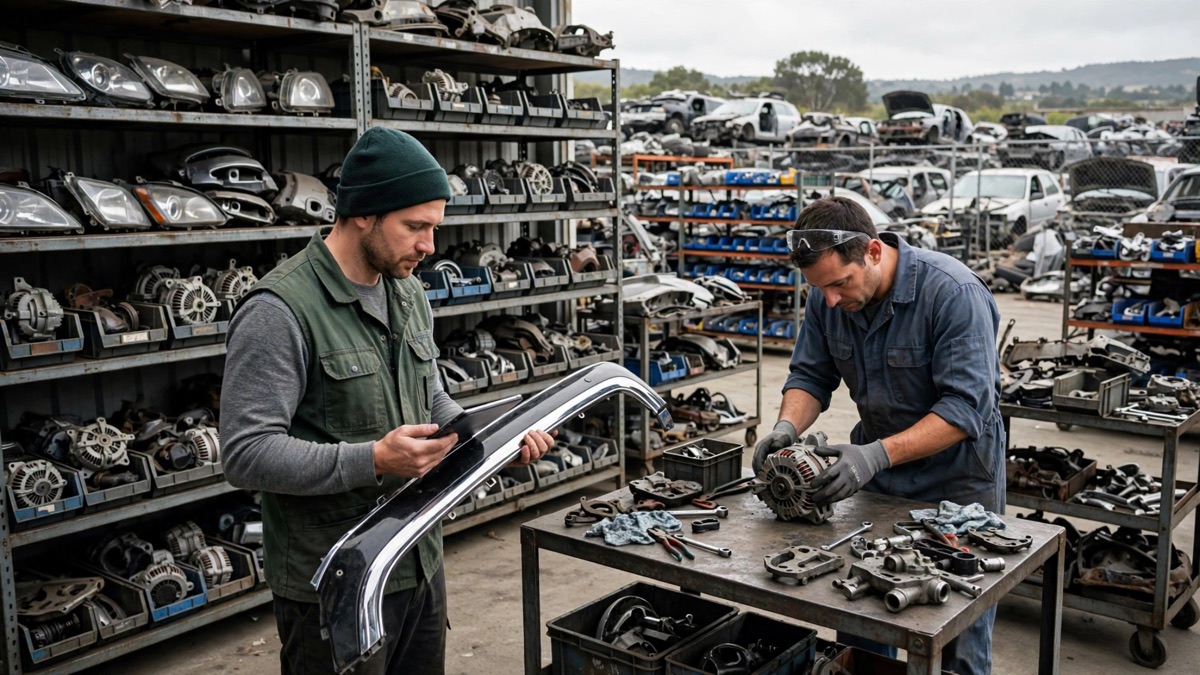
The dealer parts counter looks at the screen, pauses, and says the words nobody wants to hear: no longer available, no supersession. Your car is fifteen years old, otherwise sound, and it needs one trim clip, one window regulator or one control module the manufacturer stopped producing years ago. This is the moment most people discover you can submit a part request to find discontinued auto parts through the salvage network instead.
It’s a genuine option, and it works more often than you’d guess. It just isn’t instant, and it isn’t magic. Quality Auto Parts can help connect you with available used OEM options when new dealer stock is no longer available. Knowing what a request can and can’t do saves a lot of frustration. With Quality Auto Parts, you can submit your requirements and explore possible sources for hard-to-find replacement parts.
Why Parts Get Discontinued
Manufacturers keep service parts flowing for a limited period after production ends, typically around a decade, though it varies by market and by part. After that, tooling is scrapped, warehouse space gets reallocated, and low-volume items go first. Trim pieces, interior plastics, model-year-specific lamps and infotainment modules disappear fastest, which is why owners so often need to find discontinued auto parts through recyclers instead.
Low production numbers make it worse. A limited-run trim level or a single-year facelift means only a small parts pool ever existed, which is why owners of ordinary cars sometimes hit a wall on one bracket.
What a Part Request Actually Is
A part request is a structured enquiry you submit to a supplier or a network of salvage yards describing exactly what you need. Rather than browsing listings and hoping, you describe the vehicle and the component, and the network searches inventory for you.
What Happens After You Submit One
Your request gets matched against live inventory databases covering yards across a wide area. Recyclers who don’t have the part listed online often still have it on a shelf or on a car that hasn’t been dismantled. A good supplier also checks interchange data, which identifies other models and years that used the identical component.
Who Sees Your Request
Depending on the supplier, your request may go to a handful of yards or to a national network of several hundred. That’s the real advantage: no single yard has everything, but collectively they hold an enormous parts pool. Reach is what turns a dead end into a delivered box.
How Part Requests Help You Find Discontinued Auto Parts
The core mechanism is interchange. Manufacturers reuse components across platforms, brands and model years far more than buyers realise. A mirror listed as unavailable under one model number may be identical to one from a sister brand that sold in higher volumes and sits in stock somewhere.
The second mechanism is undocumented inventory. Plenty of yards hold parts that never made it into an online listing, particularly interior pieces and small brackets. Those never surface in a web search, but a human searching against a specific request will find them. That’s the practical difference between browsing and asking, and it’s why part requests find discontinued auto parts that appear extinct online.
Third, requests can stay open. If the part isn’t available today, a supplier can keep the request active and contact you when a matching donor arrives. Waits of a few weeks are common on scarce items, and patience is often what finally lets you find discontinued auto parts.
What Information Makes a Request Work
Vague enquiries get vague answers. If you want to request hard to find car parts with a real chance of success, send:
1. Full 17-digit VIN, which is more important here than anywhere else
2. Year, make, model, trim and engine
3. The OEM part number, if you can read it off the old part or get it from a dealer
4. Clear photos of the part from several angles, including connectors and mounting points
5. A precise description of location and side, such as front passenger side lower
6. Whether you’ll accept a different colour, a repairable item or a slightly different variant
7. Your ZIP code and how quickly you need it
That sixth point matters more than people expect. Flexibility on colour or cosmetic condition is often the difference between a part existing and not existing when you request hard to find car parts.
Where Rare Used Auto Parts Actually Come From
Recycled inventory comes from insurance write-offs, collision vehicles, hail claims and end-of-life cars. A vehicle written off for a bent rail may have a flawless interior, so its rare used auto parts stay perfectly serviceable.
Hard to Find Car Parts vs Genuinely Extinct Ones
There’s a meaningful difference between scarce and gone. Most hard to find car parts are scarce: they exist, they’re just not listed where you looked. Genuinely extinct parts are rarer than the internet suggests, and they tend to be single-year electronics or emissions components. If you’ve been told a part is impossible, one more properly structured request is worth sending.
Timelines and Costs to Find Discontinued Auto Parts
Expect a spread rather than a fixed answer. Common items surface within a day or two, genuinely scarce ones take weeks, and open requests sometimes run months.
| Route | Typical wait | Indicative cost | Best for |
|---|---|---|---|
| Salvage network request | 1 day to 3 weeks | Lowest, often 30-60% below new | Most discontinued items |
| New old stock from a dealer | Days, if it exists | Highest, often above original list | Collectors, concours builds |
| Aftermarket reproduction | Off the shelf | Moderate | Popular models only |
| Repair or refurbish the original | 1-3 weeks | Varies widely | Modules, clusters, plastics |
Pricing follows scarcity rather than the part’s original value, so a plastic bracket for a low-volume model can cost more than a mechanical component from a common one. Treat any quote as indicative until it’s confirmed against your VIN.
When Nothing Turns Up
If a request comes back empty, you still have moves. Module repair specialists rebuild many clusters, ECUs and body control units rather than replacing them. Plastic welding and 3D-printed brackets handle some trim failures. Owners’ clubs often know which sister model shares the part, and that knowledge frequently beats any database.
Ask too whether discontinued OEM auto parts have a documented supersession. Manufacturers sometimes replace an old number with a redesigned part that fits earlier vehicles, and a dealer can check that in seconds from the original number. Plenty of supposedly discontinued OEM auto parts are still orderable under a newer code.
Red Flags Worth Watching For
Not every seller is equal, particularly on scarce items where buyers feel cornered. Be cautious of stock photos rather than pictures of the actual item, sellers who won’t confirm donor mileage or VIN compatibility, no stated return window, and prices far below everyone else. Ask how the part was tested, what the warranty covers, and whether shipping is included. Good suppliers of used OEM parts answer all three without hesitation.
Frequently Asked Questions
How long does it take to find discontinued auto parts?
Common items often surface within a day or two through a salvage network. Genuinely scarce components take several weeks, and some requests stay open for months until a matching donor arrives. A supplier can usually tell you within 48 hours whether you can realistically find discontinued auto parts for your vehicle.
Are used OEM parts as good as new ones?
For most components, yes. Used OEM parts are original factory items built to the same tolerances as the ones fitted at the plant, and they often outperform budget aftermarket alternatives. Condition and donor mileage matter, which is why grading, testing and a stated warranty are worth checking before you buy.
Does a part request cost anything to submit?
Submitting a request is normally free, and you’re under no obligation when quotes come back. You pay only if you accept an offer. Compare quotes on total delivered cost, warranty length and return window rather than headline price alone, particularly on heavy items where freight is significant.
What if my part is discontinued and no salvage yard has one?
Then look at repair rather than replacement. Specialists rebuild many electronic modules, and plastics can often be welded or reproduced. Model-specific owners’ clubs are useful for identifying interchangeable parts from other vehicles. Keeping your request open with a supplier costs nothing and sometimes pays off weeks later.
Conclusion
A discontinued part number at the dealer counter is not the end of the road. A properly detailed part request puts your vehicle in front of a large recycling network, and between interchange data, unlisted shelf stock and incoming donor vehicles, that network can find discontinued auto parts that no online search will show you. Send your VIN, photos, and clearly state how flexible you are on colour and condition. Be realistic about timelines, and ask about testing, warranty, and returns before you pay. Compare the delivered cost rather than focusing only on the headline price. Quality Auto Parts can help you explore available replacement options when a part seems difficult to source. If you’re stuck on a part that seems impossible to find, speak with Quality Auto Parts to check whether it’s genuinely unavailable or simply unlisted. Get in touch today and start your part search.